

By Suranjan Majumder and Uday Chatterjee, Bhatter College
When policy assumes people have ‘time’
The Anthropocene has transformed climate change into an ordinary political reality. Across much of the world, the increasing frequency of climate extremes has made climate change an immediate challenge rather than a distant possibility. Unsurprisingly, climate change adaptation has become the dominant policy response. Across the world, governments invest in resilient infrastructure and community-based adaptation.
Yet adaptation is often imagined as a rational sequence of planning: identify the risk, consult stakeholders, design interventions, build capacity, and monitor outcomes. At this point, this administrative logic appears sensible. Nevertheless, it rests on a remarkably fragile assumption that people possess enough disposable time to participate in the adaptation process on institutional terms. For millions of people in the ‘economic and time poverty’-stricken Global South, this assumption simply does not hold.
Therefore, the temporal politics of adaptation becomes visible only when policy is observed from the perspective of everyday life of a vulnerable population. The concern is not whether vulnerable communities are willing to participate in climate adaptation. It is that adaptation unfolds within survival that is already organised around daily pay for daily work, and the dual burden of care and survival. A woman employed on a tea estate in the Darjeeling Himalayas negotiates adaptation alongside paid plantation work, unpaid domestic responsibilities and caregiving. On the other hand, a daily wage labourer in the Sundarban Delta weighs attending a consultation against losing a day’s wages. A farmer in the same region, facing uncertain monsoon rainfall and saline intrusion from tidal surges, often makes cultivation decisions within days, while institutional procedures take weeks or months. In both cases, the challenge is less about awareness than the temporal mismatch between everyday life and public policy. The issue is not unwillingness to adapt, but that adaptation policies often demand the resource vulnerable people have least: time—more precisely, the “temporal politics of climate adaptation.”
The (in)visible inequality fixed in adaptation planning
Climate policy at the global level traditionally recognises inequalities in income, assets, technology and institutional capacity. Time, however, remains almost invisible. This oversight matters because adaptation is inherently time-intensive. It requires attending meetings, learning new farming techniques, navigating digital portals, participating in training programmes and complying with reporting procedures. Each step appears insignificant in isolation. Together they constitute what might be called the temporal burden of adaptation.
When adaptation policy assumes disposable time, it treats people as if they can pause life in order to plan for climate risk.
For communities already living with precarious livelihoods, time is already committed to the everyday work of earning incomes, and responding to environmental uncertainty. The question is therefore not whether they value adaptation, but whether policy recognises the temporal circumstances under which adaptation must actually take place. In other words, adaptation does not merely distribute financial costs unequally—it distributes temporal costs unequally.
When policy time collides with everyday time
Perhaps the most persistent blind spot in climate adaptation is the assumption that people have time to adapt. Policy often treats adaptation as an additional activity, with each phase appearing modest in isolation. Yet it rarely asks a more basic question: where does this time come from?
For many climate-vulnerable households, there is no spare time waiting to be filled with adaptation. Instead, adaptation becomes another part of everyday life alongside existing demands.
This is why many adaptation programmes struggle despite being technically well designed. The challenge lies not in people’s willingness to participate but in how institutions conceive participation. Everyday life in vulnerable households rarely follows orderly sequences. Decisions about sowing, migration, wage work, and post-flood rebuilding are driven by immediate necessity rather than administrative timelines.
When time becomes a question of power
India offers one of the clearest illustrations of this temporal politics.
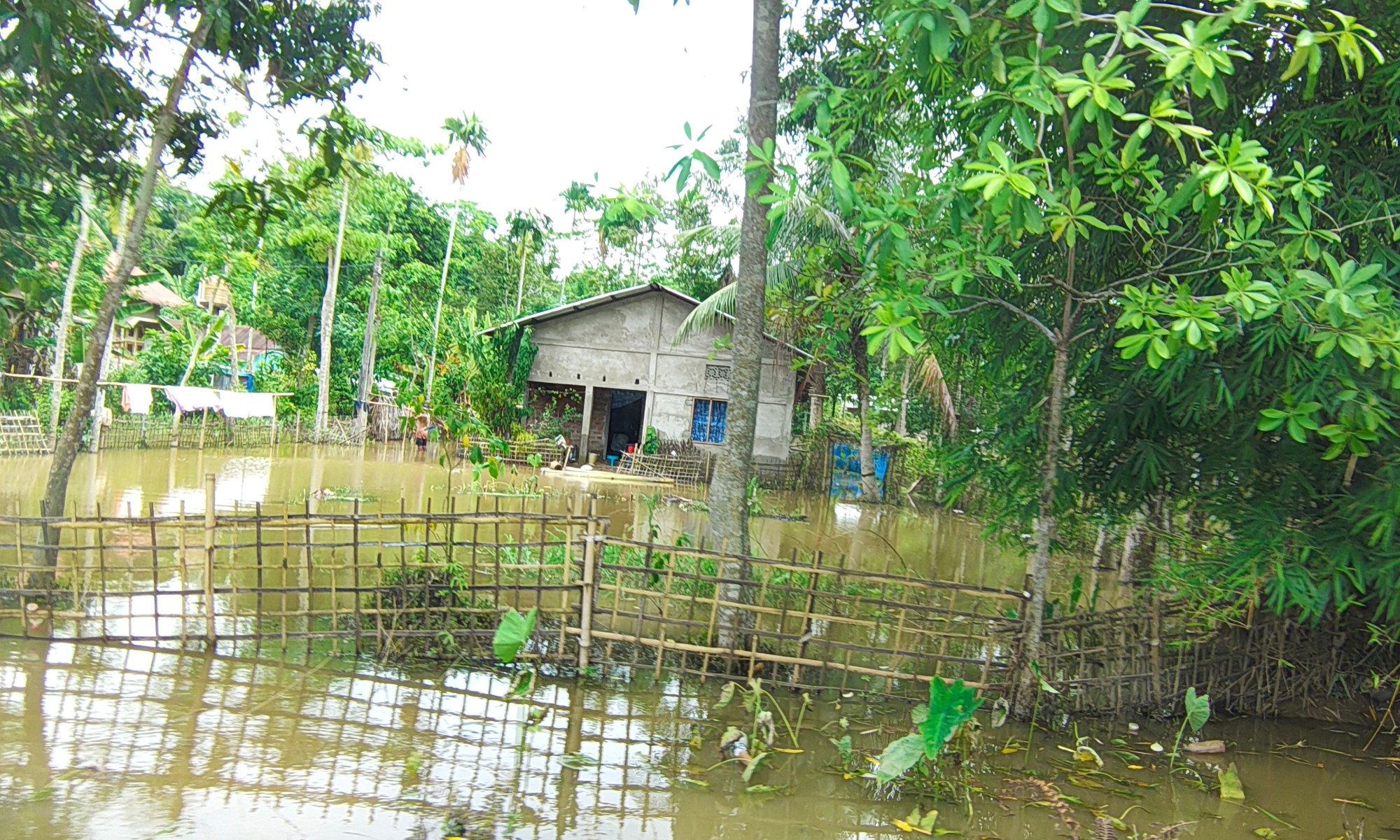
Consider India’s recurring flood-prone districts in Assam. Communities reported engineers constructing flood-control measures only days before floods reached villages, leaving little time for meaningful protection. Even in a majority of states across India, long before official damage assessments or compensation arrive, families have already repaired homes with borrowed money or migrated for work. From an administrative perspective, the intervention was delivered; from the household’s perspective, it came too late. By the time formal assistance arrives, the most urgent decisions have already been made.
A similar pattern appears in rain-fed agriculture. Farmers in semi-arid Maharashtra rarely wait for seasonal advisories before deciding when to sow. Rainfall shifts within days, requiring immediate decisions, while public programmes move through approvals, reporting, and implementation over weeks or months.
These cases reflect different forms of household time poverty and unequal distributions of power. Temporal injustice is therefore a form of climate injustice. Climate adaptation risks serving those who can adjust to institutional time rather than those living closest to climate uncertainty.
Learning from places that value people’s time
Not all adaptation follows this pattern.
Bangladesh’s Cyclone Preparedness Programme (CPP) shows that adaptation need not depend on distant bureaucratic procedures. Established in 1972 as a joint initiative of the Government of Bangladesh and the Bangladesh Red Crescent Society, it has become one of the world’s leading community-based disaster preparedness systems. Rather than relying solely on official warnings, the CPP operates through more than 76,020 trained volunteers, equally divided between women and men, who disseminate warnings, assist evacuations, conduct search and rescue, provide first aid, and support recovery in cyclone-prone coastal districts. Field research across seven districts found volunteers were the most trusted source of cyclone warnings, reaching over 72% of households and nearly 90% in Bhola. People responded not simply because warnings were issued, but because they came from trusted local volunteers through door-to-door visits, mosque announcements, and community networks. The Bangladesh experience also shows that effective adaptation requires sustained attention to inequality. Resilience depends not only on shelters or warning systems but also on trusted local institutions, inclusive communication, and strategies that reflect the realities of vulnerable communities.
Similar lessons emerge from the Netherlands’ Room for the River programme. Rather than relying on post-flood emergency responses, it integrated engineering, spatial planning, and community consultation over the long term. Although developed in a very different socio-economic context, it demonstrates how sustained engagement and predictable institutional commitment can reduce uncertainty instead of shifting it onto affected communities.
These examples show that effective adaptation depends not only on what policies deliver, but also on when and how they engage with people’s lives.
Whose time counts in climate adaptation?
If climate adaptation is to become more than a technical exercise, it must recognise that time is not equally available to everyone. The burden of adaptation is measured not only in money or infrastructure but also in hours many people simply cannot spare.
This does not mean abandoning planning or participation. Rather, adaptation must begin with how people already organise their lives. Agricultural calendars, seasonal migration, care responsibilities, local ecological knowledge, and community networks are not peripheral considerations but the conditions under which adaptation occurs. The challenge is not simply to make adaptation more efficient, but more temporally just. Climate governance must recognise that vulnerable communities are already adapting every day to sustain their livelihoods.
About the authors:
Dr. Suranjan Majumder is a Research Assistant in the Department of Geography at Bhatter College (Autonomous), West Bengal, India. His research lies at the intersection of critical development geography, political ecology, spatial justice, climate adaptation, just transition, and subaltern livelihoods, with a particular focus on plantation landscapes and marginalized communities in eastern India. Drawing on ethnographic fieldwork, participatory research, and spatial analysis, his work examines how everyday experiences, local knowledge, and lived geographies shape responses to environmental change and development interventions. His broader research seeks to challenge dominant development narratives by foregrounding the voices, practices, and agency of communities often overlooked in policy and academic debates.
Dr. Uday Chatterjee is an Assistant Professor in the Department of Geography at Bhatter College (Autonomous), West Bengal, India. His research spans climate change, disaster risk reduction, resilience, indigenous knowledge, and sustainable development. He serves on the editorial boards of several leading international journals and is Book Series Editor for Developments in Environmental Science (Elsevier) and Sustainability Solutions: An Interdisciplinary and Transdisciplinary Nexus (Springer Nature). Dr. Chatterjee has led and collaborated on nationally and internationally funded research projects and has published extensively in high-impact journals and books. He has also held international research collaborations and visiting appointments, including at Keio University, Japan.
Suggested further reading
Anderson, B., Grove, K., Rickards, L., & Kearnes, M. (2019). Slow emergencies: Temporality and the racialized biopolitics of emergency governance. Progress in Human Geography. Available from: https://doi.org/10.1177/0309132519849263
Cox, S. (2024). Unbounding the future: New directions for climate‐changed geographies. Transactions of the Institute of British Geographers. Available from: https://doi.org/10.1111/tran.12720
Garcia, A., & Tschakert, P. (2022). Intersectional subjectivities and climate change adaptation: An attentive analytical approach for examining power, emancipatory processes, and transformation. Transactions of the Institute of British Geographers. Available from: https://doi.org/10.1111/tran.12529
Hossain, M. L. (2026). Beyond warnings and shelters: local institutions and trust build cyclone resilience in Bangladesh. Npj Natural Hazards. Available from: https://doi.org/10.1038/s44304-026-00177-9
MacLeavy, J. (2024) Neighbourhood regeneration through a longitudinal lens: Exploring crisis temporalities in Bristol, UK. Area. Available from: https://doi.org/10.1111/area.12895
Tschakert, P. (2012). From impacts to embodied experiences: tracing political ecology in climate change research. Geografisk Tidsskrift-Danish Journal of Geography. Available from: https://doi.org/10.1080/00167223.2012.741889
How to cite
Majumder, S. and Chatterjee, U. (2026, September) Who owns time? The hidden cost of climate change adaptation. Geography Directions. https://doi.org/10.55203/UIXN3772

