
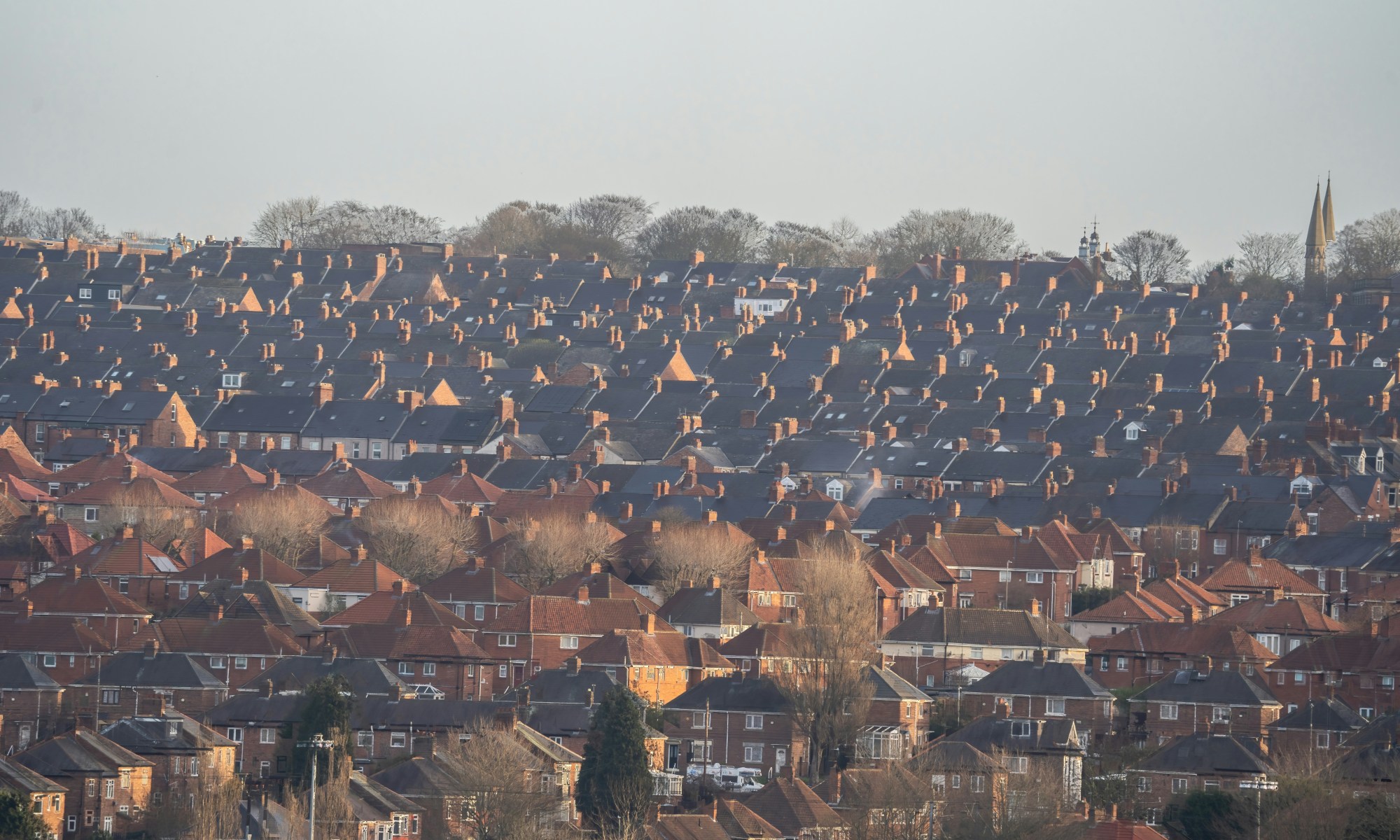

By Sophie Lively, Newcastle University
When Rupert Lowe, leader of the far-right party Restore Britain, recently visited the north east of England and described it on social media as “proper England”, it might (on the surface) sound like an elevation, a compliment at a stretch. For a region long accustomed to being represented through decline, deprivation and political neglect, a nod of national significance can feel like a rare gesture of respect and recognition.
But who gets to decide what counts as ‘proper’ England?
The phrase does more than flatter a place. It creates a hierarchy of authenticity. Some places, some people and some histories become more genuinely national than others. Behind this seemingly simple claim sits a selective and mournful ghost story – an imagined industrial past in which working-class identity is associated with masculinised heavy manual labour, physical strength and a singular, White sense of belonging.
This is not only nostalgia but a way of making place.
Making the post-industrial
Landscapes are never passive backdrops to political life. They are produced through memory, representation and struggle and the dominant image of place is always open to contestation. Following this understanding of place, I use the term ‘north east’ to refer broadly to interconnected places and landscapes commonly associated with the north east of England. This is a necessarily imprecise geography given regional identities regularly exceed administrative boundaries which are themselves shaped through various histories and political contestations.
The physical remnants of industrial history can therefore become powerful resources for competing stories about who belongs and what has been lost. Research on industrial ruination has shown how industrial landscapes and ruins become entangled with memory, history and political representations of the working-class.
Tom Astley’s work on the former coalfields around Sunderland describes these landscapes as carrying the ‘ghosts’ of industrial pasts into the present, with industrial heritage continuing to shape imaginaries of place.
But these landscapes can also be recruited into a very different story: one in which a coherent, authentic England once existed and has since been taken away.
There is something seductive about this story. Deindustrialisation did produce profound material and social losses and, as Ray Hudson has argued, understanding the north east requires attention to the long and uneven relationship between regional development, economic restructuring and the state.
The problem begins when this very real history of loss is turned into a story about cultural purity.
Who gets remembered?
The industrial north east was never as singular as nostalgic representations suggest. Its working-class histories were shaped through migration as well as industry, through people who moved into and through the region’s ports, factories, mines and shipyards.
This isn’t a minor footnote to regional history. Research on migration and regional identity shows just how profoundly migration shaped the north east’s industrial development and social life. By 1911, people born outside England, or the children of migrants, made up a substantial proportion of the region’s population and later generations of migrants from India, Pakistan and the Caribbean further reshaped the region.
Nor was working-class life reducible to the heroic industrial worker. The reproduction of everyday life depended upon forms of labour that were less visible: caring, cleaning, organising, raising children, maintaining households and sustaining communities. As Jay Emery argues, dominant representations of the post-industrial working-class can obscure women and racialised working-class experiences by repeatedly returning to the figure of the White male industrial worker.
To remember only the mine, the shipyard or the steelworks is therefore already to have selected a particular version of the past. This is where nostalgia becomes politically useful.
The political uses of nostalgia
Lauren Berlant’s idea of cruel optimism offers one way of thinking about the attachment to these stories. The concept describes situations in which something we become attached to as a source of possibility can simultaneously obstruct the flourishing it promises. Cruel optimism draws attention to the difficult relationship between attachment, sustaining fantasies and conditions that may ultimately be harmful.
The nostalgic (industrial) past can work precisely in this way. It offers recognition. You mattered, your community mattered, this place mattered. But it can also narrow the terms on which that recognition is available. The working-class becomes imagined through an industrial masculinity that is increasingly impossible to reproduce, while economic insecurity is recast as a problem of cultural change.
The result is a peculiar political bargain. Instead of asking what happened to the wealth, institutions and employment that sustained industrial communities, attention can be redirected towards who supposedly changed the place. The causes of economic insecurity become cultural rather than political. A story about disinvestment becomes a story about dilution.
Making ‘proper England’
Here, the language of ‘proper England’ makes geography do political work.
To call somewhere ‘proper England’ is to suggest that Englishness is embedded in particular landscapes, accents, industries and bodies. It establishes an imagined centre against which other forms of Englishness can be measured.
Saskia Papadakis has recently argued in Geography Directions, the figure of the White working-class northern man has become a powerful shorthand through which ideas of northerness, class and English identity are produced.
But there is another danger. In challenging this narrative, we should be careful not to replace it with another simplified portrait of the north east – the endlessly deprived, traumatised or abandoned post-industrial region waiting to be rescued.
The north east does not need a redemption narrative.
Beyond redemption
The north east’s landscapes are not simply ruins. Its communities are not relics of an industrial past and its history cannot be reduced either to decline or to some lost moment of authentic working-class life.
What happens in these places is messier and more interesting. People make lives in the spaces left behind by industrial capitalism. They preserve memories but also reinvent them. They organise, care for one another, argue, contest, migrate, leave, return, build new identities and live with contradictions that do not fit neatly into political mythology.
Research on post-industrial place-making shows how people actively challenge and rework the ways their places are represented. Anoop Nayak’s work on Teesside for example, shows how residents respond to territorial stigma by producing alternative narratives and re-scripting place from within.
Perhaps then, the task is not to find a more authentic story of the north east. It is to unsettle the demand for authenticity in the first place. Post-industrial places do not need to prove that they are ‘proper’ anything. They do not need to redeem their past nor do they need to be redeemed from it.
Their histories are complicated. Their landscapes are contested. Their working-classes have never been a single, White, masculine constituency. Their futures do not have to be built by recovering an imagined past. The north east does not need another story about what it has lost or what it ought to become. It is a living geography – contradictory, unfinished and still being made.
Suggested further reading
Carr, C. (2017) ‘Maintenance and repair beyond the perimeter of the plant: linking industrial labour and the home’, Transactions of the Institute of British Geographers. Available from: https://doi.org/10.1111/tran.12183
Emery, J. (2019) ‘Geographies of deindustrialization and the working‐class: Industrial ruination, legacies, and affect’, Geography Compass. Available from: https://doi.org/10.1111/gec3.12417
Papadakis, S. (2025) ‘Postimperial melancholia and the English North–South divide: Reading the life stories of Northern women of colour in London’, Transactions of the Institute of British Geographers. Available from: https://doi.org/10.1111/tran.70016
Zhang, V. (2024) ‘Embodying industrial transitions: Melancholy loss, interrupted habit and transitional memory after the end of a coal mine’, Transactions of the Institute of British Geographers. Available from: https://doi.org/10.1111/tran.12672
How to cite
Lively, S. (2026, September) Who gets to be ‘proper England’? Myth making, nostalgia and post-industrial geographies. Geography Directions. https://doi.org/10.55203/LYJU3569

