

By Frederic Hanusch, Justus Liebig University Giessen
After the global
Human geography has been one of the central fields for understanding globalisation. It has shown that space is not a neutral container but is produced through power, movement, labour, technology, memory, imagination and material life. Yet the present moment suggests that the language of the “global” no longer captures what is at stake.
The global imagines Earth primarily as a connected surface. It is the language of circulation, integration and distance overcome. The planetary shifts the problem. It asks what follows once Earth is no longer treated as the stage on which human histories unfold, but as an active condition of those histories. Put more sharply: the global still allows us to imagine that we live on a planet; the planetary begins from the fact that we are part of it.
This shift is not about adding entirely new objects to geography’s agenda. Geographers already study heat, rivers, infrastructures, extraction, data centres and satellites. The difference is analytic: a planetary human geography asks how such sites are not only connected across Earth’s surface, but co-produced with Earthly conditions and agencies. A heat-exposed neighbourhood, a modelled river basin or an orbital infrastructure are not just nodes in global networks. They are places where planetary processes become spatial arrangements, technical decisions and political questions.
What geography adds
This way of rethinking geography builds on a growing body of planetary scholarship. Nigel Clark and Bronislaw Szerszynski’s Planetary Social Thought argues that social theory has to revise its assumptions once social life becomes implicated in planetary dynamics. Dipesh Chakrabarty’s The Climate of History in a Planetary Age similarly distinguishes the planetary from the global by asking how human histories are entangled with Earth histories. More recently, Julia Verne, Nadine Marquardt and Stefan Ouma’s Planetary Futures has brought this debate directly into geography by asking what the planetary means for cultural, social and economic geography.
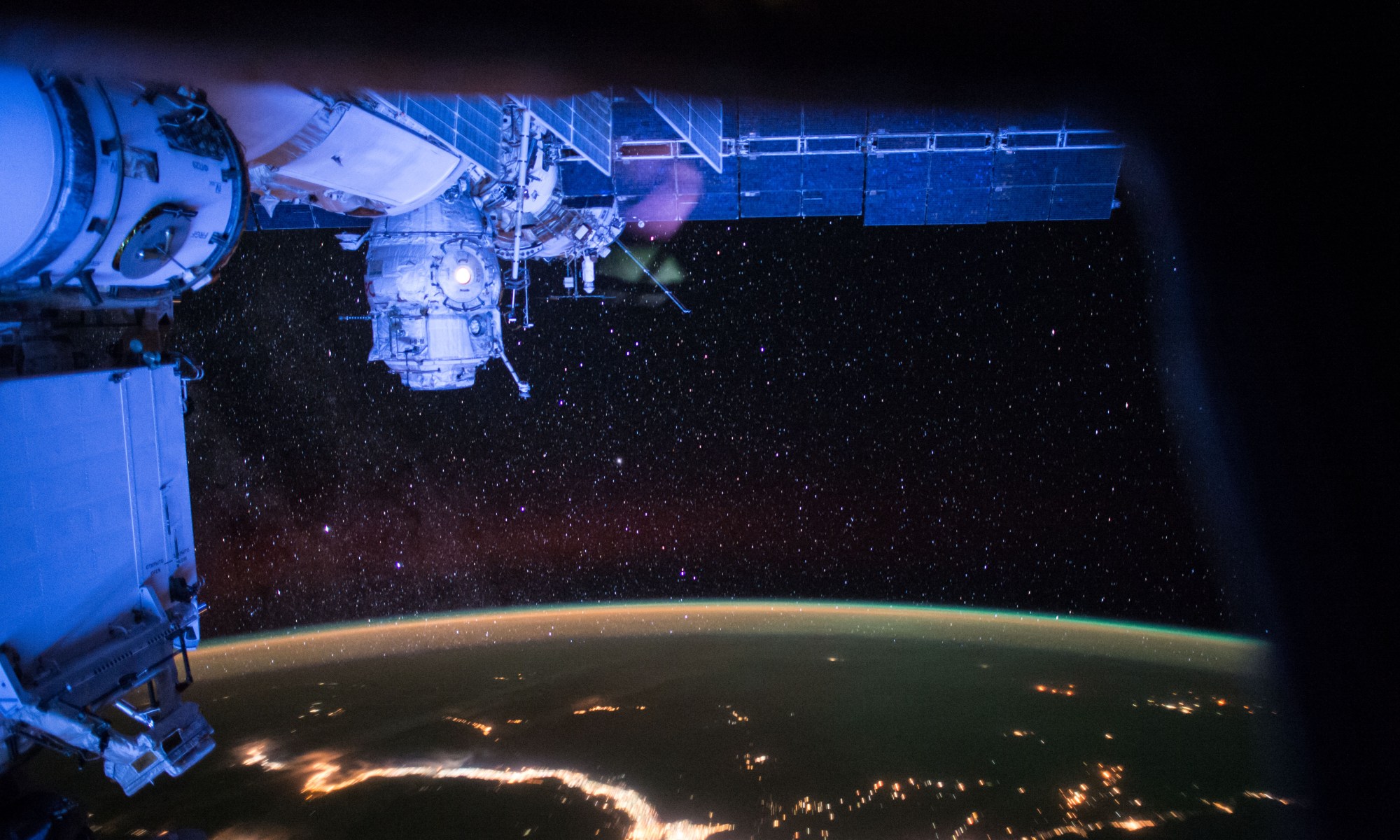
A planetary human geography begins from the insight that spaces are co-produced by human and more-than-human forces. A city is not only shaped by planning, housing markets or mobility regimes, but also by heat, concrete, water, air and the technical systems that make urban life possible. An agricultural region is not simply a rural economy, but an arrangement among soils, organisms, ownership, weather, machines and forms of care. Even outer space is increasingly part of terrestrial geography, as satellite infrastructures reorganise how Earth is observed, valued and governed. The question, then, is how human geography can make the planetary concrete: not as a distant abstraction, but as something that appears in places, infrastructures and everyday conditions of life.
First, planetary human geography should analyse habitability as a spatial condition rather than as a merely environmental background. Habitability is often treated as the capacity of a place to support life. For geography, however, the issue is more concrete: how do particular spatial arrangements make life more or less possible? Recent work on planetary urbanization, for example, shows how socio-ecological crises are generated through the very processes that produce and sustain urban life. Habitability is therefore not only about survival. It concerns the conditions under which breathing, dwelling, moving, caring, beginning and transforming remain possible.
Second, planetary human geography should examine the knowledge infrastructures through which the planet is made knowable. Planetary boundaries, climate models, biodiversity indicators, digital twins, satellite images and risk maps do not merely represent the world. They help organise political attention. They define what counts as relevant, where responsibility is located and which futures appear actionable. This is where a deliberately simple question becomes useful: what if Earth is not only a system, but a planet? The point is not to reject Earth system science, but to ask how system-based knowledge formats shape political imagination, and what becomes visible when the planet is approached as a changing body of agencies, histories and spatial relations. Scholarship on Digital Twin Earth is useful here because it shows how planetary knowledge infrastructures do not simply describe Earth, but increasingly turn it into an object of simulation, experimentation and intervention.
Third, planetary human geography should rethink the political beyond the human-centred management of nature. The question is not only how environmental change affects states, borders or institutions. It is how more-than-human agencies become part of political life. A recent publication demonstrates that planetary politics is not a single doctrine, but can be imagined through different figures: territorial conquest, Gaia, and a broader sense of Earth. In Our Planetary Condition: Foundations for a Politics with the Earth, a forthcoming contribution relevant to political geography, my co-authors and I develop this question as one of political architectures capable of registering the collective agency of living, nonliving and technological forces. This matters for freedom because political action does not happen outside planetary relations; it depends on the conditions that allow agents to appear, act, withdraw, contest and begin anew.
This is not a call for human geography to become planetary science. Its contribution is to keep the planetary spatial, empirical and political: to study how it materialises in heat-exposed neighbourhoods, modelled river basins, data centres, transition mines and orbital infrastructures.
The planetary is therefore not simply a larger scale. It is a different way of asking what space is when Earth can no longer be treated as a stable background to human affairs. This matters for planning, infrastructure, governance and democratic debate. Heat policies, river restoration, energy transitions, digital infrastructures and Earth observation systems all rely on assumptions about what the planet is and how it should be acted upon. Human geography can make these assumptions visible. It can show how worlds become habitable, how planetary knowledge is made, and how politics changes when we recognise that we do not live on a planet, but are part of it.
Planetary human geography in a nutshell
- The planetary is not the global at a larger scale. It marks a shift from seeing Earth as a connected surface to understanding humans as part of Earth’s changing conditions.
- For human geography, this opens three tasks: studying habitability as a spatial condition, examining the infrastructures make Earth knowable as a planet, and rethinking politics with more-than-human agencies.
- The political question is not only how societies respond to planetary change, but how freedom and collective action can be sustained within the planetary relations that make them possible.
About the author: Frederic Hanusch is Professor of Planetary Change and Politics at Justus Liebig University Giessen, Germany. His work explores how the humanities and social sciences engage with planetary change and how planetary politics can be analysed and designed. His publications include Democracy and Climate Change, The Politics of Deep Time, Seeds for Democratic Futures, and Our Planetary Condition: Foundations for a Politics with the Earth.
Suggested further reading
Brönnimann, S., and J.Wintzer. 2026. “Climate Data Agency: Intra-Active Knowledge Production Between the Human and Non-Human World”, Transactions of the Institute of British Geographers. Available from: https://doi.org/10.1111/tran.70050.
Clark, N. and Bronislaw Szerszynski, B. (2020) “Planetary Social Thought: The Anthropocene Challenge to the Social Sciences”, Polity.
Hanusch, F., Bauer, L. B., Finkelstein, C., and Leggewie, C. (forthcoming). “Our Planetary Condition: Foundations for a Politics with the Earth”, MIT Press.
Kumar, A., Singh, C., Hermanus, L., Kamath, L., Kimari, W., Pelling, M. et al. (2025) “Crisis of imagination/(re)imaginations for a (climate) crisis”, Transactions of the Institute of British Geographers. Available from: https://doi.org/10.1111/tran.70023
Verne, J., Marquardt, N. and Ouma, S. (2025) “Planetary Futures: On Life in Critical Times”, Geography Compass. Available from: https://doi.org/10.1111/gec3.70015.
How to cite
Hanusch, F. (2026, May) Beyond the global: Why human geography needs the planetary. Geography Directions. https://doi.org/10.55203/YPDK8837

