

By Basak Tanulku
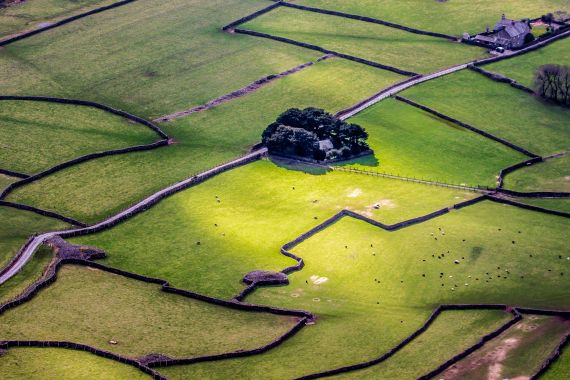
I have visited the Lake District, one of the most popular national parks of the UK, many times – across different seasons and with various people as well as on my own. I observed that, despite being a popular destination for tourists, the area remains fundamentally wild. This does not imply experiencing the “wild” through touristic activities such as wild camping, swimming, or face-to-face encounters with wolves. This means a feeling of loneliness, individuality, and freedom in an area full of wildlife and wild land. Let me explain what I mean by “wild” in the Lake District: rarely regarded as wild in a real sense, generating tensions around rewilding efforts and hill farming, an ancient sector which has shaped the Lake District as we know it.
Rewilding has emerged as a way to restore the wilderness in conservation sciences. Although there are different forms of rewilding, it is generally regarded as a method of reducing human presence and activity in sites to be restored. However, some criticisms suggest that rewilding could result in partial or complete gentrification of these areas . As Krauß and Olwig point out, pastoral landscapes in marginal regions undergo processes of abandonment, rewilding, and agro-environmental management, which may impact the wildlife in these areas, including flora and fauna. Furthermore, rewilding might lead to the decline of local cultures and alternative lifestyles. It could also turn these areas into sites primarily for the enjoyment of people from central regions.
The UK is a densely populated country separated from large land masses. Additionally, as Yarwood explains, protected areas in the UK are not managed directly by the government but by local authorities. While 74% of the protected land is owned privately, only 2% by the state, and it is inhabited and utilised by people. As argued by Carver and Fritz, these areas depend more on human activity than on natural processes, in contrast to other areas where the separation between humans and wilderness is more pronounced, such as Greenland, Antarctica, Alaska and Siberia.
Consequently, rewilding exerts pressure particularly on local cultures and practices. There are emerging efforts to reconnect humans and nature in protected areas in England, such as in Cornwall and new forms of rewilding in Scotland. Another notable initiative is “Wilderculture,” launched in 2018, which promotes regenerative upland farming across the UK and Europe to address the climate emergency, declining biodiversity, and challenges faced by farmers, such as declining profits.
The Lake District: wild or not?
The Lake District is England’s second-largest national park, established after the Peak District, receiving this status in 1951. In 2023, the Lake District attracted over 18 million visitors and more than 27 million tourist days (spending more than three hours a day).
The area offers a range of activities and facilities, from culinary experiences to outdoor amenities, arts, and tourism pursuits such as wild swimming and camping. It is also a popular spot for filming movies and TV series.
The Lake District contains many sites with different statuses (Special Areas of Conservation (SAC) like the Lake District High Fells, and Sites of Special Scientific Interest (SSSI) like Honister Crag, Scafell Pikes, etc..
The Lake District is at the heart of debates surrounding hill farming and rewilding efforts. Hill farming has been criticised as making the Lake District a “sheep-wrecked monument”, damaging its wildlife and wilderness. However, it also played a significant role in the area’s designation as a UNESCO World Heritage Site under the cultural landscape category in 2017.
A different wilderness competent with culture
A more nuanced assessment of wilderness can help find a balance between the natural and cultural elements of the Lake District, which have been shaped by intense human activity for thousands of years. To analyse the wild character of an area, not only physical, but also cultural and cyclical elements should be included.
The Earth: both above and below
In the analysis of wilderness character, topographical elements are usually examined by considering their relative remoteness and naturalness, which demarcates from an idealised view of wilderness to a softer, more nuanced version. Additionally, this analysis often relies on human perception —features like ruggedness are important to judge whether an area is truly wild.
If the wilderness character of the Lake District is assessed through more standardised values and categories—rather than subjective ones— and includes all topographical elements (such as sky, sound, smell, and underground features like caves and barrows) in terms of their relational remoteness and naturalness, the area can be regarded as wild in its present form.
Wildlife
Wildlife that has been neglected in wilderness studies should be included in the analysis. For example, instead of focusing on reintroducing wolves (or other extinct apex predators), perhaps it would be better to consider other wildlife, along with the diversity of the existing fauna. We desire to see wolves because they symbolise wilderness in many cultures. However, we might overlook the importance of the current wildlife if they are not deemed wild enough.
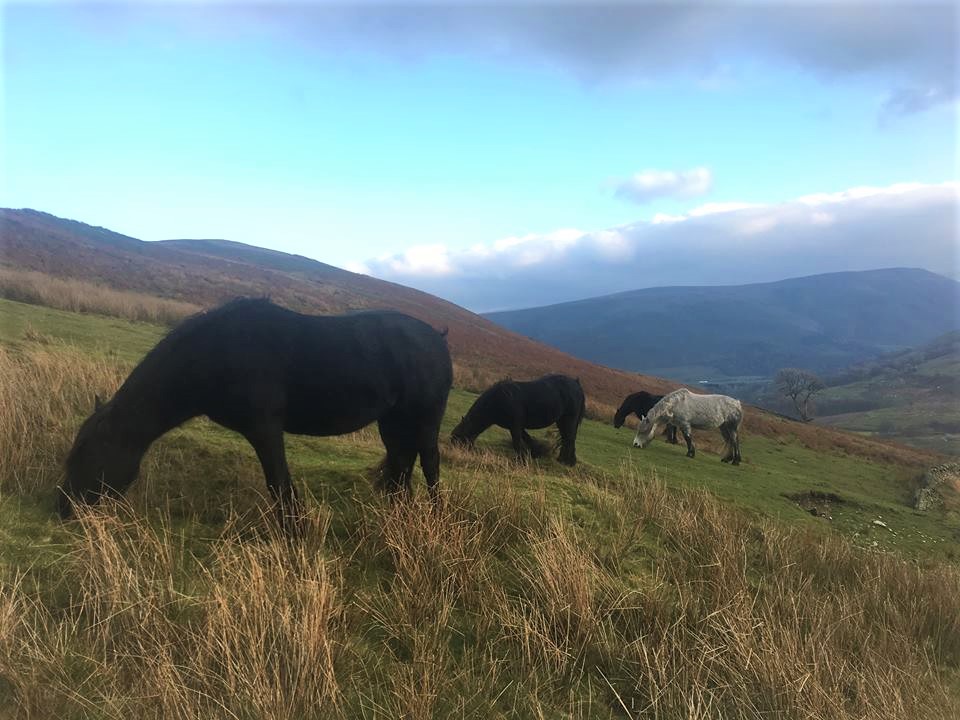
The Lake District boasts steady and abundant wildlife, ranging from smaller mammals (deer, badgers, and hares) to birds (golden eagles, bats, lizards, falcons), as well as amphibians, insects, fungi, and mosses. Once a wildlife survey is carried out, including all species present in a given area—even those not regarded as wild—is vital for assessing the area’s wilderness character.
Local culture
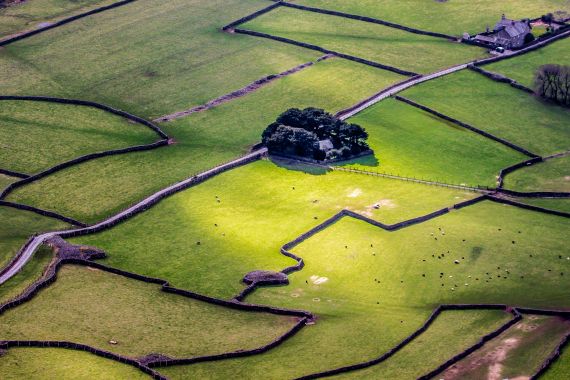
Another important aspect is to examine the effect of local cultural practices on topography and wildlife. Culture here is not something which harms or reduces wilderness (by causing noise, pollution, for example), but rather something which protects/increases its wilderness character.
Ruins from the past: not cultural but also natural
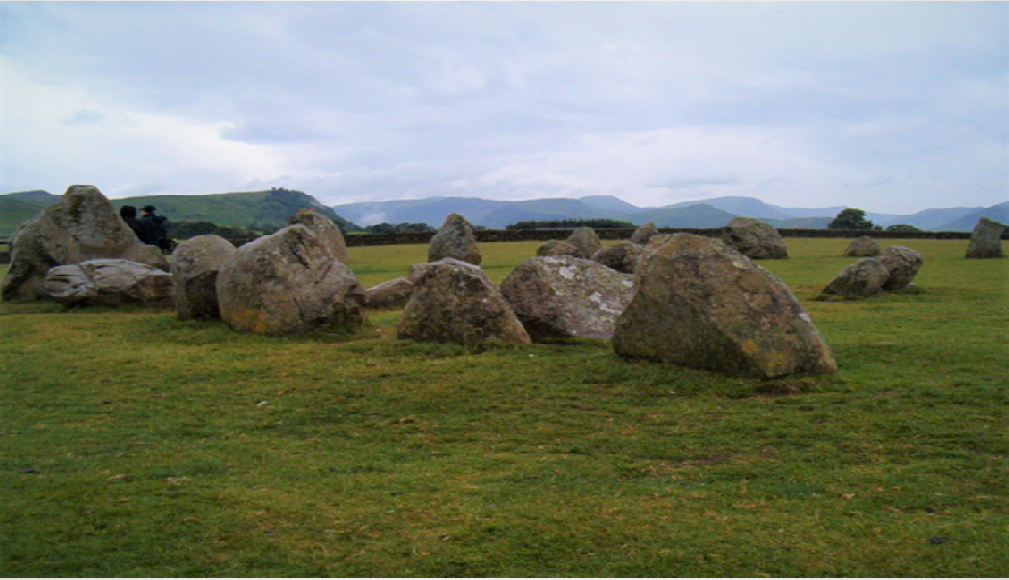
Remnants from the past help safeguard wildlife or specific areas used by locals at certain times of year, such as ritual sites like sacred trees, cemeteries, or wells. These locations can be important for their heritage—cultural, architectural, or symbolic—and some ruins serve as nesting sites for birds or mammals. Whether abandoned or not, these sites may hold value because of legends or stories linked to them. They help protect wildlife and soil while enhancing the area’s sense of remoteness and naturalness. Since they are rarely visited or used, these sites can be ideal habitats for local wildlife, especially if the soil quality is good, making them suitable for rewilding efforts.
Time: hidden actor in wilderness research
Another factor to consider when measuring the Lake District’s wilderness character is time (cycles). “Cyclical wilderness” does not refer to how people perceive wilderness at different times or how wildlife in an area has changed over a period. Instead, it pertains to changes in wildlife across seasons, such as summer and winter, or day and night. Assessing wilderness character through cycles provides insight into how an area’s wilderness qualities fluctuate based on cyclical changes. Seasonal cycles also affect the number of visitors and the amenities they utilise, while concurrently increasing wildlife diversity. An example of cyclical wilderness is “The Dark Skies Project” by the local conservation charity Friends of the Lake District, which aims to reduce artificial light to enable people to observe the sky and stars. The Dark Skies Project also benefits wildlife since half of the animals are nocturnal. Artificial light disrupts their habitats, causing a decline in local wildlife.
To conclude
Instead of seeing the Lake District as a barren and sheep-wrecked area, I evaluate its current features to determine whether it can be considered “wild” enough. My approach considers both its natural and cultural aspects, often criticised in media debates. While doing this, I am not opposed to rewilding. I suggest that when assessing the wild character of the Lake District (and similar areas), we should focus on which human activities can coexist with the wilderness rather than removing all human presence.
Basak Tanulku is an independent scholar based in Istanbul, Turkey, with a PhD in Sociology from Lancaster University. She has contributed to several Royal Geographical Society (RGS) research groups, including the Social and Cultural Geography Research Group (SCGRG) and the Urban Geography Research Group (UGRG), serving in various committee roles. Recently, she has advocated for the recognition of independent geographers within the academic community, addressing challenges such as limited funding and restricted access to knowledge and data sources.
Tanulku’s research focuses on borders and boundaries, housing—including gated communities and related forms—urban transformation, vacant urban land, and alternative urban spaces. She also conducts research on Cumbria and the Lake District, examining the interplay between cultural and natural heritage, rewilding initiatives, the region during the Dark Ages, and sites associated with local folklore.
Suggested further reading
James, Z. (2025) Staged ecologies: Aesthetics, nature and infrastructure in the late-modern metropolis. Transactions of the Institute of British Geographers. Available from: https://doi.org/10.1111/tran.70004
Jewell, H. (1994). The North-South Divide: Origins of Northern Consciousness in England. Manchester: Manchester University Press.
Madsen, E.K., Daniels, M., Montgomery, C., Stillman, N., Homer, N., Lambert, C. et al. (2025) Where the wild places are: Factors associated with people’s favourite local and national wild place in the United Kingdom. The Geographical Journal. Available from: https://doi.org/10.1111/geoj.12607
Marshall, J. D. (1981). Portrait of Cumbria. London: Robert Hale.
Tanulku, B. (2019). ‘The English Lake District: A Culturally Wild Landscape’. International Perspectives: International Journal of Wilderness. Available from: https://ijw.org/english-lake-district/
How to cite
Tanulku, B. (2026, March) Choosing wolf or sheep? A new wilderness through the case study of the Lake District. Geography Directions. https://doi.org/10.55203/ZMVD7496
 Geography Directions