

By Yana Wengel, Hainan University-Arizona State University International College and Ling Ma, Chinese University of Hong Kong
In September 2025, a collaboration between the outdoor brand Arc’teryx and artist Cai Guo-Qiang staged a large-scale fireworks performance on the Tibetan Plateau, in Gyangze County, at an altitude of around 5,500 metres. It was marketed as a tribute to “mountain culture” and produced dramatic images of coloured smoke and pyrotechnics that travelled quickly across global social media. Almost as quickly, it triggered backlash. Internet users argued that the performance treated a fragile high-altitude ecosystem as an empty canvas for spectacle and corporate promotion, while sidelining local cultural meanings and the lived realities of pastoral livelihoods. In response, both Arc’teryx and Cai issued apologies and pledged to work with environmental experts and assess potential ecological impacts.
This episode represents not only a branding and art controversy, but it also raises a geographical question about how mountains (and other natural landscapes) are represented, mobilised, and governed. Who gets to decide what happens in natural places, whose values count, and what is obscured when spectacular imagery circulates faster than ecological care?
When does “nature” becomes a backdrop?
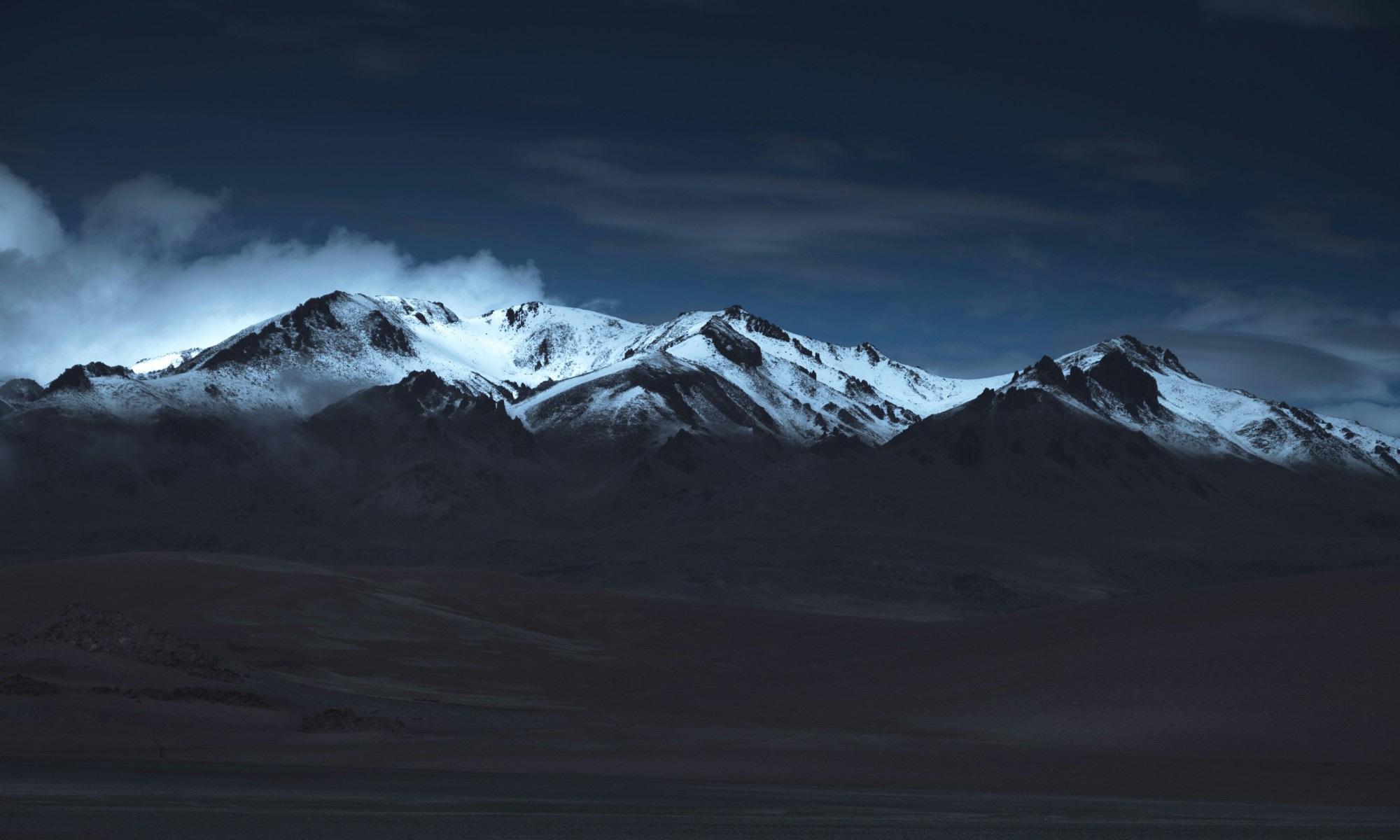
Mountain landscapes represent fragile ecosystems and are home to remote, culturally diverse mountain communities; however, they are repeatedly framed as scenery. Contemporary landscapes often serve as a backdrop for achievement, art, lifestyle marketing, and tourism.
Rising Dragon’s performance illustrated how quickly “backdrop thinking” can appear, even in campaigns that borrow the language of sustainability. A fireworks show lasts minutes, but its footprint may be longer. The controversy also made visible something that mountain communities have long known. In such environments, the impact is not only visual but also cultural, sensory and embodied.
In our commentary, we drew on a thematic analysis of 43 social media posts (each with substantial comment threads) on Weibo and Little Red Book discussing the event. Many commenters articulated a distinctly ethical stance by questioning human exceptionalism, demanding accountability, expressing concern for wildlife and fragile grasslands, and mobilising collective critique (including boycotts and memes). In other words, this was not simply “internet outrage”. It looked like an emerging form of ecological citizenship when people began debating what is acceptable in more-than-human worlds.
Are mountains just passive canvases and spaces of power representation?
Geography is unusually well placed to make sense of this case because it holds together three things that are often separated: material environments, cultural meaning, and power. We look at the Rising Dragon fireworks from a posthumanist lens. This approach builds on work that foregrounds more-than-human agency and ethics, including animal geographies and wider posthuman scholarship. Posthumanist geography challenges the habit of treating landscapes as inert matter and insists that environments participate in what becomes possible. Mountains are more than just distant landscapes. Their thin air, strong winds, glimmering snow, plants, animals and local communities create a unique environment. This environment allows for amazing experiences but also pushes back against them. This perspective is important ethically. If we see mountains as active participants rather than just backgrounds, we need to reconsider our questions. It is not only about whether humans left a mark. We should also ask what connections were formed with the soils, the atmosphere, the wildlife, and the local surroundings during these events.
How do mountain geographies add scale, history, and vulnerability?
Mountains cover about a quarter of Earth’s surface and sustain livelihoods in demanding settings, where steep terrain, isolation, and environmental volatility make everyday life and work more precarious. They have also been repeatedly remade through powerful imaginaries: sacred peaks, sublime scenery, scientific laboratories, adventure frontiers, and national symbols. Those histories matter because contemporary branding often recycles older conquest narratives, even when it adopts modern “green” language. Classic work on the emergence of mountain-based adventure tourism helps trace how mountains became sites of aspiration and commercialisation, while political ecology reminds us how “green” projects can reproduce extractive logics.
Who is included, and who is left out, in the making of place?
Rising Dragon also raised an uncomfortable governance question. Who had the power to author the meaning of this place? The campaign centred on a dragon motif, while local cultural symbolism (and local decision-making) was largely absent from the public story. This is a familiar pattern in mountain tourism and conservation. The decisions are made by states, corporations, or global organisations, while community knowledge is treated as secondary. In the commentary, we included local accounts describing the fireworks as physically disruptive, with ground-shaking sound and acrid smoke, and concerns about slow ecological recovery in high-altitude grasslands. Those accounts underscore that “impact” is not measured solely by formal protected-area boundaries. It is experienced in everyday life, through bodies, animals, and livelihoods.
Key takeaway messages:
1. Mountains are more than scenery: They are ecosystems, cultural landscapes, and homes. Treating them as empty canvases for spectacle normalises commodification and erases both fragility and meaning.
2. Brands that trade on mountain symbolism inherit responsibility: Outdoor companies benefit from the aura of authenticity that mountains provide. Ethical engagement, therefore, requires more than sustainability slogans. It requires restraint, careful impact assessment, transparency, and a willingness to say no to spectacle-driven interventions.
3. Inclusion is not a “nice to have.” Community participation is part of cultural sustainability and environmental stewardship. It is also a knowledge issue as local ecological understanding is often more precise than external assumptions, especially in environments where recovery is slow, and thresholds are hard to see.
4. Posthumanist thinking is practical, not abstract. It reframes nature ethics holistically, considering relations and consequences among humans, animals, atmospheres, soils, and temporalities. It pushes debate from “good versus bad publicity” towards “what ontology of mountains is being produced, and with what material effects?”
About the authors: Yana Wengel is an Associate Professor at Hainan University-Arizona State University International College. Ling Ma is a researcher within the Department of Geography and Resource Management at The Chinese University of Hong Kong,
Suggested further reading
Apollo, M., & Wengel, Y. (2021) Mountaineering Tourism: A Critical Perspective. Available from: https://doi.org/10.4324/9781003095323
Sherpa, S., & Wengel, Y. (2023). The Sherpas and Their Original Identity. Available from: https://doi.org/10.65325/EB10576
Wang B, Zhou Q. (2020) Climate change in the Chinese mind: An overview of public perceptions at macro and micro levels. WIREs Climate Change. Available from: https://doi.org/10.1002/wcc.639
Williams N, Patchett M, Lapworth A, Roberts T, Keating T. (2019) Practising post-humanism in geographical research. Trans Inst Br Geogr. Available from: https://doi.org/10.1111/tran.12322
How to cite
Wengel, Y., and Ma, L. (2026, February) Can the Himalayas speak when brands make them a stage? Geography Directions. https://doi.org/10.55203/TDAY3060
 Geography Directions