

By Tinashe P. Kanosvamhira, University of Leeds
Community gardens may look like simple patches of vegetables, herbs and flowers. But beyond this they are places of survival, resilience, and quiet resistance against a long history of exclusion. In my recent Geo article, I explore how these spaces help communities reimagine deprived neighbourhoods. By drawing on the work of French philosopher Henri Lefebvre, particularly his idea that space is socially produced, I show how gardens beyond providing food they serve as spaces for justice, memory and belonging. Lefebvre argued that space is socially produced, which simply means that places gain their meaning from the people who use them. In other words, a garden becomes a space where people share stories, build relationships, and express who they are. In this way, gardens help communities create a sense of hope and belonging in areas often overlooked or neglected.
Growing food, growing community
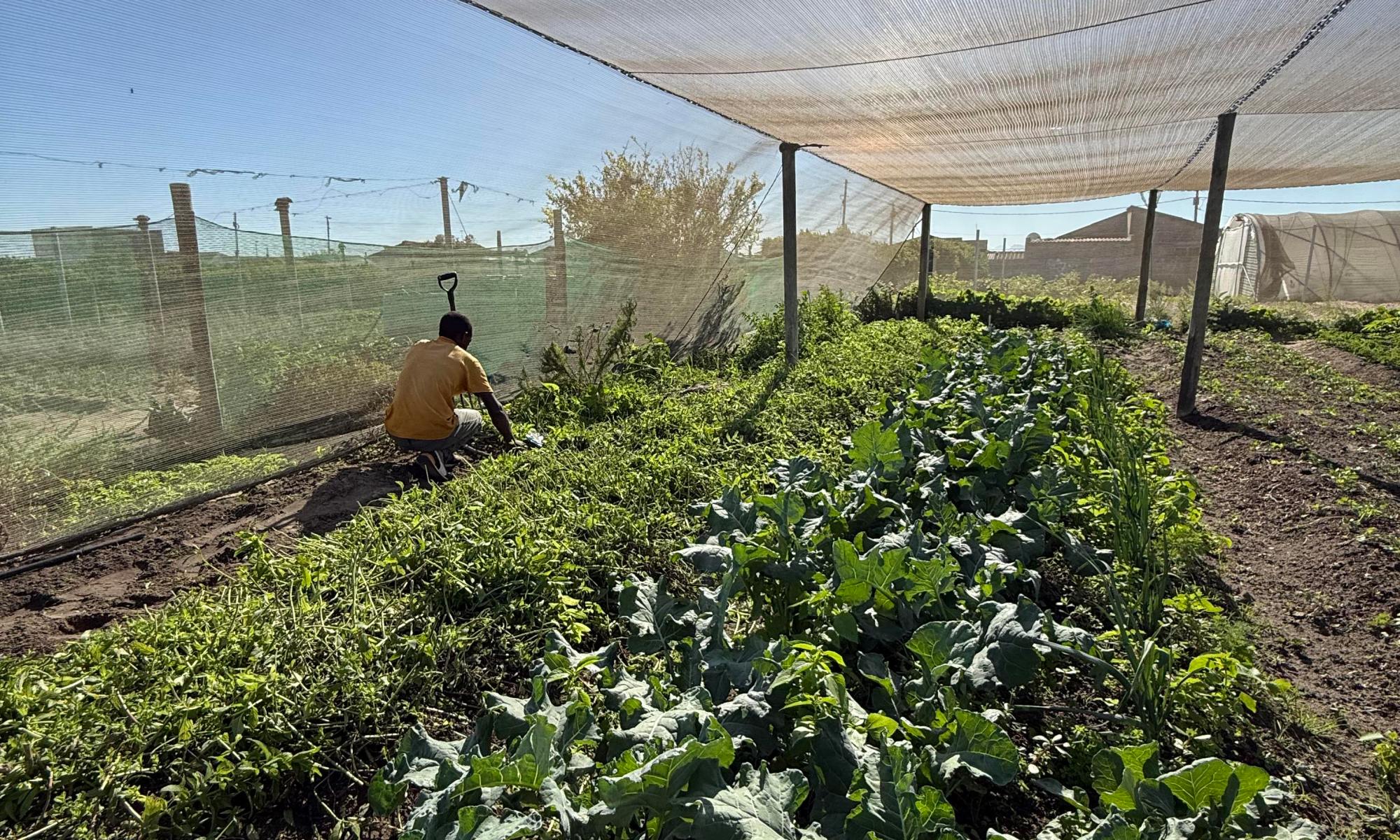
Cape Town is home to the Cape Flats, a vast area on the edge of the city, created largely through apartheid-era forced removals. Communities here face high unemployment, limited services and ongoing violence. Amidst these challenges, thousands of residents tend to small plots sometimes in schoolyards, sometimes on unused municipal land. On the surface, these gardens are about growing food. They provide fresh produce in neighbourhoods where affordability and access are major issues. But they also offer something deeper: a way of remaking neglected spaces into places of value. One gardener put it simply: “This garden is more than just a place to grow food. It’s a place where we meet, talk and share ideas. It keeps the community together.”

A Lefebvrian lens: perceived, conceived, lived space
To unpack what gardens mean, I used Lefebvre’s spatial triad, which sees space as:
• Perceived: the physical, everyday practices that shape space.
• Conceived: the official plans, policies and ideas of planners and the state.
• Lived: the symbolic, emotional and cultural meanings attached to space.
In the Cape Flats, these three dimensions collide.
Perceived space is visible in the act of turning land into vibrant gardens. Clearing rubbish, planting crops, and building compost heaps are acts of claim-making. Through labour, gardeners assert their right to the city.
Conceived space reflects how the state frames gardens. Policies often treat them as temporary “self-help” projects for the poor, rather than serious interventions in urban planning. This limits their potential and leaves them vulnerable to eviction when land is earmarked for other uses.
Lived space is about memory and identity. For many, gardening connects them to rural traditions or to a sense of cultural belonging disrupted by apartheid. Planting indigenous herbs, sharing seeds, or teaching younger generations are all ways of reclaiming history and building solidarity.

Quiet resistance in the city’s margins
Community gardens are not loud protests, but they are political spaces. They represent a form of quiet resistance. By consistently working the land, gardeners expose the limits of state control. They refuse to accept that vacant land is “wasted” or that food must come from distant supermarkets. Instead, they produce a commons; spaces owned not by individuals or corporations, but by the community.
At the same time, these efforts remain fragile. Most gardens lack formal land rights; many operate on verbal agreements with schools or municipalities. Some have been relocated when development projects took precedence. Without secure tenure and stronger support, their future is uncertain.
Why this matters
The Cape Flats story speaks to wider urban debates across the Global South. In many cities, residents face legacies of segregation, inequality and informality. Yet, through gardening, communities carve out spaces of care, solidarity and resilience.
These gardens are not just about alleviating hunger. They challenge neoliberal logics that treat land as a commodity and people as passive consumers. They remind us that cities can be made differently, from the ground up. For policy-makers and planners, the lesson is clear: community gardens deserve more than token support. They need secure land tenure, integration into urban planning frameworks, and recognition as vital social infrastructures.

Towards more just urban futures
If we view gardens only as “small” or “local,” we miss their broader significance. In the Cape Flats, they are everyday enactments of the “right to the city.” They show how marginalised communities use cultivation to reshape urban life, even in contexts of structural disadvantage.
As climate change, food insecurity and urban inequality intensify, these lessons are urgent. Gardens remind us that justice is also about seeds planted in soil, conversations held between neighbours, and the slow, patient work of tending the land. In this way, community gardens are seeds of a more just city.
About the author: Tinashe P. Kanosvamhira is a Lecturer in Critical Human Geography in the School of Geography at the University of Leeds, based in the Social Justice, Cities and Citizenship cluster. His research focuses on African urbanism, food systems, spatial justice, and sustainable urban futures.
Suggested further reading
Kanosvamhira, T.P. (2025) Urban oases and spatial injustices: Community gardens in the Cape Flats through a Lefebvrian lens. Geo: Geography and Environment. https://doi.org/10.1002/geo2.70027
Kanosvamhira, T. P., & Tevera, D. (2024). Unveiling quiet activism: Urban community gardens as agents of food sovereignty. Geographical Research. https://doi.org/10.1111/1745-5871
Moragues‐Faus, A. (2020). Towards a critical governance framework: Unveiling the political and justice dimensions of urban food partnerships. The Geographical Journal. https://doi.org/10.1111/geoj.12325
How to cite
Kanosvamhira, T. P. (2025, October) Cape Town community gardens: growing justice. Geography Directions. https://doi.org/10.55203/GXFC4429
 Geography Directions