

By Sunit Bagree, Results UK & University of Sussex
Negative news is everywhere. It can feel all-encompassing and overwhelming. Yet, if one looks closely enough, there are some candles glimmering in otherwise dark caverns.
It is true that the global state of nutrition is extremely poor. Humanity is falling well short of Sustainable Development Goal 2 (including the target to end all forms of malnutrition) and the World Health Assembly global nutrition targets.
However, as a new briefing from Results UK demonstrates, positive change is occurring even in two of the regions worst affected by malnutrition, namely Sub-Saharan Africa and South Asia. Using real-life examples, the briefing highlights how the lives of severely undernourished children are being saved in Pakistan, and how entire communities are gaining access to sufficient nutritious food in Burkina Faso.
The UK Government can and should build upon these stories of hope in its international humanitarian and development work in Sub-Saharan Africa and South Asia.
Saving lives with ready-to-use therapeutic food
Wasting occurs when children are too thin for their height. More than half of all children affected by wasting globally live in South Asia. Severe wasting is the most lethal of all forms of child undernutrition.
Ready-to-use therapeutic food (RUTF), a high energy and micronutrient-dense paste, has revolutionised the treatment of severe wasting for children under five without other medical complications. Amazingly, it has a cure rate of over 90% when used as part of a community-based malnutrition programme. RUTF is also highly convenient: it has a two-year shelf life, does not require refrigeration, can be consumed directly from its one-dose foil sachet, possesses an appealing taste, and is easily digestible.
RUTF has proved to be a powerful tool in Pakistan’s struggle against severe wasting. In 2018, the Government of Pakistan (GoP) accepted that a package of essential nutrition interventions, including RUTF, should be integrated into the routine services delivered through primary healthcare. The GoP is seeking to develop the capacity of community health workers to make this a reality.
More specifically, in partnership with multilateral institutions and civil society organisations, the GoP has developed national guidelines to steer programming to address severe wasting. It is also notable that Pakistani academics and medical practitioners have been involved with some innovative research on how RUTF positively impacts children’s developmental potential (and not just their weight gain).
Putting nutrition at the core of agriculture
More than any other region of the world, Sub-Saharan Africa has the highest prevalence of food insecurity and the greatest challenges in terms of affordability of a healthy diet. Nutrition sensitive agriculture (NSA) promotes the sustainable production of diverse, nutrient-rich foods that improve dietary quality and nutritional outcomes for all. As a consequence, NSA integrates nutrition goals into agricultural development.
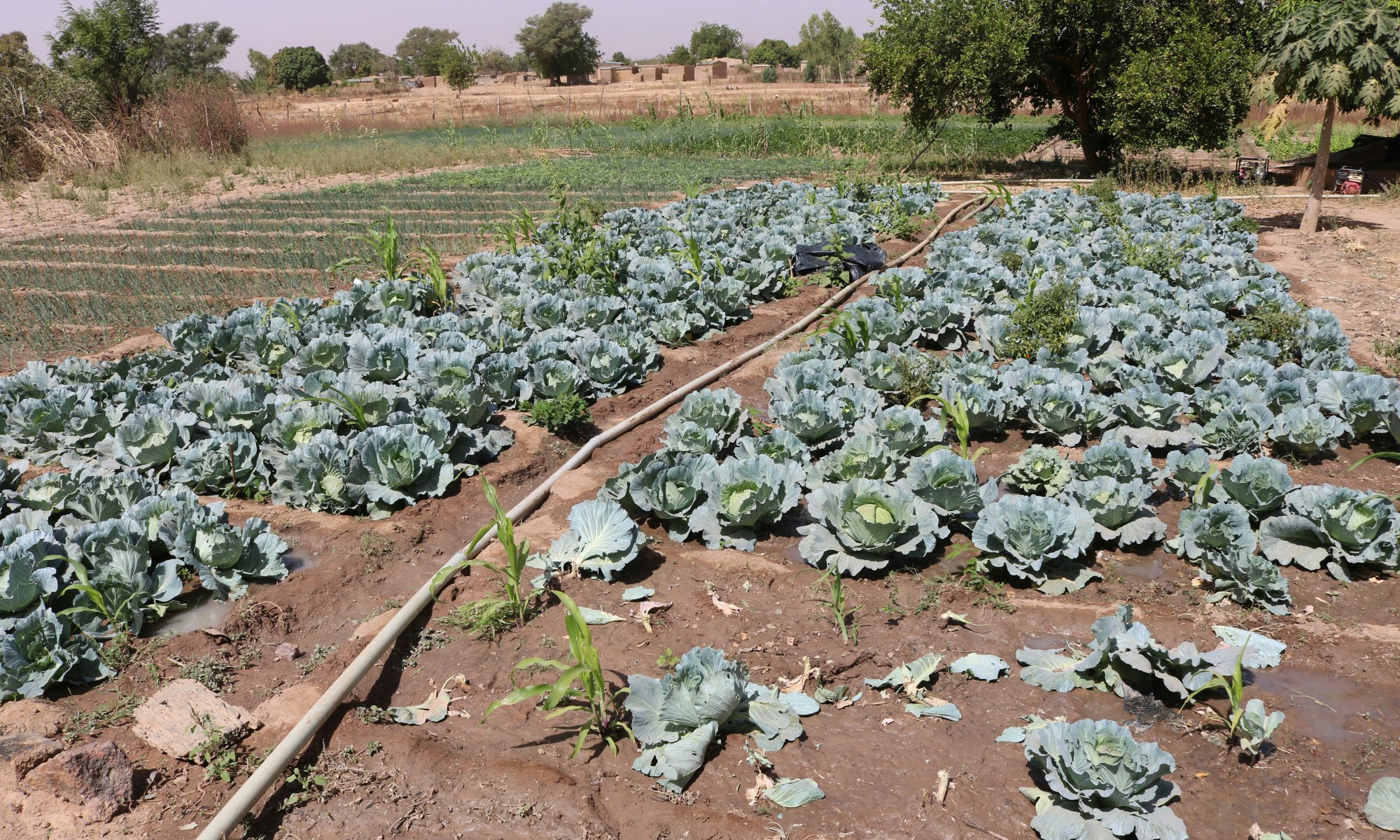
Enhanced homestead food production (EHFP) is an approach to NSA pioneered by Helen Keller International. Under EHFP, model farms are established and managed by women in their local community. At these farms, women learn improved agricultural practices. Moreover, interactive nutrition education is provided by community health groups, which improves women’s understanding of malnutrition’s causes and solutions, and promotes behaviour change. Participating women are then supported to develop their own gardens.
EHFP programming commenced in eastern Burkina Faso in 2009. Just two years later, rigorous evaluations determined that it had already generated multiple benefits. Among children benefiting from the programme, the prevalence of wasting reduced by 9% and diarrhoea decreased by 16% compared with children in control villages. This was unsurprising as, compared with women in control villages, participating women owned more agricultural assets, produced more nutritious foods, experienced lower underweight prevalence, enjoyed greater household decision-making power, and possessed greater nutrition knowledge.
EHFP works because it adopts a holistic approach to tackling malnutrition and the marginalisation that drives it. In addition, the EHFP approach is driven by high-quality evidence, a genuine commitment to learning and the active promotion of knowledge sharing within and across communities.
Challenges to overcome
Despite these successes, clear challenges remain. One major challenge is the lack of investment. For example, according to UNICEF (which procures 75-80% of RUTF globally), only one-third of those children in need of RUTF in Pakistan receive it, with more than 2.4 million children globally unable to access the product due to funding shortages. Similarly, in spite of important criticisms of the US Agency for International Development’s (USAID) nutrition strategy, the decimation of USAID has negatively affected NSA programmes, including in Burkina Faso. Recent cuts to official development assistance (ODA) by other states, including the UK, have also aggravated the lack of funding for proven interventions.
Another major challenge is the need to consistently place tackling inequalities at the heart of policy. For example, international donors should promote the in-country production of RUTF. Local production of RUTF is becoming increasingly efficient in Sub-Saharan Africa and South Asia. Procuring locally produced RUTF can generate economic benefits, enhance food security and increase the sustainability of the product. Similarly, some UK ODA for agriculture, particularly to Sub-Saharan Africa, has been criticised for widening economic disparities by failing to place the priorities of smallholder farmers above those of large agribusinesses.
So what should the UK Government do? First, it is essential for the UK to reverse its ODA cuts and increase spending on nutrition (and encourage other donors and Global South governments to do the same). The targeting of ODA should prioritise Sub-Saharan Africa and South Asia, as these regions are where it is most needed. Second, the UK ought to increase its investment in the UNICEF-led Child Nutrition Fund, which supports the local production of RUTF. Third, the UK needs to ensure that all of its investments in agriculture improve nutrition in ways that reduce socio-economic inequalities.
We need our political leaders to light more candles – and make them all glow.
About the author: Sunit Bagree is Senior Policy Advocacy Officer at Results UK and a Research Associate in International Development at the University of Sussex.
Suggested further reading
Beacham, J. (2022) Planetary food regimes: Understanding the entanglement between human and planetary health in the Anthropocene. The Geographical Journal. Available from: https://doi.org/10.1111/geoj.12407
Global Nutrition Report (2022) Global Nutrition Report: Stronger commitments for greater action. Bristol: Development Initiatives. Available from: https://globalnutritionreport.org/reports/2022-global-nutrition-report/
International Fund for Agricultural Development (2015) How to do integrated homestead food production (IHFP). Rome: IFAD. Available from: https://www.ifad.org/en/w/publications/how-to-do-note-integrated-homestead-food-production-ihfp-
Sonnino, R., Marsden, T. and Moragues-Faus, A. (2016) Relationalities and convergences in food security narratives: Towards a place-based approach. Trans Inst Br Geogr. Available from: https://doi.org/10.1111/tran.12137
How to cite
Bagree, S. (2025, September) Good news stories about nutrition in the Global South exist – but our leaders must build upon them. Geography Directions. https://doi.org/10.55203/QRUJ3395
 Geography Directions