

By Ana Laura Zavala Guillen, Northumbria University
The translation of the article ‘Geographies of slavery in the Les Malouines/Las Malvinas/Falkland Islands: The Maroon connection’, published in Transactions of the Institute of British Geographers (TIBG), marks an inaugural moment. This is the first translation project led by TIBG to be interpreted in a language other than English, constituting an exercise in critical openness toward other possible worlds.
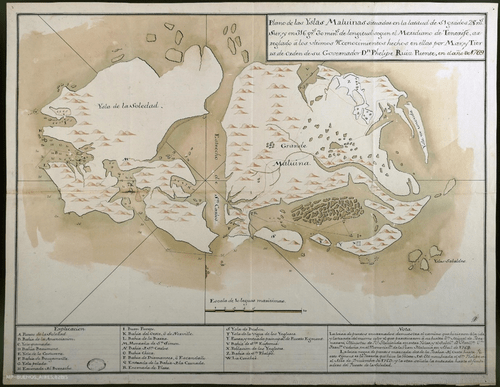
The text translated here reflects on an insular territory left behind—the Malvinas Islands—located in the South Atlantic. Claimed by the Argentine Republic, these islands are part of the British Overseas Territories, the Falkland Islands, and represent a long-standing geopolitical dispute between the so-called Global North and South.
This dispute, often reduced to the 1982 war between Argentina and the United Kingdom, is part of a European (post)colonial project in southern Latin America. From this perspective, the Malvinas and their trajectories remain one of those wounds that echo as metaphors of past, present, and future dispossessions. This article also joins efforts to make visible the Afro-descendant and Black geographies that have been denied and silenced in the official national discourses of the Río de la Plata region—those of resistance and re-existence by fugitives from slavery, who also reached the Malvinas, an archipelago largely imagined as inhospitable and white.
It is not coincidental that I write this work from my position as an Argentine historical geography scholar who has chosen to live in the United Kingdom for years, inhabiting an interstice where affective and intellectual loyalties are constantly under scrutiny. I did not undertake this process of interpreting the article into Spanish alone, but accompanied by others: I now stumble not only in English—perhaps as an unconscious act of resistance—but also in my mother tongue. Translation, in this sense, does not merely pose tensions between English and Spanish. It also opens up conflicts within each language and within both individual and collective feelings/ thoughts [sentirpensares]. Some words do not translate easily, ideas that resist, meanings that shift or become unsettled. And it is precisely in these displacements that something new can emerge.
Because to interpret is to acuerpar [to give our body] to difference so it may exist, to re-weave myself into my mother and father, their distinct voices, their races, their territories, and their frameworks of reference. This affective practice has allowed me, as the author, to attempt to reimagine these islands from other questions, other sensitivities that traverse latitudes and longitudes. It is from this implicated perspective that I wrote this text and interpreted it into the languages that inhabit me—seeking to expand and diversify the ways of thinking about the Malvinas/Falkland Islands and their legacies. And also, the legacies of two enslaved men, Antonio and Miguel, to whom I pay tribute and ask for permission to approach their story, whose names—chosen by their own people—were likely others we will never know. They resisted through escape, tracing a possible path for unexpected Latin American subaltern re-existences.
This translation hosted in Geography Directions will be the first of many.
La traducción del artículo ‘Geographies of slavery in the Les Malouines/Las Malvinas/Falklands Islands: The Maroon connection’, publicado en Transactions of the Institute of British Geographers (TIBG), marca un momento inaugural. Se trata del primer proyecto de traducción liderado por TIBG que se interpreta en una lengua distinta del inglés, constituyendo un ejercicio de apertura crítica hacia otros mundos posibles.
El texto que aquí se traduce reflexiona sobre un territorio insular dejado atrás, las Islas Malvinas. Con un reclamo de soberanía de la República Argentina, Falkland Islands forman parte de los British Overseas Territories, en disputa geopolítica histórica entre los llamados Norte y Sur Global.
Esta disputa, que ha intentado muchas veces reducirse al conflicto bélico de 1982 entre Argentina y el Reino Unido, es parte de un proyecto (pos)colonial europeo en el sur de Latinoamérica. Desde esta perspectiva, las Malvinas y sus trayectorias siguen siendo una de esas heridas que se replican como metáfora de pasados, presentes y futuros despojos. Este artículo también se une a los esfuerzos de visibilizar a las geografías afrodescendientes y negras que han sido negadas y silenciadas en los discursos oficiales nacionales de la región rioplatense. Aquellas de resistencia y reexistencia de fugitivos y fugitivas de la esclavitud, que también alcanzaron las Malvinas, mayoritariamente imaginadas como inhóspitas y blancas.
Tampoco es casual que escriba este trabajo desde mi posición de investigadora argentina experta en geografía histórica que, desde hace años, elige vivir en el Reino Unido habitando entonces un intersticio donde lealtades afectivas e intelectuales siempre están bajo escrutinio. Este proceso de interpretación de este artículo al español no lo he hecho sola, sino acompañada por otros: ya no solo tropiezo en el inglés, como una resistencia inconsciente, sino también ahora en mi lengua materna. La traducción, en este sentido, no solo plantea tensiones entre el inglés y el español, sino que también abre conflictos dentro de cada lengua y en el sentirpensar individual y colectivo. Hay palabras que no se traducen fácilmente, ideas que se resisten, sentidos que se mueven o se desajustan. Y es precisamente en esos desplazamientos donde algo nuevo puede emerger.
Porque interpretar esacuerpar la diferencia para que pueda existir, volver a entretejerme en mi madre y mi padre, distintos, sus decires, sus razas, sus territorios y sus marcos de referencia. Esta práctica afectiva me ha permitido, como autora, intentar reimaginar estas islas desde otras preguntas, otras sensibilidades cruzadas a lo largo y a lo ancho. Así escribí este texto y lo interpreté en las lenguas que me habitan, desde una mirada implicada que busca expandir y diversificar las formas de pensar las Malvinas/Falkland Islands y sus legados. Y también los legados de dos hombres esclavizados, Antonio y Miguel, a quienes honro y pido permiso para aproximarme a su historia, cuyos nombres elegidos por los suyos habrán sido otros que nunca conoceremos. Ellos resistieron en fuga, marcando un camino posible a las reexistencias subalternas latinoamericanas inesperadas.
Esta traducción acobijada en Geography Directions será la primera de muchas.
View and download the PDF of the translation below.
How to cite
Zavala Guillen, A.L. (2025) Geografías de la esclavitud en Les Malouines/Las Malvinas/Falklands Islands: La conexión cimarrona/quilombola. Translated by Zavala Guillen, A.L., Geography Directions. Available from: https://doi.org/ 10.55203/GAGR9826. (Original work published 2024 in Transactions of the Institute of British Geographers).
 Geography Directions