

By Suzan Ilcan, University of Waterloo
According to the United Nations Refugee Agency (UNHCR), forced displacement is at its highest level since World War II. On a global scale, over 123 million people are forcibly displaced because of massive conflicts, persecution, violence, and human rights abuses. During migratory journeys to access safety and protection, diverse groups experience movement restrictions due to border and migration governance controls. These types of control force them on precarious journeys. For example, many sub-Saharan migrants have climbed over the militarised fences of the Spanish enclaves Ceuta and Mellia and entered the European Union (EU). Other migrant groups from the Cameron, Democratic Republic of the Congo, and Syria have travelled to the Turkish Republic of Northern Cyprus and, often with the help of intermediaries or smugglers, have crossed irregularly into the Republic of Cyprus in search of protection, work, and a new life.
There are also various kinds of border resistance that involve displaced people, including asylum-seekers, engaging in practices of negotiation at border areas to access protection and create temporary spaces of waiting, living, and surviving. These people have been often confronted by hostile borders (such as militarized and state territorial borders) that make them feel insecure and apprehensive. These border environments foster particular feelings (fear, anger, anxiety, trauma) which can control or shape peoples’ movements and border crossings. However, in response, displaced people can engage in practices that mediate such border environments by exerting their agency such that their feelings of anticipation and hope for a safer life can influence their journeys across borders to access protection. I refer to these practices as “mediating atmospheric bordering”. I advance the view that memories of forced displacement are important for understanding the practices of mediating atmospheric borders during times of war and how displaced people seeking protection can navigate their mobility, gather information for their journeys, and work with intermediaries.
In this blog post, I draw on interviews and informal conversations with 55 formerly displaced Syrians now living in southern Ontario, Canada, many of whom are Canadian citizens, and highlight their insights and experiences. They spoke with me about their memories of displacement and migratory journeys within and outside of Syria to access safety and protection. These memories underline their experiences of fear, anxiety, anticipation, and hope as they negotiated the atmospheres of the war in the cities and towns where they lived in Syria, and later, as they travelled across territorial borders, sometimes with the aid of intermediaries, to ‘host’ states such as Egypt, Iraq, Jordan, Lebanon, and Turkey. Some people living in these host states also travelled to other countries in Europe, such as Cyprus, Germany, Greece, and Sweden, and to Canada.
It was clear from their memories of forced displacement that they were not victims, nor did they perceive themselves as victims. This view is counter to a dominant public framing of displaced people as ‘hopeless victims’, or worse, as a danger to national sovereignty and social cohesion. In fact, they participated in this research to register their memories, their stories, and their acts of agency, which bear similarity to how other refugees voice their traumatic memories in public ways, such as in the media, initiating online campaigns, and speaking at public events. It was important for them to convey how they confronted and addressed the devastation, despair, and hope that they felt during their movements to and across borders – the atmospheres of borders – during the war. In this way, it is essential to offer greater consideration to the memories of displacement they express and transfer across time and place.
Memories of displacement and movements
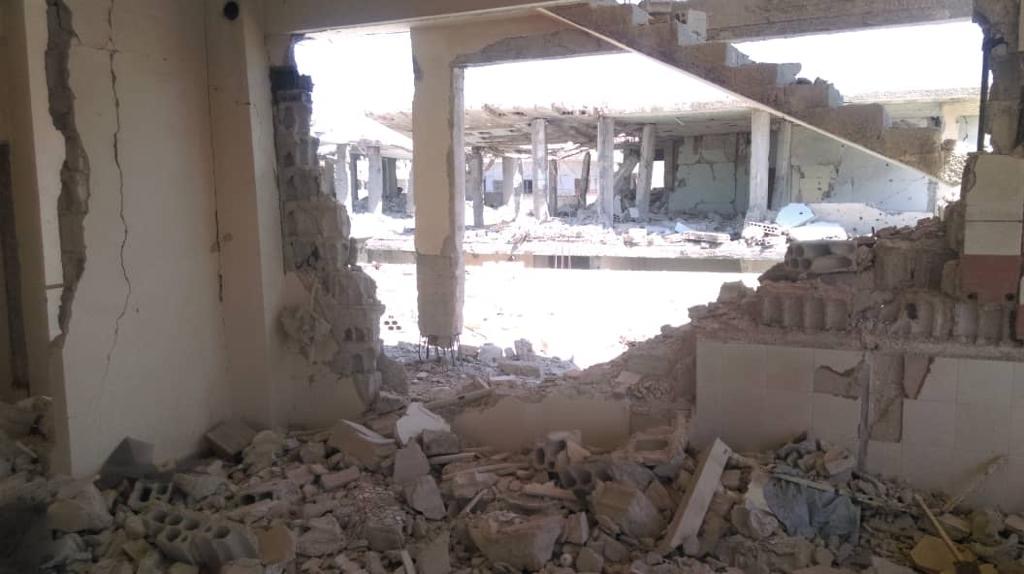
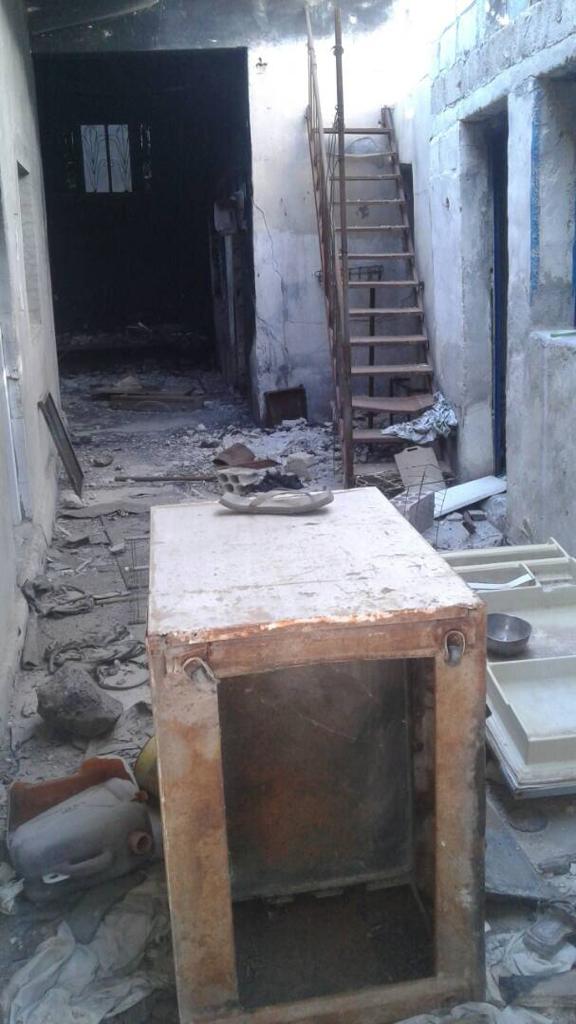
Displaced peoples’ movements within Syria during the war were underscored by many emotions, including those that aimed to shape their ability to stay in or escape a country, and to access resources and rights as refugees or asylum-seekers. For example, a grocery store owner, Samir, was living in a town just south of Damascus, Syeda Zainab, an area heavily controlled by the Syrian regime at the time. In 2011, he left the army and married his cousin, Noor. The couple remembered the atmospheres of the war and border checkpoints, particularly the heightened fear and apprehension they felt, which in turn regulated their movements: “The war had begun [in 2011]… there were protests, gun shots, lots of police” in nearby areas. The war made “everything so expensive. There was no gas. People would carry empty tanks on their backs looking for some fuel… People were looking for food; there was a shortage”.
In Noor’s words, “we were living in a borderland”. She recollected her hometown as being characterized by fear, desperation, and apprehension due to the war. “People were scared to go out. They didn’t feel safe doing so. There wasn’t work like before. We had rented a house, and you know, you need everything to run it. I was pregnant. He (her husband) would go to work and not be able to get the things we needed for the house.” One day, Noor remembered, they went outside, “and we saw the planes. They were bombing areas around us. We were in the middle of Syeda Zainab”. Noor returned home and was traumatized by what she saw on the TV: “hundreds of people dead” in her area. As Samir and his friends went to the streets to help the wounded and bring them inside, they “found body parts and flesh everywhere on the ground… some bodies were picked up, others weren’t.” They had been told that “the Shia – from Afghanistan, Iran, and Pakistan – were going to kill the Sunni people. They were armed.” Noor reflected, “it became a sectarian war.” Fearing for their lives and the safety of their children, Noor and Samir and their immediate and some extended family members decided to leave Syeda Zainab the next day. They traveled through controlled neighbourhood passage routes, militarized checkpoints, and a territorial border with the hope of having a safer life in Lebanon.
In remembering their migratory journeys to escape Syria, some Syrians vividly recalled the militarized checkpoints where they faced interrogations by security personnel and were made to feel scared and fearful for their lives or for the young and older relatives who accompanied them on their journey. They also recalled their ability to negotiate the atmospheres of borders during the war. For example, Samir and Noor mediated the Lebanese territorial border by telling security officials that they were travelling to an area in Lebanon to visit their relatives, but they stayed there for over six months in extreme poverty and then travelled to Canada. Upon their arrival in Canada, they received residency status under Canada’s Private Sponsorship of Refugees Program.
Since peoples’ journeys from their hometowns in Syria to host countries are often intertwined with violence, unease, fear, and family separations, memory is a vital resource. Displaced people from Syria have used their memories to discuss the atmospheres of the war and crossing borders and borderlands across time and place, and to convey how they mediated these atmospheres through feelings of fear, anticipation, and hope. Their memories of forced displacement are critical for understanding the importance of people’s spaces of struggle, the geopolitics of migratory journeys, and border atmospheres during war conditions.
About the author: Suzan Ilcan is Professor & University Research Chair in the Department of Sociology and Legal Studies, and Balsillie School of International Affairs, University of Waterloo, Canada. Her research focuses on critical migration and border studies, asylum and refugee policies, and citizenship and social justice. She is principal investigator of a SSHRC-funded project on borders, asylum, and resettlement in Cyprus.
Suggested further reading:
Anderson, B. 2018. Affective materialism. Dialogues in Human Geography. https://doi.org/10.1177/2043820617748271
Brankamp, H. 2021. Feeling the refugee camps; affectual research, bodies, and suspicion. Area. https://doi.org/10.1111/area.12739
Closs Stephens, A. 2016. The affective atmospheres of nationalism. Cultural Geographies. https://doi.org/10.1177/1474474015569994
Gallagher, M., A. Kanngieser, and J. Prior 2017. Listening geographies: Landscape, affect and geotechnologies. Progress in Human Geography. https://doi.org/10.1177/0309132516652952
Perl, G. 2024. Under pressure: Moods, affects and the violence of everyday life in a Spanish migrant detention centre. Journal of Ethnic and Migration Studies. https://doi.org/10.1080/1369183X.2024.2377864
How to cite
Ilcan, S. (2025, July) Memories of forced displacement and mediating atmospheric bordering. Geography Directions. https://doi.org/10.55203/TTXI1711
 Geography Directions