

By Ethan Chandler, University of Oxford
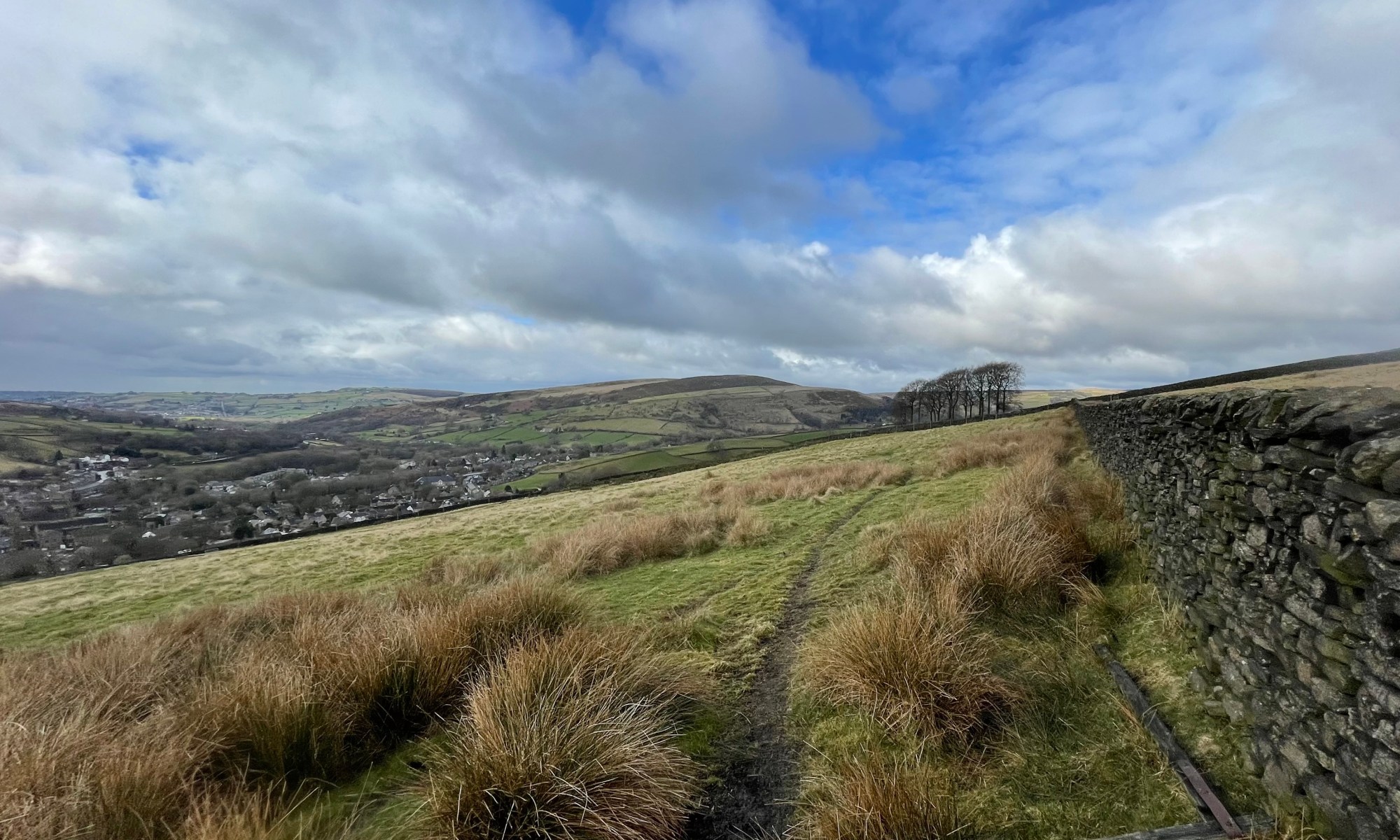
Set amidst the context of rising unemployment, the increasing political mobilisation of the working class and unsanitary living conditions in Britain’s industrialised Northern cities, the Kinder Scout Mass Trespass of 1932 has been characterised as the “walk that changed Britain”. As the highest point in the Peak District and a symbol of the British landscape for nearby city-dwellers, Kinder Scout offers a site in which the controversy of countryside access can be traced over time. This lineage demonstrates how the fight for the right to roam remains deeply unequal almost one century later. And yet, the dynamics of this injustice are now racialised as much as classed, evolving from a question of legal rights to social barriers. This migration of controversy shows that, whilst the Mass Trespass of Kinder Scout exerted a deep political footprint on British political life, it did not win the fight for access. Although de jure reforms reversed the enclosure of the Peak District by the landed gentry, this same landscape demonstrates that barriers to equal access in the British countryside have evolved rather than evaporated since 1932.
Walking as political
The act of walking through space is imbued with cultural, social and political meaning that determines the experience of different bodies moving through both human and natural landscapes. Walking has a purpose that is differentially marked socially, racially and economically on different bodies. As Jennie Middleton notes, the experience of walking is produced through a sensory, social and political relationality with our environment that varies according to the identities of our individual bodies. Therefore, the ‘where’, ‘when’ and ‘why’ of walking means that it is not classless, but overtly political.
In Britain’s National Parks, the leisurely past-time of rambling is an act coded as a middle-class performance of choice, enjoyment and recreation. However, this apolitical view of walking obscures the ways in which race, class and gender are intertwined with the purpose and performance of walking. For instance, the care-giving responsibilities of female workers in the Global South necessitate walking as an act of social reproduction whereas walking whilst Black involves a complex array of oppressive negotiations surrounding safety, threat and criminality. The issue of walking, therefore, is intertwined with the history of colonialism, capitalism and land ownership as mechanisms that control which groups have access to space, for what purpose and under whose terms.
A three-tier countryside
The question of who is granted the right to roam in Britain has historically been determined by social status. Prior to the Kinder Scout Mass Trespass, differential levels of access were structured in three tiers. Firstly, most open moorland was owned by the gentry and guarded by gamekeepers, following eighteenth century enclosure acts that allowed landowners to enclose land without consulting Parliament. Secondly, middle-class rambling associations were permitted access to the land, but only at the discretion of landowners. These groups viewed any act of emancipatory trespass suspiciously, as it threatened their own contingent rights to the countryside. Meanwhile, the working-classes were excluded entirely from participating in rural pursuits. Nevertheless, as Britain’s economy changed from rural and agrarian to urban and industrial, these labourers began walking to escape their polluted living conditions for exercise and leisure – described by Rebecca Solnit in Wanderlust: A History of Walking as an act of “psychic survival”.
The Mass Trespass as civil disobedience
Given this three-tier system of permissibility, the appearance of urban labourers in the countryside caused alarm, threatening the established social order in an act that appeared as a proxy for class-war. Accordingly, in 1932, politically emboldened factory workers in the nearby conurbations of Manchester and Sheffield were mobilised by Benny Rothman, an activist connected to the Young Communist League. At this time, the Peak District was largely owned by the Duke of Devonshire, rendered unassailable by fifteen square miles of privately-owned land with only twelve legal paths across the Peak District. Fighting for the ‘right to roam’, five hundred ramblers comprising men, women and children travelled by train from Manchester and Sheffield before convening to scale Kinder Scout – the chosen site for this revolutionary act of civil disobedience. The Trespass marched as a group in an overtly political performance that attracted a strong police presence and involved violent altercations with the Duke of Devonshire’s gamekeepers. Upon returning, five participants were arrested and subjected to an infamous trial in which the Mass Trespass became synonymous with the fight for open access.
Legal reforms to access
As public consciousness of unjust imbalances in land ownership grew, the Trespass galvanised larger groups of ramblers across the country whose demonstrations provided new impetus for the right to roam campaign. Therefore, working-class access to the countryside soon became a microcosm through which broader state governance was enacted.
This was evident in the reforms delivered by the post-1945 Labour government, which culminated in the transformative ‘National Parks and Access to the Countryside Act’ in 1949. This act not only established the Peak District as the nation’s first national park, but also sought to reorientate the relationship of Britain’s working class with the governing elite. Since then, the scale of change has been immense; the national park now offers five hundred square kilometres of access land following the Countryside and Rights of Way Act in 2000. Given the pivotal role of Kinder Scout throughout the past century in providing succour to open-access campaigners, unsettling social hierarchies of walking and catalysing systemic changes to the legal organisation of rural space, the Mass Trespass has been lauded by Lord Hattersley as one of the “most successful acts of direct action in British history”.
The fight for access continues
However, although the Peak District itself now receives ten million visitors per annum, stark statistics surrounding land ownership demonstrate that the ‘right to roam’ is still unachieved in Britain. Approximately one percent of the population owns half of all land in England, with just eight per cent designated as open access. Moreover, just as in 1932, access to the countryside is not distributed equally across all social groups. Upper and middle-class visitors remain disproportionately represented in the total number of visitors to the Peak District National Park, especially when compared with the socio-economic demographics of local residents. This demonstrates that – whilst legal barriers may have been overcome by the Countryside Acts that succeeded the Mass Trespass – social barriers to rural areas persist. It is these social barriers, often harder to identify and deconstruct, that take on a greater role in governing inequality in the British countryside today.
Migration of controversy: from class to race
In 2021, the Countryside Charity estimated that Black, Asian and Ethnic Minority communities have eleven times less access to greenspace than white counterparts, viewing the countryside as an “exclusively English environment of…white communities”. Concerningly, these barriers are reinforced by racist abuse, exemplified by the hate directed towards the ‘Muslim Hikers’ when they organised a group walk of 130 people in the Peak District in 2021. Just as they did in the Mass Trespass almost a century earlier, these hikers came from nearby cities to walk in the countryside surrounding Kinder Scout. They sought recreation and leisure from walking in the beautiful countryside of the Peak District. Crucially, they highlighted questions about which bodies are free in the British countryside.
However, despite these similarities, the ramblers of the Mass Trespass and the ‘Muslim Hikers’ of today expose different underlying injustices. In 1932, the presence of working-class people in the countryside threatened social norms but, in 2024, it is the ability of ethnoreligious groups to access these spaces that is in question. Therefore, the Mass Trespass of Kinder Scout represents simply one historical moment in a continuing struggle. In this way, a focus on the genealogy of Kinder Scout prompts us to reconsider the right to roam not as a legal right, but as a socially inclusive project of spatial justice for all marginalised socio-economic demographics. This small plot of land in the Peak District provides a prism through which we can track changes in wider social, political and race relations in Britain manifested in the shared act of walking in the countryside.
About the author: Ethan Chandler is a final-year undergraduate Geography student at the University of Oxford.
Suggested further reading
Halfacree, K. (2023) Towards a revanchist British rural in post-COVID times? A challenge to those seeking a good countryside. The Geographical Journal. Available from: https://doi.org/10.1111/geoj.12549
Herman, A. & Yarwood, R. (2025) Locked out? Navigating the geographies of precarity on Britain’s waterways. Transactions of the Institute of British Geographers. Available from: https://doi.org/10.1111/tran.12671
Middleton, J. (2022) The walkable city: dimensions of walking and overlapping walks of life. 1st ed. London; Routledge.
Thorogood, J., Hastie, A. & Hill-Butler, C. (2022) Public access, private land, and spatial politics: The geographical importance of the right of way in Coventry, England. Transactions of the Institute of British Geographers. Available from: https://doi.org/10.1111/tran.12514
How to cite
Chandler, E. (2025, July) The “walk that changed Britain”? Revealing the echoes of the Mass Trespass. Geography Directions. https://doi.org/10.55203/MXLL5380
 Geography Directions