

By Victoria Ridgway, Durham University
From Trump’s election to anti-vaccination movements, the past few years have intensified the sense that we can no longer rely on a shared understanding of truth. Conspiracy theories, disinformation, and fake news have become major concerns in liberal democracies, where reasoned debate is expected to support democratic pluralism. In the face of climate change and the pandemic, these phenomena also appear to distract and divide collective efforts to face urgent crises. Crucially, they have become a symbol of crisis for liberal democracies in North America and Western Europe. Today, there is therefore broad agreement that truth must be defended against these attacks.
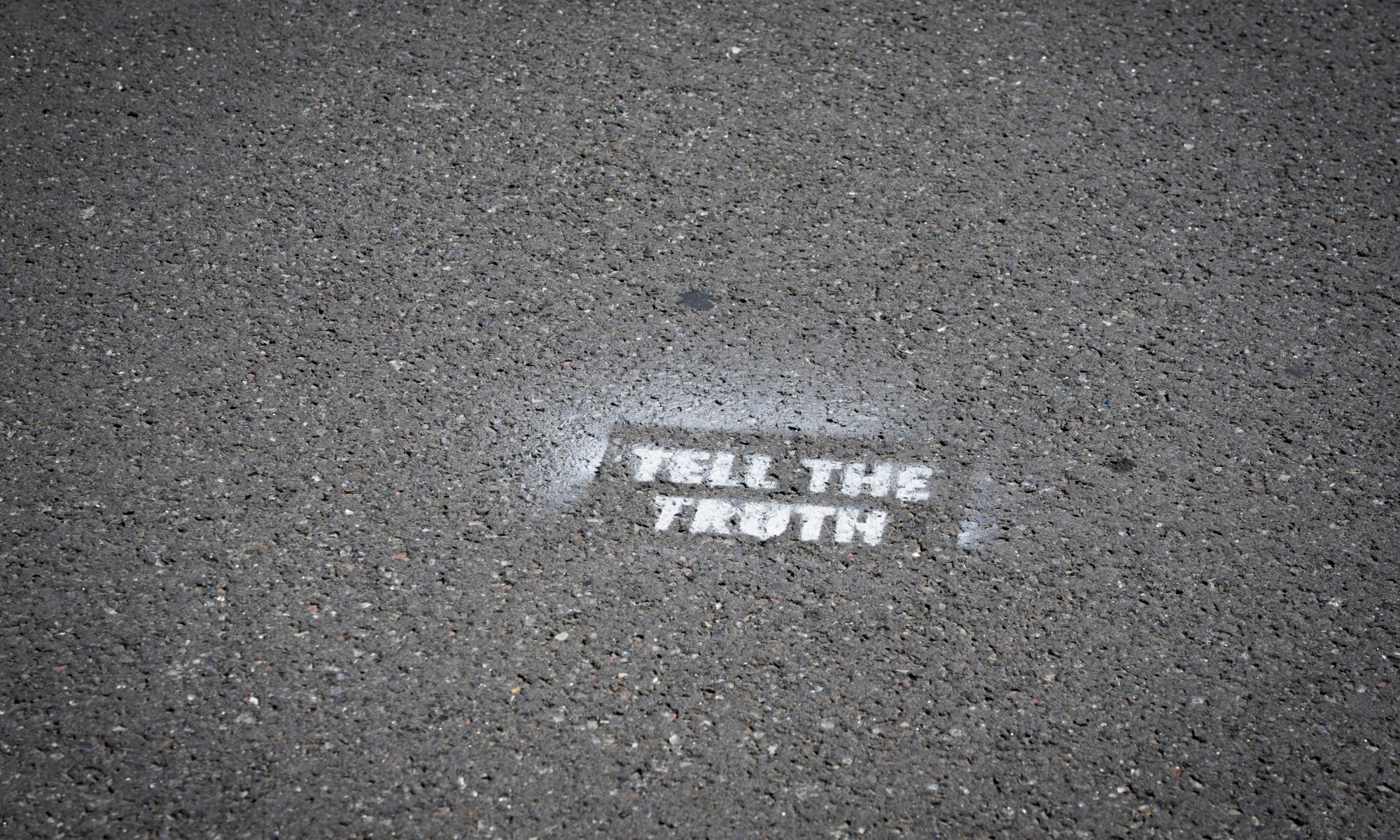
One danger that is immediately apparent in this situation is that naming the truth is never neutral. Naming the truth traces boundaries that shape who is seen as credible, whose voices are amplified or excluded, and what kinds of questions are allowed into public debate. My research therefore proposes to take a step back to ask: what is really at stake when we talk about defending truth against conspiracy theories?
What are we even talking about when we talk about conspiracy theories?
The first thing to note about conspiracy theories is that it can be hard to know what we’re talking about when we invoke them. At face value, it might describe a theory that sees hidden plots behind world events. But in everyday language, the phrase carries much more weight and suggests irrational beliefs that are beyond the realm of meaningful dialogue. As beliefs that question the conspiratorial nature of power, they seem to always go too far in their distrust of power. As a result, conspiracy theories are often framed as extreme forms of critiques of power and frequently positioned as the irrational “other” to legitimate, institutionally accepted critiques of power.
A second thing to note is that there is therefore a lot at stake when we recognize something as a conspiracy theory. Who gets to say what is a conspiracy theory? Who becomes excluded from the realm of reasonable dialogue? The issue is that in trying to defend truth from conspiracy theories we often end up reinforcing the dominant systems that determine what counts as valid knowledge in the first place. This is why the term “post-truth” has been criticized for suggesting that truth is an object that our societies have suddenly lost. Indeed, many marginalized groups have never been given the legitimacy of being recognized as truth-tellers.
Talking about conspiracy theories then is a complex matter. More than just naming false beliefs, the term has come to signal distance from irrationality and illegitimate knowledge. The concern that conspiracy theories might be endangering democracy therefore always involve a decision over who and what ideas are reasonable.
Is this just a moral panic then?
Because it’s so difficult to pin down a clear definition of conspiracy theories, some scholars have asked whether the current concern about them might be an example of a moral panic.
The answer is: yes and no.
Yes, in the sense that Stanley Cohen’s framework of the “moral panic” names a large societal reaction to a perceived threat that goes beyond the threat’s real impact on the social and political body. This seems to apply to the way conspiracy theories are often treated in media and political discourse. Even without a strict definition, they are frequently portrayed as dangerous and destabilizing. If we take the Covid-19 pandemic, for example, the threat of an ‘infodemic’ sometimes matched or even exceeded warnings against the threat of the Covid-19 virus, as people feared that anti-vaccination conspiracy theories would ruin chances of achieving collective immunization. And yet, vaccine uptake turned out to be significantly higher than early alarmist predictions suggested. Moreover, it’s still unclear whether belief in conspiracy theories actually increased during that period.
No, if we reduce a “moral panic” as a mediatic construction aimed at manipulating public opinion. This is a widespread mainstream understanding of what a moral panic is. In that sense we might believe that the concern over conspiracy theories is an artificial political and mediatic construction which has nothing to do with reality. In doing this, we would reproduce a conspiratorial imaginary of power, where a concern over conspiracy theories is constructed and instrumentalized to silence certain voices.
But academic work on moral panic reminds us that these societal reactions point at something deeper in our societies. Scholars like Stuart Hall and his colleagues have shown that these intense social reactions often reflect deeper tensions and transformations within society. In their analysis of the “mugging” panic in 1970s Britain, for example, Hall and his colleagues argued that the public outrage was not just about street crime, but a response to a broader shift in political and moral values. As post-war ideals of permissiveness and prosperity came under pressure, older values like discipline and respectability were reasserted through public discourse. In this sense, the panic was a symptom of a changing political order, not simply a media invention.
So when we think about the growing concern over conspiracy theories and their supposed threat to democracy, we should take these reactions seriously. Not necessarily because they reflect the size of the threat itself, but because they reveal important social and political anxieties. Rather than dismissing the concern as just a moral panic, we need to pay attention to what it might be telling us about the struggle for political dominance that is currently happening.
How can geographers think about and research conspiracism?
As this article has explored, researching conspiracy theories can be a deeply complicated task. For some geographers, there is an urgent need to diminish the threat of conspiracism. These research efforts focus on exposing the fallacies on which these theories rest and show ways to protect democratic life from these outside attacks. But others, understand conspiracy theories as devalued forms of everyday speech that, while often flawed, reflects how people try to make sense of their experiences, especially in the face of systemic inequality or political exclusion. For these researchers, the focus is less on debunking and more on understanding why certain narratives resonate. What cultural, economic, or political conditions lead people to find these theories meaningful in the first place?
In my research, I argue that these approaches need to exist alongside a third approach which questions how and why conspiracy theories became such an intense problem in the first place. Rather than asking only whether conspiracy theories are true or false, we also need to ask why they have become such a prominent concern in our political and cultural landscape. What makes conspiracy theories feel so threatening right now? Why have they become a symbol of crisis for liberal democracies in North America and Western Europe?
I suggest that the growing attention to conspiracy theories and the public anxiety surrounding them offers a unique entry point into the politics of truth that accompanies the current political shifts happening across liberal democracies in North America and Western Europe. I ask: How did conspiracy theories come to be treated as a central problem for democratic societies? What kinds of political and social orders are being protected, challenged, or reshaped through this struggle over truth? Who decides what counts as a conspiracy theory and whose ideas are excluded in the process?
Today, defending truth has become a defining concern for many governments, institutions, and media platforms. But truth is never just a neutral object, it is always tied to systems of power, authority, and legitimacy. That’s why there is so much at stake in understanding not just the content of conspiracy theories, but the deeper political work being done in the name of truth itself.
About the author: Victoria Ridgway is a PhD researcher at Durham University. Her thesis explores the crisis of truth, conspiracism, and anti-vaccination movements.
Suggested further reading
Bratich, J.Z. (2008) Conspiracy Panics: Political Rationality and Popular Culture. Albany, NY: State University of New York Press.
Johnson-Schlee, S. (2019) ‘Playing cards against the state: Precarious lives, conspiracy theories, and the production of “irrational” subjects’, Geoforum. Available at: https://doi.org/10.1016/j.geoforum.2019.02.013.
Ridgway, V. (2025) ‘Conspiracy theories and Geography: Who gets to say where is power?’, Dialogues in Human Geography. Available at: https://doi.org/10.1177/20438206251316008
How to cite
Ridgway, V. (2025, June) Conspiracy theories in times of political turmoil. Geography Directions. https://doi.org/10.55203/EWMX1799
 Geography Directions