

By Christopher Schulz, University of St Andrews
In the common imagination, evidence is numbers. These numbers can emerge from natural science or social science research. But, generally, whenever policy-makers, stakeholders or the general public call for evidence, they tend to think of ‘objective’ pieces of information, that will help de-emotionalise debates and calm conflicts around a specific public policy problem.
This is a limited view of what is commonly understood to be ‘evidence’. Evidence can take many forms and be gathered in a diversity of ways. Stories and spoken testimonials can be evidence. Evidence can be emotional, rather than de-emotionalise public policy debates; and that can be a strength, not a weakness.
These claims feature in our recent paper published in the Geographical Journal, on the basis of insights from the case of the World Commission on Dams. This Commission was a global science-policy platform that existed between 1998 and 2000, to resolve conflicts around the planning, construction, and operation of large dams.
The 1990s had seen heated debates and often violent conflict around large dams. Around the world, dams have displaced millions of people, disrupted riverine ecosystems, submerged cultural heritage sites, and impacted social-ecological systems in more ways than can be listed here. These impacts spurred intense opposition from activists and social movements, who were, in turn, forcefully repressed by the often authoritarian regimes under which dam construction had taken place.
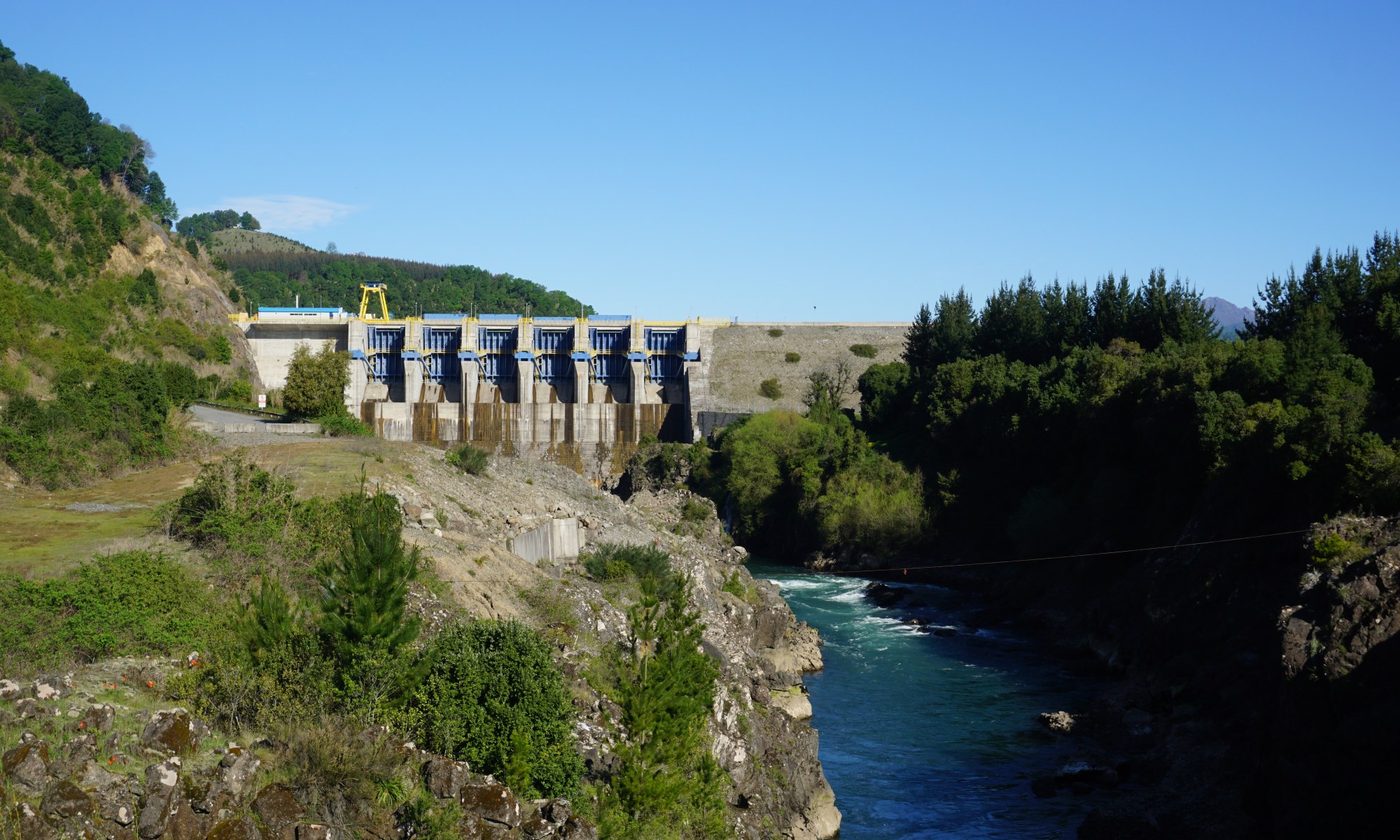
Dams are built to capture and store water for irrigation, domestic use, flood control, and the production of hydroelectric power. They are also often interpreted as tangible symbols of the strength of nations; names such as ‘Grand Ethiopian Renaissance Dam’, recently completed on the Blue Nile River, make this clear. Dams can produce benefits to people, but costs and benefits are often unevenly distributed. Rural (and often indigenous) populations tend to be an afterthought in large dam construction – financially compensated at best, displaced and persecuted at worst.
In this context, the World Commission on Dams gathered both sides to the conflict, in what was a remarkable ‘experiment’ at the time: engineers, private and public funders, and others favouring dam construction; and the activists and dam-affected people opposing them. The Commission held a series of consultation events around the world, including in São Paulo, Brazil; Colombo, Sri Lanka; Hanoi, Vietnam; and Cairo, Egypt. They also commissioned a large number of studies, trying to collate a global picture, covering almost all aspects of large dams.
In the words of our interviewees, some consultation events were ‘real dramas’. In São Paulo, there were helicopters flying above the venue, and there was ‘absolute panic in the faces of some of the bureaucrats there’, because they had to be in the same room as activists from the Movement of Dam-Affected People (MAB, in Portuguese), for the first time.
In Sri Lanka, the 12 Commissioners were invited to speak with displaced villagers; as one of the Commissioners noted, hearing these stories of displacement and diminished living standards turned out to be a major emotional experience for at least one of the Commissioners, the engineer Jan Veltrop, who had been oblivious to the reality of dam-induced displacement:
We were in a village where you could see the reservoir, and this village did not have electricity or irrigation water. […] And it was on the bus ride going back, that he … he was quietly crying. And I remember speaking with him […]: ‘I’ve been an engineer for 50 years, I’ve worked on these projects, and it’s breaking my heart that 20 years after this dam was built, these communities aren’t getting anything.’
This was not a unique incident; while the benefits of large dams were already widely known, the Commission did much to systematically gather the negative social and environmental impacts of large dams globally for the first time. Evidence was often assembled through emotional testimonials or field visits, observing these impacts first-hand, rather than through written reports (though there were plenty of those, too).
The scenarios described above are very different to what is conventionally understood to be ‘evidence-based policy-making’ (i.e., the disinterested collection and analysis of quantitative data to inform decision-making on a public policy issue). While the World Commission on Dams did also collect such numbers, it was most shaped by these emotional encounters with realities on the ground. And the recommendations it made reflected this evidence.
The Commission produced a much-publicised final report, which observed that: ‘In too many cases an unacceptable and often unnecessary price has been paid to secure benefits [of large dams], especially in social and environmental terms, by people displaced, by communities downstream, by taxpayers and by the natural environment.’ (page xxviii).
Although these facts had been known for some time, the work of the Commission ensured that they could no longer be ignored. In the immediate aftermath of the launch of this report, for example, the World Bank walked away from supporting large dam projects, even if they did not fully sign up to the more specific policy recommendations made by the Commission.
Tracing the medium to long-term impacts of the World Commission on Dams is more challenging. It appears to have foreshadowed how other global environmental assessment processes seek to operate today: through its emphasis on participation, as well as its recognition that the gathering of evidence is always political, to be managed through ensuring representation of all stakeholder groups, not just politically powerful ones.
In any case, the World Commission on Dams was not primarily a number-crunching exercise. Instead, it recognised the very real implications of large dams to humans and the natural environment around the world; this is what made it particularly powerful and memorable to those who participated in its work.
About the author: Christopher Schulz is a Lecturer in Sustainable Development in the School of Geography and Sustainable Development at the University of St Andrews. He conducts research in the fields of environmental policy and governance and ecological economics, with a particular focus on understanding conflicts about water. Further research interests include the politics of indigenous knowledge, conservation and management of tropical peatlands, and plural valuation of the natural environment. His research paper in The Geographical Journal, co-authored with Bill Adams, emerges from a research project on the history, legacies, and impact of the World Commission on Dams, conducted when he was based in the Department of Geography, University of Cambridge.
Further suggested reading
Schapper, A., Scheper, C., and Unrau, C. (2020): The material politics of damming water: An introduction. Sustainable Development. Available from: https://doi.org/10.1002/sd.1992
Schulz, C., and Adams, W.M. (2019): Debating dams: The World Commission on Dams 20 years on. Wiley Interdisciplinary Reviews: Water. Available from: https://doi.org/10.1002/wat2.1369
Schulz, C., and Adams, W.M. (2025): ‘…and the evidence was irrefutable’: The politics of evidence in the World Commission on Dams. The Geographical Journal. Available from: https://doi.org/10.1111/geoj.70002
How to cite
Schulz, C. (2025, May) What counts as evidence? Evidence from the World Commission on Dams. Geography Directions. https://doi.org/10.55203/ULFS3672
 Geography Directions