

By Basak Tanulku
I have always had difficulty answering when people ask, “What’s your job?” For artists or social scientists, it is a usually difficult task compared with those working in a field that is easier to define, like STEM or more practical occupations such as technical jobs. Also, even if you earn money, dealing with arts or social sciences has always been challenging in the real world. For some people, dealing with abstract concepts is also found unnecessary or luxurious in a world full of physical dangers and problems. Many also want to see tangible products from you that are considered a work/job.
“I am an independent scholar” is my usual answer, followed by endless explanations about my actions. In a society becoming more neoliberal from the most microscopic level of family to the macro scale of the state, doing something without payment means something surreal for most people. I can also define myself as holding a liminal position. I have been applying for endless posts and awaiting the outcome of my applications. I have been exposed to the same competitive processes as permanent academics when submitting papers to peer-reviewed journals while spending additional energy on self-realisation and increasing my visibility.
The best thing about doing independent scholarship is following my own path when writing either a scholarly or non-scholarly output. Without being dependent on any academic school of thought or method, I have been able to cite every source I find useful in my works, from past and present and across continents and cultures, providing me with a rich background in my field of work. The result of independent scholarship is a mix of diverse and opposing arguments, creating something new for the field of study.
Independent: an umbrella term with many meanings
“Independent” has become an umbrella term defining people doing different things, which leads to trivialising its meaning. “Independent” is a generic term corresponding to people in different situations, while an independent scholar can hold different positions simultaneously.
The most common meaning of “independent scholars” is those without a permanent job and wage overlapping with “precariat” or “unemployed”. In this context, being independent implicitly refers to a lack of success, being an outsider or someone unable to find a job.
“Freelance” is another concept that overlaps with “independent” referring to temporary or occasional work for academic or research institutions. However, a freelance does not always mean a scholar. A scholar refers to a person who contributes to the body of knowledge in a particular field. Independent scholarship is not also volunteer work in which there is no competition or payment. Volunteer work is seen as something for those who enjoy their retirement and look to do something “good” for society. Instead, independent scholars are exposed to all forms of competition when they submit a paper for a conference or peer-reviewed journal or experience some assessment as permanent academics. Independent scholars might also receive payments, bursaries or awards for their work. Early careers can also define themselves as independents when they get their PhD degrees and look for a job. Nominating someone as “independent” is a good way to conceal their liminal position between jobless and employed.
I approach “independence” positively, which, in my view, means being free from any financial constraints. An “independent scholar” is a scholar with a PhD in a related field of study, producing academic knowledge and research outputs continuously, cited in respected journals and having an impact in the academic world without being affiliated with an academic institution. This definition would include those who work outside academia (full or part-time) and produce academic outputs. This definition would exclude people with PhD degrees but do not contribute to the academic knowledge. It also extends to non-academics producing academic knowledge (either working/unemployed or holding a PhD or not), opening the group to “citizen science”. This does not refer to folk/traditional forms of knowledge which oppose scientific knowledge. It refers to scientific knowledge produced outside the academia.
Post-pandemic conditions of relative physical equality and visibility for independents
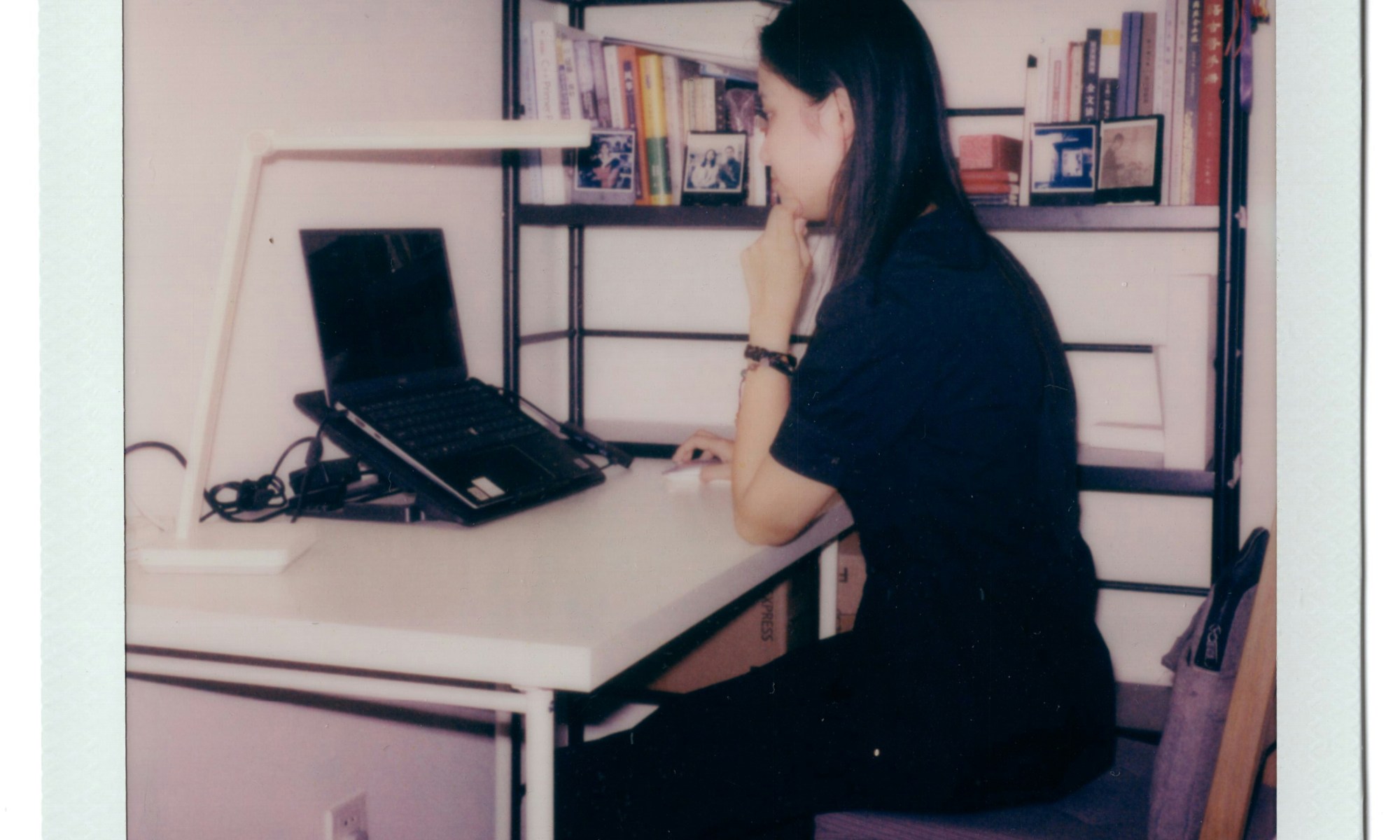
As a result of post-pandemic conditions, remote work has gained prestige among white collar workers. Before the pandemic, working at the office was regarded as a compulsory step in work life. “Home” was something for the family and privacy, while staying at home has also been associated with joblessness or idleness. However, since the pandemic, remote work has symbolised relative freedom from compulsory office work, dramatically changing working conditions. First, remote work has changed the meaning of home from a private and family setting into a liminal space between home and work, private and public, providing people with relative freedom while working, such as casual dressing, flexible working hours, etc. Second, remote work might have reduced loyalty to institutions and companies, leading to continuously changing jobs for better work conditions.
These would equalise “remote workers” and “independent scholars” in some aspects, particularly physical conditions allowed by online work opportunities for independents to join academic events at a cheaper rate and increase their visibility. Of course, this relative equality might not work in reality. As demonstrated by the research study by David McCollum, home working (fully remote or hybrid) has either increased or reflected the existing social and spatial inequalities in the UK.
More recently, there have also been efforts in academia to open up academic knowledge to the wider world. First, most journals have allowed open access options for publications, which provide opportunities to access publications freely. Second, academic knowledge has started to be disseminated through non-institutional or informal means such as personal blogs, vlogs and websites by academics. Third, the production of academic knowledge has been extended to citizen scientists. Relatedly, the knowledge has been produced by the cooperation between researchers and participants (participatory research is a recent field of study to eliminate the boundaries between researchers and participants while conducting a research study).
In this context of blurring boundaries between academics and non-academics in the production of academic knowledge, and at a time of unprecedented crisis in academia, the number of independent scholars fitting into this loose definition is expected to rise. They might face extra challenges because of being not affiliated with an institution and/or having a permanent job, which leads to difficulty in accessing funding for research projects and travel to attend academic events.
The initiative
The Network for Independent Geographers initiative aims to bring together independent geographers based in the UK. It will first form around an email group and website to be developed by independent geographers. On a secondary basis, it also aims to address the importance of independent geographical knowledge outside the norms of academic institutions. The initiative can also help recognition of independent scholarship as an official status if certain criteria are met and transform it into a desired status/position. It aims at finding solutions to various issues of independent geographers, particularly:
- Difficulty of recognition of independent research by the wider academic community
- Difficulty of having access to funding sources
- Difficulty of having access to databases, journal archives or information only accessible through institutional email and membership.
If you are interested in this initiative, please get in touch at rhed@rgs.org. We welcome initial expressions of interest by Monday 2 June 2025.
About the author: Basak Tanulku is a RGS-IBG Fellow and an independent scholar based in Istanbul, Turkey. She holds a PhD in Sociology from Lancaster University. Tanulku works on borders and boundaries, housing (gated communities and similar housing forms), urban transformation and urban vacant lands, and alternative urban spaces. Tanulku also works on Cumbria and the Lake District, particularly on the tension between their cultural and natural heritage, rewilding, Cumbria during the Dark Ages and the haunted sites of Cumbria.
Suggested further reading
Bodenheimer, R. (2017). The Plight of the Independent Scholar, https://www.insidehighered.com/advice/2017/08/29/difficulties-and-frustrations-attending-academic-conference-independent-scholar
Independent Social Research Foundation, https://isrf.org/
Kara, H. Funding for Independent Researchers, https://the-sra.org.uk/SRA/SRA/Blog/Funding%20for%20Independent%20Researchers.aspx
McCollum, D. (2025). Post-pandemic geographies of working from home: more of the same for spatial inequalities? Geography Directions.
The National Coalition of Independent Scholars, https://www.ncis.org/
Nelson, M. K. (2017). Hey Academics, Please Stop Calling Me an “Independent Scholar”, http://www.megankatenelson.com/hey-academics-please-stop-calling-me-an-independent-scholar/
How to cite
Tanulku, B. (2025, May) A call for interest for a network for independent geographers. Geography Directions. https://doi.org/10.55203/QYZG2914
 Geography Directions