

By Valerio Donfrancesco, University of Aberdeen, and Chris Sandbrook, University of Cambridge
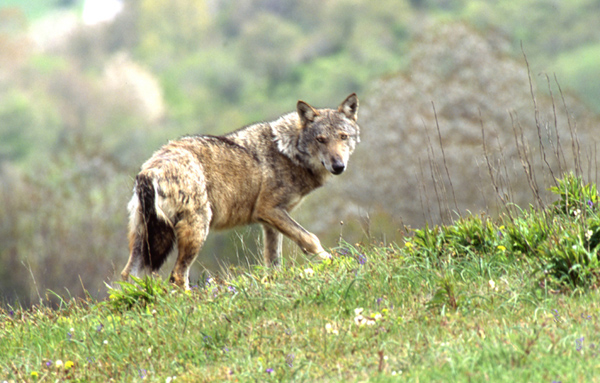
A key question in conservation today is how humans and wildlife can coexist in shared landscapes. Conservationists are increasingly arguing that coexistence is necessary, both socially and ecologically. Keeping people and wildlife separate has been widely criticised for its negative impacts on people. In some cases, such separation is simply impractical. For example, in Europe, where human activity is widespread, the survival of large carnivores like wolves depends on their ability to live alongside people.
Coexistence is proving to be a complex and uneven process. Living with wildlife comes with significant and often inequitable costs for local communities, such as farmers who experience livestock depredations by local carnivores. As a result, there is often rural opposition to coexistence projects.
To address these difficulties, different approaches are being undertaken to promote greater local tolerance for problematic, protected wildlife, such as wolves. Current initiatives seek to do so by emphasising the benefits local people may gain from getting behind the idea of coexistence. In other words, wildlife is increasingly framed for its services, to foster behavioural change and promote long-term multispecies cohabitation.
Despite the popularity of this approach, however, it is showing limited success. For example, in Europe, rural communities continue to call for reducing wolf protection. Wolves can have significant impacts on local livelihoods, such as by predating livestock, which comes with not only economic but also emotional and psychological costs. This situation has led to the first steps towards policy change last December, when the Council of Europe’s Bern Convention committee voted to downgrade wolves’ protected status in supranational legislation. Why is this happening? And what are the limits of framing wildlife for its benefits? Addressing these questions is key to deepen current understandings of contemporary coexistence challenges. In our new study published in Transactions, we explored these questions from a critical social science perspective.
Power and life
In our Transactions article, we engaged with broader debates within geography, particularly around different conceptualisations of power and life. We highlighted a key distinction between two approaches. The first, biopower, refers to the ways in which life is governed—how states and institutions seek to manage, regulate, and discipline populations through various strategies. The second, affirmative biopolitics, shifts the focus to life’s own capacities for self-organisation, transformation and resistance. Rather than emphasising control, this perspective attends to the generative, creative forces through which both human and non-human lives assert themselves and forge alternative ways of being.
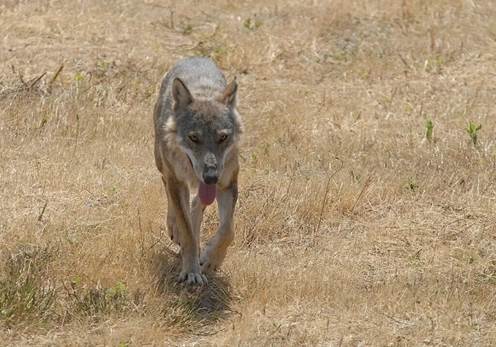
So, basically, we highlighted the difference between controlling life versus life’s own power to act and flourish. We used these concepts to critically examine efforts to promote human-wolf coexistence in Tuscany, Italy.
Limits to biopower
Linking wildlife to specific benefits to promote local behavioural change is a form of biopower, often exercised by conservation organisations, practitioners and scientists. This approach aims to shape attitudes to accept wildlife such as wolves by seeing their benefits. In our study, we highlighted two ways in which this is manifested: framing wolves as bringers of ecological balance and as sources of economic benefits.
On the one hand, emphasising the wolves’ role in ecological balance seeks to bring interest groups like farmers to value wolves for their contribution to aspects such as the reduction of wild boar and deer populations, which are impacting local crop production. However, wolves are not fixed, homogenous entities. Their ecological impacts are complex and dynamic, meaning that the ecological consequences of their return do not always play out as expected. In our study we highlighted different reasons why the return of wolves may not be resulting in the anticipated changes in wild ungulate populations – such as because of the rise of novel ecological interactions between wolves and the coypu (a large, introduced rodent), or the unexpected ways wild boars are responding to wolf presence.
On the other hand, framing wolves for their economic benefits partly relies on the idea that farmers who adapt successfully to wolves and support projects of coexistence will be able to draw economic gains, such as by selling their products at a premium to customers interested in buying wolf-friendly products, or by receiving other subsidies to support the farm. Yet, not all farms can afford the material and immaterial costs of implementing preventive measures. For some, such as large farms, non-lethal preventive measures can also be difficult to implement, inadequate and ineffective. The lack of the expected economic benefits from wolf presence, or their inequitable accessibility to farmers, further exacerbates tension and conflict over projects of coexistence.
In both cases, opposition to coexistence emerges as a form of rural resistance against exercises of biopower that seek to mould local subjectivities.
Finding a radical alternative in affirmative biopolitics
To move forward, we argue for embracing affirmative biopolitics as a liberatory alternative to biopower. Rather than persuading people to accept wolves for their benefits, affirmative biopolitics encourages attuning to existing relationships between humans and wildlife, in their different forms. We showed how farmers can relate to wolves beyond the services they may provide, but based on the necessity of learning to live with other beings, including wolves. This is a defining experience of being a farmer, involving navigating daily multispecies interactions to sustain local livelihoods and live in the world as well as possible. Within this context, livestock depredations can be tolerated, to an extent. At the same time, a degree of wolf killing, rather than being an act devoid of care, can be a hands-on representation of what navigating the responsibility of living with wolves might entail.
Central to affirmative biopolitics is the idea that local ways of relating to wildlife are not grounded in abstract moral principles but emerge through practice, resonating with feminist conceptualisations of care. Rather than imposing predefined coexistence models, conservation efforts could better recognise and engage with local ways of relating to wildlife, acknowledging that these relationships are shaped by quotidian interactions, traditional know-hows, and the hardships people are experiencing.
Focusing on the hardships, we showed how the actualisation of local ethical propensities to coexist with wolves is affected by contexts of socioeconomic difficulties, linked to neoliberal policies driving high rates of farmland abandonment in Europe as elsewhere. This dynamic undermines the extent to which farmers are able to cope with and support wolf presence, increasing the perceived necessity for wolf culling and undermining prosects of coexistence.
Towards liberatory strategies for multispecies societies
Efforts to foster behavioural change in rural communities by associating wildlife with services have clear limits and can be counterproductive. We argue for embracing the alternative of affirmative biopolitics in conservation strategies. This means recognising different ways of relating to wildlife while tackling the structural drivers of interspecies violence that are undermining coexistence.
In our paper, we highlighted possible avenues to making caring for wolves a systemic project. We suggested changes to international agrarian and trade policies, including the Common Agricultural Policy of the European Union and the regulations of the World Trade Organisation, to tackle socioeconomic hardships in the farming sector and facilitate coexistence.
It is in this sense of requiring structural changes and a rethinking of dominant ethico-political frameworks that affirmative biopolitics are radical. This is in contrast to exercises of biopower that work within the status quo.
We argue that the success of projects for multispecies flourishing depends on the recognition and pursuit of affirmative biopolitics.
About the authors:
Valerio Donfrancesco is currently a Teaching Fellow in Human Geography at the University of Aberdeen. His research is focused on the social and political dimensions of wildlife conservation. A particular focus of his work has been on human-carnivore conflict, including grey wolves and dingoes, and the management of wild hybrids. He completed his PhD in Geography at the University of Cambridge in 2024, supervised by Professor Chris Sandbrook.
Chris Sandbrook is Professor of Conservation and Society at the University of Cambridge, and Director of the MPhil in Conservation Leadership. He is a conservation social scientist with a range of research interests around the central theme of biodiversity conservation and its relationship with society. His current research investigates (i) the relationship between conservation and development in theory and practice, (ii) the values and viewpoints of conservationists and how these influence conservation action, and (iii) the social and political implications of digital technologies for conservation.
Suggested further reading
de la Bellacasa, M. P. (2012) ‘Nothing Comes Without Its World’: Thinking with Care. The Sociological Review. Available from: https://doi.org/10.1111/j.1467-954X.2012.02070.x
Donfrancesco, V. & Sandbrook, C. (2025) From biopower to affirmative biopolitics: A (bio)political ecology of becoming with wolves. Transactions of the Institute of British Geographers. Available from: https://doi.org/10.1111/tran.12744
Fry, T., Marino, A. and Nijhawan, S. (2022) ‘Killing with Care’: Locating Ethical Congruence in Multispecies Political Ecology. ACME: An International Journal for Critical Geographies. Available from: https://doi.org/10.14288/acme.v21i2.2054
Hodgetts, T. (2017) Wildlife conservation, multiple biopolitics and animal subjectification: Three mammals’ tales. Geoforum. Available from: https://doi.org/10.1016/j.geoforum.2016.12.003
Srinivasan, K. (2024) Conservation beyond biopolitics: Vulnerability and abundance in Chennai’s nature-cultures. Transactions of the Institute of British Geographers. Available from: https://doi.org/10.1111/tran.12714
How to cite
Donfrancesco, V. & Sandbrook, C. (2025, April) What does radical wildlife care look like? Geography Directions. https://doi.org/10.55203/EBMW1243
 Geography Directions
