

By Sing Fei Teoh, University of Nottingham Malaysia
Policymakers and decision-makers in Kelantan, a north-eastern coastal state in Peninsular (West) Malaysia, have been pushing for an upgrade to its signature airport, the Lapangan Terbang Sultan Ismail Petra (LTSIP), located in Pengkalan Chepa, Kota Bharu.
The LTSIP, the main airport in Kelantan today, is filled with lots of fond local memories. Ever since news of the upgrade, Kelantanese locals have been sharing (and perhaps celebrating with) old ‘black and white’ photos of the airport, and recent video recordings of it, on social media.
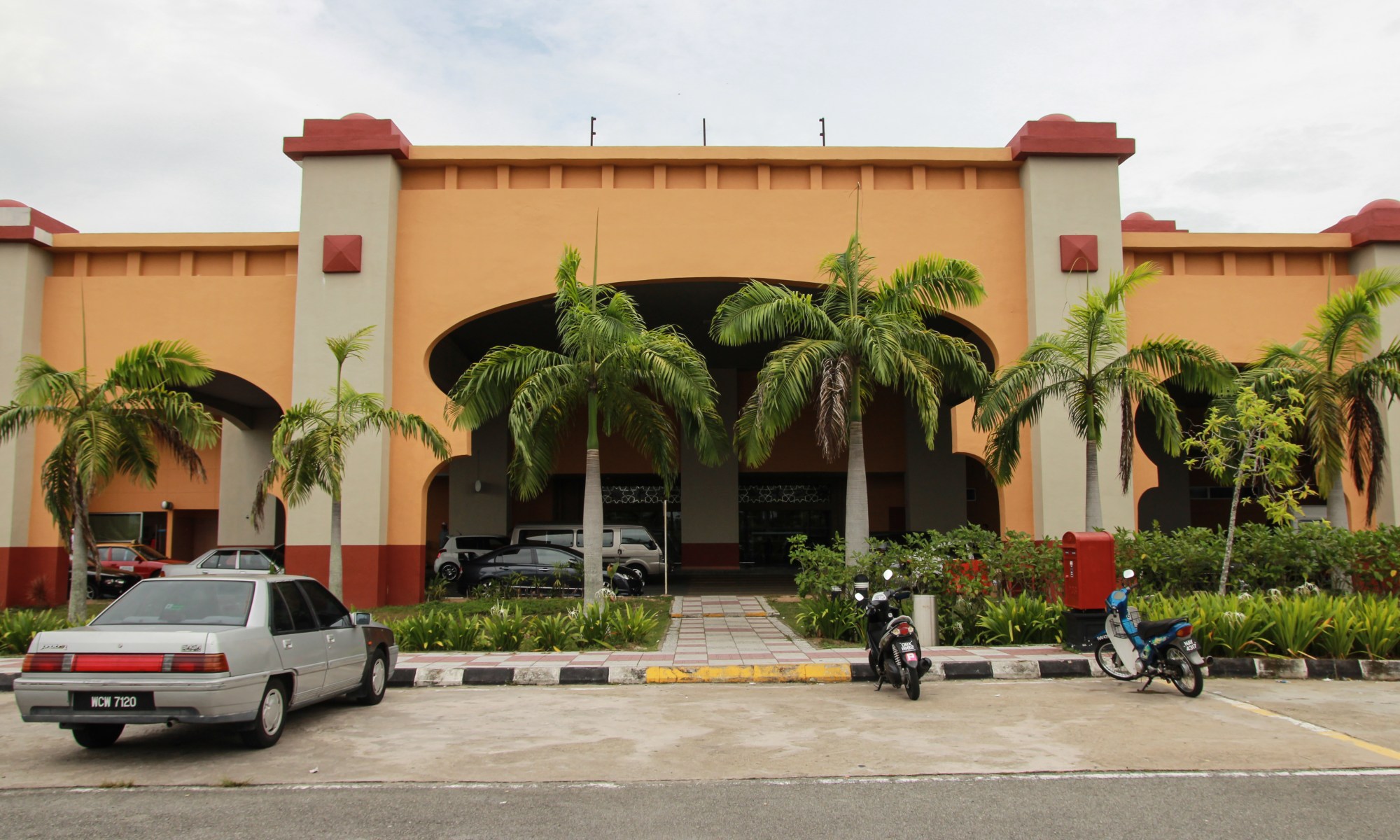
First operating in 1949, today the airport combines modern facilities (e.g. taxi building, multi-storey carpark, VIP lounge, cargo infrastructure) with beautiful traditional Kelantanese architectural form. Passengers can fly from this Kota Bharu airport to regions (e.g. Penang, Kuala Lumpur, Kota Kinabalu) within East and Peninsular Malaysia. It presently carries 4,000 to 4,500 passengers with 30 to 35 flights per day.
While Phase One of the upgrade has been completed and welcomed by the Kelantanese and Malaysian locals, and although Phase Two is underway, the upgrade plan has suffered a number of unexpected complications along the way. Kelantan’s airport policy ambition tells a broader story about the complex relationship between development, culture, and nature within Southeast Asia’s spaces of development.
Since late 2015, there have been growing discussions about developing the airport. These all began with a former Prime Minister’s parliamentary budget speech. The Straits Times wrote: “It’s time Kelantan got a bigger and better airport.” The idea was to expand the runway so that it can accommodate Boeing 747s.
The airport’s ambition emerges from a broader developmental story, and Kelantan is an interesting and important case. Many outsiders’ impression of Kelantan is that it is a ‘backward’ area, whose development has been stunted by the long-term spatial strategy of the long-ruling political party, Parti Islam Se-Malaysia (PAS) to maintain political control, and to create an Islamic state.
Compared to Selangor, deemed the powerhouse of the Malaysian economy and contributing about 25% of Malaysia’s Gross Domestic Product (GDP), Kelantan’s GDP contribution was estimated at 1.8% in 2023. Although the land area of Kelantan is almost twice the size of Selangor’s, the Selangor population, according to official government statistics from a 2020 census, is about four times that of Kelantan’s. Kelantanese have attributed their migration to Selangor to more rewarding employment opportunities, rather than to the official claim of ‘wanderlust’.
Uneven geographical development is very real. But Kelantan’s political class has not bought this story, and argued that comparing Kelantan to Selangor is as logically fallacious as comparing apples with oranges.
The ruling party’s idea for development in Kelantan is clear. When the vice president of PAS argued that “while Kelantan is poor, but the Kelantanese people are rich”, the message was that Kelantan deserves an autonomous space for thinking about development in relation to federal, regional, and international developments.
Intending to stand on their own feet, with their own developmental model guided by a religious-political class alliance, the Kelantanese government has, in 2023, connected with fifty (50) Kelantan-born TikTok influencers to “boost” its tourism and soft power outreach.
The message and the ideology behind Kelantan’s particular push for the airport upgrade reflects its ambition to internationalise its developmental model. Here comes the problem: which is neither political nor ideological, but a geographical one.
The LTSIP upgrade has been underway for some time. In May 2024, the Prime Minister announced that Phase One of the upgrade has been completed, and Phase Two would follow soon to extend the LTSIP runway to 400 metres, and to expand its capacity to take on four million passengers, so that it becomes an international airport. The official explanation is that passengers at the LTSIP have been increasing, and thus the upgrade, estimated to cost a RM440 million (approximately, USD 99.5 million), is necessary.
Between July and September 2024, Malaysia’s Transport Minister shared to the press that the overall progress of the LTSIP upgrade has been delayed by about 25% due to the COVID-19 health disaster, and that Phase Two of the upgrade was scheduled to be completed by January 2025.
But, as of late February 2025, at the time of writing, no news has emerged about the completion. Instead, news of (1) flooding disasters (due to heavy rainfalls, land use, inadequate drainage system, and monsoon-induced ocean tides) and (2) disruptions to airport operations in Kelantan, has been more pressing. Kota Bharu, where the LTSIP is located, is one of the coastal areas in Peninsular Malaysia closest to the South China Sea.
During the end of 2024, flights initially planned to land at the LTSIP diverted to the Kuala Lumpur International Airport (KLIA). Kelantanese communities suffered from the floods, as the South China Morning Post reported that these floods in the Northern region (including Kelantan and neighbour state Terengganu) displaced 122,000 inhabitants and took four lives. Police and military forces have been busy with subsequent relief efforts. In fact, the Malaysia Airports Holdings Berhad (an airport management subsidiary to Malaysia’s sovereign wealth fund, Khazanah Nasional, under the Ministry of Finance) has also published that it was sending modular tents to the flood relief centres near the LTSIP.
Virus, water, geology, weather, migration, and ordinary everyday life: a geographical analysis of the airport upgrade in Kelantan points out why development is often not only about money, technology, and political self-belief.
Looking back, the flooding disasters could be taken as a few ‘moments’ of difficulty, and the airport, so beloved by locals, may be resuming its way towards an international status. But the forces of nature are here to stay.
It is never a ‘bad’ idea to seek self-reliance in economic development. To construe this Kelantanese intention as ‘backward’ in relation to wealthier economic zones in Malaysia would be a colonial act of disregarding Southeast Asian and local endeavours to survive the global political economy. Kelantan’s self-reliance and distinct Islamic approach should always be treated as a welcome idea for economic development, because it speaks to the opportunities for local communities to work for new comparative advantages and self-sufficiency. It is always good for Southeast Asian communities to be able to assert their distinct heritage within international development discourses and practices, rather than simply embracing universal, ‘standardising’ models at the risk of wiping out local ways of life and adaptations.
The real problem comes, nevertheless, when one strives for developmental and economic self-sufficiency without an adequate, holistic assessment of one’s own material conditions and geographical limitations: geological conditions, surrounding environmental features, the general human conditions of local populations, and ‘soft power’ relationships in the country and region.
The geographical story of Kelantan’s airport upgrade offers several lessons on development. Before internationalising the airport, policymakers should have begun with both a strategy and practical measures to ensure the long-term physical security and comfort of Malaysia’s coastal communities. Decision-makers should collaborate with geographers and social scientists and examine carefully how environmental factors shape Malaysia’s place in the world economy.
About the author: Sing Fei Teoh is a doctoral candidate at the School of Humanities, University of Nottingham Malaysia. Sing Fei specialises in and has been published on the community media developments and geographical developments in Maritime Southeast Asia.
Suggested further reading
Bird, M., Cowie, S., Hawkes, A., Horton, B., MacGregor, C., Ong, J.E., Tan, A.S.H., Teh, T.S., and Yasin, Z. (2007) Indian Ocean tsunamis: environmental and socio-economic impacts in Langkawi, Malaysia. The Geographical Journal. Available from: https://doi.org/10.1111/j.1475-4959.2007.00224.x
Connolly, C. (2019) Urban political ecologies of heritage: Integrating cultural and natural landscapes in Penang, Malaysia. Transactions of the Institute of British Geographers. Available from: https://doi.org/10.1111/tran.12335
How to cite
Teoh, S. F. (2025, April) Kelantan’s airport policy: geographical lessons for local development. Geography Directions. https://doi.org/10.55203/EZPF1336
 Geography Directions