

By Giuseppe Forino, University of Salford, Lynda Yorke, Bangor University, Monia Del Pinto, Loughborough University, Hywel Griffiths, Aberystwyth University, Louise Barker, RCAHMW, Martin Bates, University of Wales Trinity Saint David, Samantha Brummage, University of Wales Trinity Saint David, Andrew Davidson, GAT, Sarah Davies, Aberystwyth University, Corinna Patterson, Bangor University, Hayley Roberts, Bangor University, Gary Robinson, Bangor University, and Andy Webb, Bangor University.
Climate change is posing a challenge to cultural heritage around the world. It can compromise the unique features of a landscape, the stability of structures, the quality of building materials. Such challenges invite a collaborative and interdisciplinary approach between physical and social science disciplines, working together to integrate approaches and methods, and share data in order to understand the potential impacts more fully, and to work together to protect cultural heritage from climate-related risk.
To explore the possibilities for collaboration, we launched an ‘Interdisciplinary pan-Wales Network for Climate Heritage’ at Bangor University in Wales (UK). We held two full-day meetings with academic participants from different universities and heritage organisations in Wales and England. As we previously noted, cultural heritage in North Wales is no exception in terms of the impacts of climate change and the need for an interdisciplinary approach. We identified seven critical steps that can be taken to inform a future agenda on climate change and cultural heritage in North Wales, and beyond.
1. Everyday life as part of cultural heritage
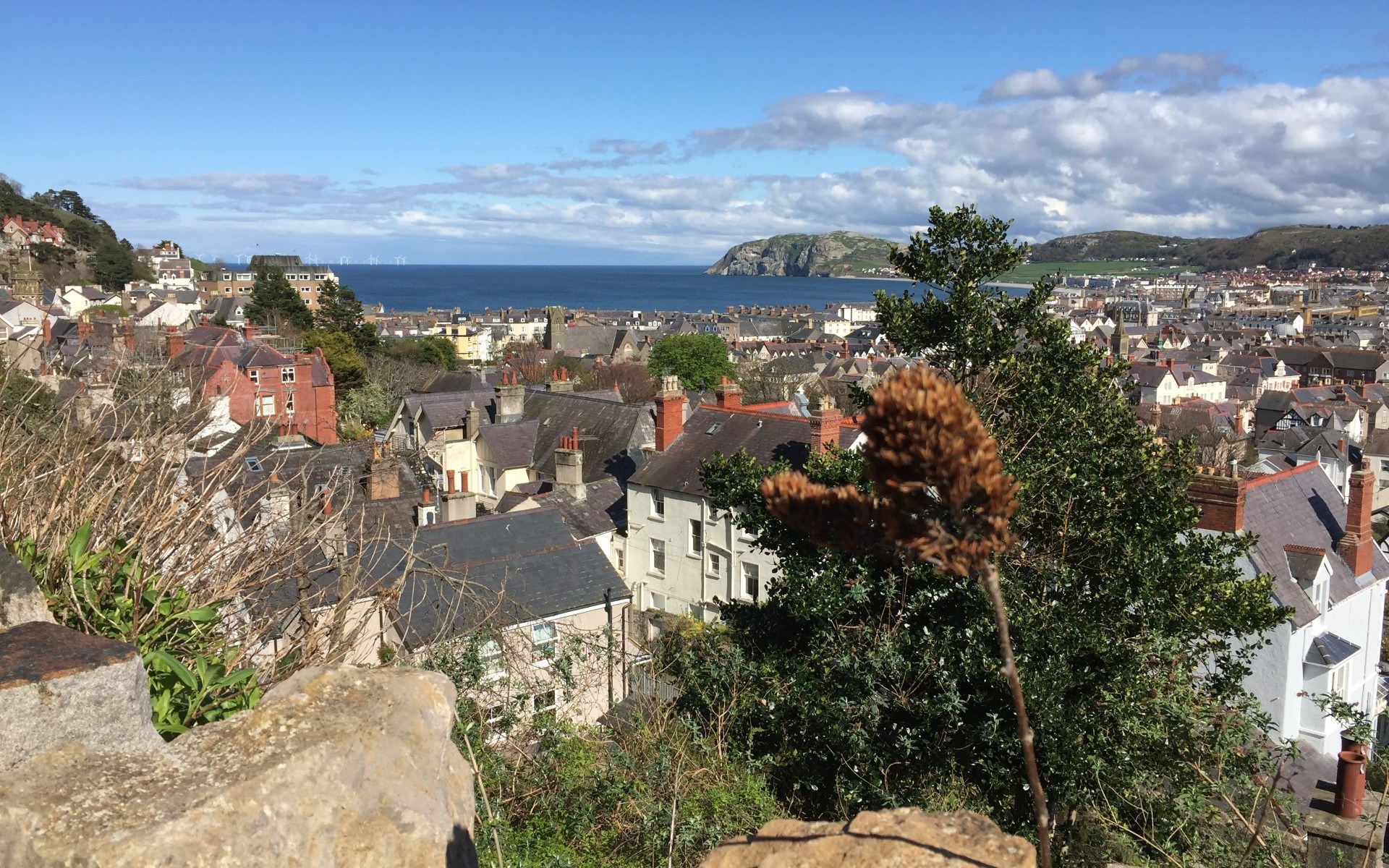
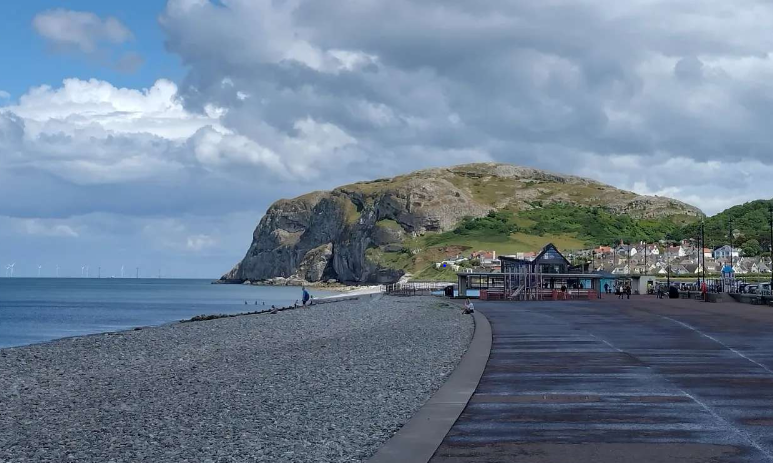
In tourist hotspot areas like North Wales, it would be easy to consider cultural heritage as consisting only of iconic ‘landmarks’ (e.g., Penrhyn Castle, Caernarfon Castle, or Ynys Môn/Anglesey) or renowned and ‘official’ listed heritage (e.g. those managed by CADW, the Welsh Government’s Historic Environment Service, or the National Trust). Beyond these, indeed, there are also significant ‘informal’ places and practices for local communities representing a form of local heritage, yet not labelled as such. Communities often show attachment to places such as squares, gardens, beaches or social spaces that are important for their everyday life, for their social and cultural action, or for nurturing memories and emotions. As these informal places and practices are often neglected in research, there is a need to bring attention to them.
2. Not just techno-centric approaches
Technologies such as preservation techniques, monitoring tools, or physical assessment are frequently employed to protect cultural heritage from climate impacts. They should be coupled, however, with considerations of the social, political, and cultural dimensions of cultural heritage. For example, exploring people’s perceptions and emotions in relation to cultural heritage can help understanding how communities and visitors are connected with a particular heritage site, practice or landscape. Investigating how heritage is placed in the life of the community or a country (e.g. buildings and monuments associated with a specific historic event, ethnicity, or language) can also reveal its importance for preservation, and how preservation might best be carried out.
3. A people-centred approach to cultural heritage management
Local knowledge is key to supporting heritage preservation. Local communities have the necessary knowledge to inform on unknown and intangible aspects of a place that are difficult to uncover through traditional academic research. Local knowledge gives a better understanding of the role of cultural heritage in the everyday life of the places. Academics must therefore recognise the limitations of imposing our top-down process of knowledge production, and must value local knowledge in a way that is comparable to academic knowledge. However, we should not over-romanticize local knowledge, which can bring with it its own power relationships, biases or exclusions. We must find ways to not only integrate people in our research, but to make this a participatory endeavour that views people as active participants and agents of change.
4. Long-term engagement with non-academic stakeholders
Given the importance of local knowledge, renewed attention must be given to developing and maintaining genuine and trusting relationships with non-academic actors. We know that trusting relationships need to be built slowly and by moving outside of institutional norms, but we acknowledge that short-term research funding often does not allow us to do so. Nevertheless, we believe that efforts are necessary to develop and maintain relationships with local actors who can contribute to creating and shaping the research through their knowledge.
5. Contextualizing climate change
Whilst we are in an era of climate change, climate change cannot be a scapegoat for broader issues affecting the cultural heritage sector. Instead, issues related to climate change should be incorporated into larger discourses around the sustainability of the everyday lives of people and communities. Maintaining cultural heritage is aligned with the sustainable management of a place that differs from physical maintenance alone, and includes aspects such as environmental quality, accessibility, social wellbeing, education, political participation. Climate change must therefore be discussed and contextualized in relation to these wider issues.
6. Innovations in climate-change communication
Whilst climate scenarios and data, including projections, are important to communicate and illustrate climate trends, we should look for more innovative ways to communicate – e.g. by using arts, imagination, creativity – with non-specialist audiences in ways that make academic knowledge accessible and engaging to all. This makes the discourse at the intersection of climate change and heritage management more accessible, inclusive, and easy to understand. Further research is needed to explore, develop and implement, alternative ways of communication.
7. Interdisciplinarity as a tension in working together
While interdisciplinarity is a process that might work in theory, challenges often arise in practice due to different languages, norms, and visions across disciplines. Further complications might arise when engaging with non-academic actors, who have other expertise and language and are sometimes reluctant to trust academics. Given these challenges, we acknowledge that interdisciplinarity, instead of being a practical goal, is a productive tension towards developing and maintaining a dialogue across disciplines and participatory groups that is genuinely collaborative and open. This tension would support a research process that is more inclusive, equitable and collective.
By giving more attention to all of the above aspects of this work, we can foster more collaboration across different disciplines and between academic and non-academic actors. We can look for more transformative approaches to support the protection of cultural heritage from climate change, in North Wales and beyond.
This work was supported by a Natural Environment Research Council (NERC) Discovery Science Grant, a NERC Public Engagement with Environmental Science Grant, and a Learned Society Wales Research Workshop grant, awarded to Yorke and Forino.
About the authors: Giuseppe Forino is a Lecturer in Planning at the University of Salford, Lynda Yorke is a Senior Lecturer in Physical Geography at Bangor University, Monia Del Pinto is a Research Fellow at Loughborough University, Hywel Griffiths is a Reader in Physical Geography at Aberystwyth University, Louise Barker is Senior Investigator at RCAHMW, Martin Bates is Professor of Pleistocene Geoarchaeology at the University of Wales Trinity Saint David, Samantha Brummage is a Postdoctoral Researcher at the University of Wales Trinity Saint David, Andrew Davidson is Chief Archaeologist at GAT, Sarah Davies is Professor of Physical Geography at Aberystwyth University, Corinna Patterson is a Lecturer in Sociology at Bangor University, Hayley Roberts is a Reader in Public International Law at Bangor University, Gary Robinson is a Senior Lecturer in Archaeology at Bangor University, and Andy Webb is a Senior Lecturer in Modern Literature Bangor University.
Suggested Further Reading
Danermark, B. (2019). Applied interdisciplinary research: a critical realist perspective. Journal of Critical Realism. Available at: https://doi.org/10.1080/14767430.2019.1644983
Ettinger, J., Walton, P., Painter, J., Flock, S. A., Friederike, E. L. O., (2023). Extreme Weather Events as Teachable Moments: Catalyzing Climate Change Learning and Action through Conversation. Environmental Communication. Available at: https://doi.org/10.1080/17524032.2023.2259623
Fatorić, S., & Daly, C. (2023). Towards a climate-smart cultural heritage management. WIREs Climate Change, Available from: https://doi.org/10.1002/wcc.855.
Forino, G., Yorke, L., Robinson, G., Austin, M., Sieradzan, K., Hewitt, J. (2023, 25 September) The need for a people’s perspective when exploring climate change and cultural heritage. Geography Directions. https://doi.org/10.55203/ZAHZ8138
Jigyasu, R. and Chmutina, K. eds., (2023). Routledge Handbook on Cultural Heritage and Disaster Risk Management. Taylor & Francis.
Nicu, I. C., & Fatorić, S. (2023). Climate change impacts on immovable cultural heritage in polar regions: A systematic bibliometric review. WIREs Climate Change. Available from: https://doi.org/10.1002/wcc.822
Sippel, M., Shaw, C., and Marshall, G., (2022). Ten key principles: How to communicate climate change for effective public engagement. Climate Outreach Working Group, Climate Outreach, Oxford.
How to Cite
Forino, G. et al. (2024, September) An interdisciplinary research agenda for climate change and cultural heritage. Geography Directions. https://doi.org/10.55203/IATD1690
 Geography Directions