

By Ed Armston-Sheret, Institute of Historical Research
In the last three decades of the nineteenth century, Isabella Bird Bishop travelled to every continent except Antarctica. She also holds an important place within the history of geography and was one of the first women admitted to the Royal Geographical Society in 1892.
Today, Isabella Bird Bishop isn’t as well-known as other explorers like Scott and Shackleton. But there has been an upsurge of interest in her life and travels. In 2022, Ruby Wax, Melanie Brown, and Emily Atack retraced her journey through the Rocky Mountains for BBC Television programme on ‘trailblazing women.’
Because she was one of the first women to gain recognition within geographical circles, many writers have focused on the fact she was a woman breaking into a predominantly masculine field. In a recent paper published in Area, I argue that it’s also important to pay attention to her disability and how it shaped her travels.
Studying Bird’s disability is complicated by the fact that her health seemed to baffle Victorian doctors. What we do know is that Bird Bishop had a long-standing spinal condition. At the age of 18, she had a tumour removed, but still suffered with pain in this area all her life. She also experienced periods of near-total prostration, caused both by pain but also by psychological conditions, including depression.
Health and exploration
In the Victorian era, exploration was a very masculine affair. Social norms discouraged women, particularly upper-class white women, from putting themselves in dangerous situations. Even today, fieldwork is often carried out in ways that discriminate against or exclude marginalised groups – though there are important initiatives in place to try to make fieldwork more inclusive.
Bird Bishop’s experience was quite different, and medical interpretations of her disability offered her with opportunities to travel. In 1872, her doctors advised her to go to sea. This advice was based on the idea that ‘a change of air’ might help her to recover from her complex physical and mental health conditions. Victorian medical thinking often saw travel – particularly to either the sea or mountains – as beneficial to the health of patients with chronic health conditions. Bird Bishop’s early travels were inspired by such advice.
The doctors’ suggestion would change Bird Bishop’s life. Over the next thirty years, she would travel to destinations including Hawaii, the USA, Japan, Malaysia, Iran, India, and China. She would write bestselling books on her travels. Her health did genuinely improve in mountainous areas and while riding. But this health advice also provided Bird Bishop with a socially acceptable reason for travelling. In Unbeaten Tracks in Japan (1880), one of her early books, she described herself as a ‘solitary health-seeker’.
Reliance on others
Bird Bishop’s disability also meant that she often relied on the help of others while she was travelling, including the animals she travelled with. She often rode on horseback. Riding allowed Bird Bishop to move distances that she would have found it impossible to walk. It also seemed to help her spinal condition – though only if she rode cross-saddle. Side-saddle riding (which involved having two legs on one side of the horse) was considered more feminine at the time. Her disability thus shaped how she travelled.
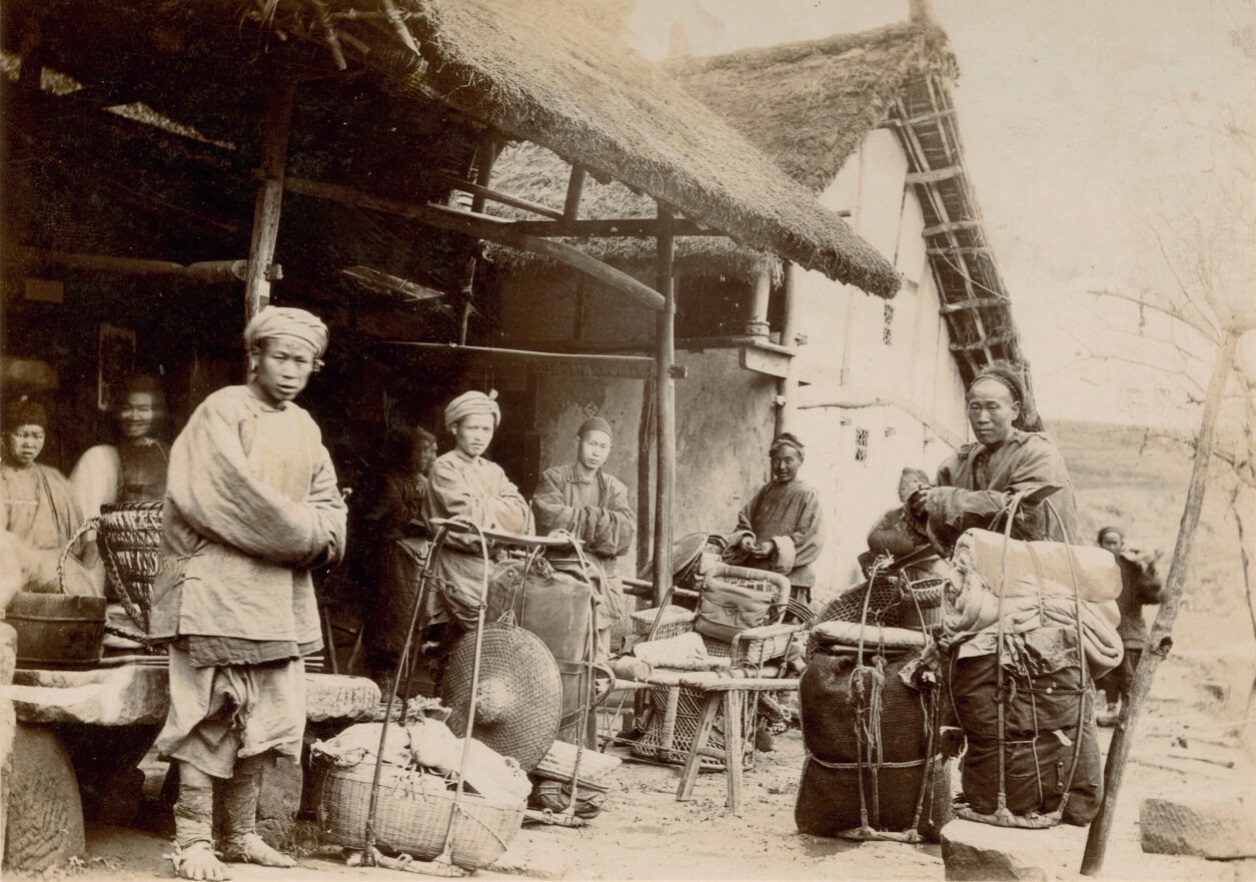
But Bird Bishop also relied on the bodies, labour, and expertise of other people. When travelling in China, Bird Bishop relied on the labour of Asian men. For instance, three separate groups of chair-bearers carried her across the country in the mid-1890s. The men who did such work seldom got much recognition in Bird Bishop’s published narratives.
In many ways, this was not unusual, as recent writing on the history of exploration has shown, explorers were seldom the lone, heroic individuals. Instead, they often led large, diverse workforces and depended on the skills and labour of numerous other people and animals. Equally, many able-bodied travellers were rendered unwell or disabled while travelling.
Conclusion
Bird Bishop’s life and travels show us that disabled women did take part in Victorian exploration. Her life and travels also show us the importance of studying the different aspects of her identity—and the complex ways, that class, gender, race, and disability interacted. We should also avoid celebrating Bird Bishop as a heroic individual. Like most explorers, she also depended on lots of other people and animals. Their labour and experiences also shouldn’t be forgotten.
About the author: Ed Armston-Sheret is the Alan Pearsall Fellow in Naval and Maritime History at the Institute of Historical Research. His research uses a focus on the body to rethink the history of exploration. In doing so, his work draws attention to the experiences and contributions of those ignored within mainstream histories of geography, including women, people of colour, and the working class. He is also interested in human-animal relations and the relationship between alcohol and travel. His forthcoming book, On the Backs of Others: Rethinking the History of British Geographical Exploration, will be published in December.
Suggested Further Reading
Armston-Sheret, E. (2024) Disability and gender in the history of geographical exploration: Understanding Isabella Bird Bishop as a disabled geographer. Area. Available from: https://doi.org/10.1111/area.12944
Martin, P.R. (2024) The ‘deer-men’ and the ‘bowhead-men’: The colonial co-optation of Arctic Indigenous knowledge within the ‘origins of the Inuit’ debates. Transactions of the Institute of British Geographers. Available from: https://doi.org/10.1111/tran.12615
How to Cite
Armston-Sheret, E. (2024, August) Isabella Bird Bishop: the disabled woman who navigated Victorian exploration. Geography Directions. https://doi.org/10.55203/OJUU3261
 Geography Directions