
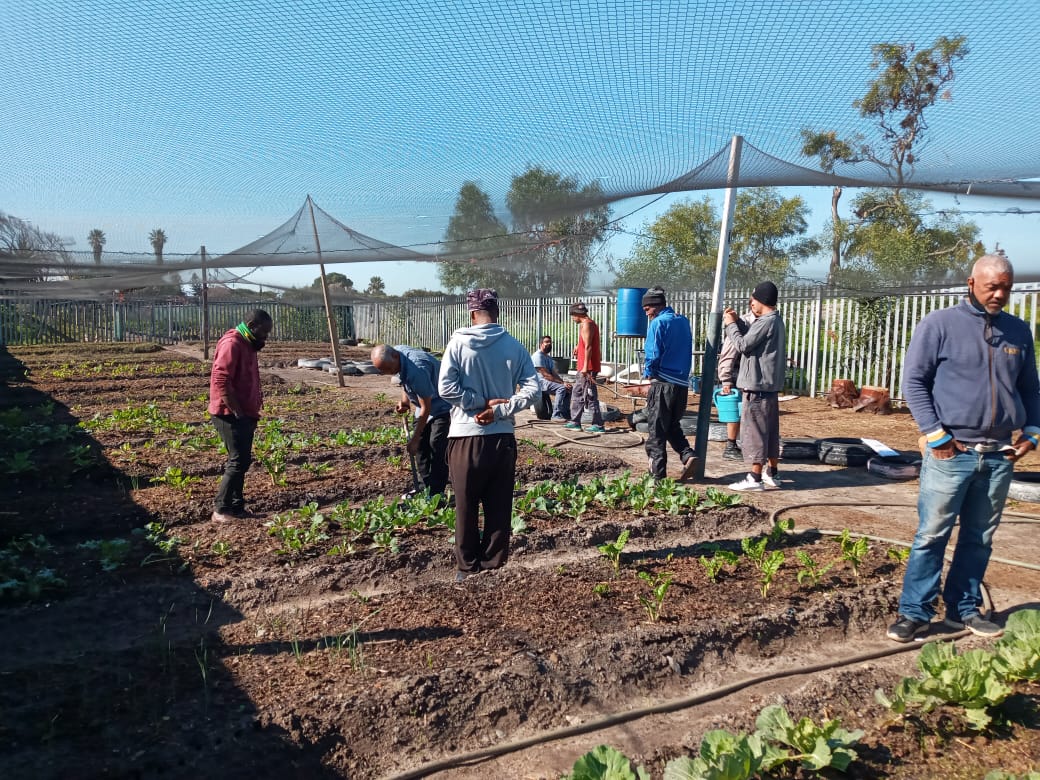

By Tinashe Kanosvamhira, University of the Western Cape, Alexander Follmann, University of Cologne, and Daniel Tevera, University of the Western Cape
Picture a world where communities come together to share and collectively manage resources, making decisions through democratic and horizontal structures. This concept, known as the ‘commons’, traditionally revolved around natural resources like forests, fishing waters, and pastures. In this communal framework, the community collectively determined how to utilise, distribute, and maintain these resources (Ostrom, 1990).
Now, what if we told you that the idea of the commons has expanded beyond natural resources to include urban spaces, alternative food movements, and urban community gardens? These urban community gardens are not mere plots of land; they are vibrant shared spaces where community members unite to cultivate plants, primarily for food production but for several other reasons. These gardens serve as hubs for community engagement, promote environmental sustainability, and foster social interaction. Some go a step further by offering food and nutrition education, aligning with community-inspired socioeconomic and nutrition goals.
The challenge
While these gardens are symbols of unity and resilience, they face a complex challenge. They exist in a world entangled with neoliberal governmentality, a dominant ideology favouring privatisation and individualisation. Neoliberal governmentality moulds habits, expectations, behaviours, subjectivities, and ways of living. This approach to governance influences and shapes various aspects of individuals’ lives, fostering a set of practices and expectations in line with neoliberal principles. It is akin to swimming against a strong current while resisting its pull. For instance, in the realm of community gardens, the influence of neoliberalism is evident in the emphasis on individual responsibility for food production and self-sufficiency. Neoliberal principles drive a market-oriented approach, fostering structures like community-supported agriculture and farmers’ markets associated with these gardens. The values of competition, efficiency, and entrepreneurial spirit are promoted, encouraging participants to optimise production methods. Simultaneously, community gardens under neoliberal influence stress the significance of volunteerism, civic engagement, and community empowerment, reflecting the belief that positive change can be driven by individual and community-led efforts. Despite these alignments, the intricate relationship between neoliberalism and community gardens involves a nuanced interplay of values, including cooperation, sustainability, and community building, which may at times challenge the individualistic nature of neoliberal ideology. The relationship between community gardens and neoliberalism is intricate and, at times, contradictory. They can be seen as counter-movements pushing back against neoliberal urban strategies, yet paradoxically, they can align with the very strategies they aim to challenge.
What’s missing?
What we’re missing in this narrative is a crucial piece of the puzzle—a treasure trove of stories and experiences often overshadowed in research. The majority of studies on urban community gardens predominantly come from the Global North, leaving the vibrant narratives of the Global South in the shadows. In bustling southern cities like Cape Town, rich tapestries of community gardens remain largely unheard, as if a vital chapter of the urban gardening story is missing. This gap in our understanding represents a missed opportunity to learn from the diverse experiences of these gardens, their unique challenges, and their innovative solutions in confronting the complexities of urban life in the Global South.
Our journey
To bridge this gap, we embarked on a journey deep into the vibrant neighbourhoods of post-apartheid Cape Town. Our mission led us to 34 urban community gardens nestled in low-income areas, where we uncovered tales of resistance, growth, and transformation. These gardens nestled in low-income areas, challenge the established norms of neoliberal privatisation and individualisation. They are more than patches of green; they are beacons of change, resistance, growth, and transformation offering an alternative model for resource management in a city where the dominant narrative often leans toward privatisation.
Our survey of 97 participants from these community gardens paints a nuanced socio-economic profile, with a predominant representation of an elderly population facing unemployment challenges. As one participant eloquently expressed, working in the garden was not just about growing plants; it was about growing a community that understands the impact of our current food system. The diversity in cultivation methods revealed a rich tapestry of approaches, with 19 out of 34 gardens practicing collaborative cultivation through collective plot utilisation (Figure 1). In contrast, 14 gardens adhered to an individual cultivation approach, reminiscent of the traditional UK allotment system. The significance of this diversity lies in its reflection of varied resource management strategies employed by these community gardens.
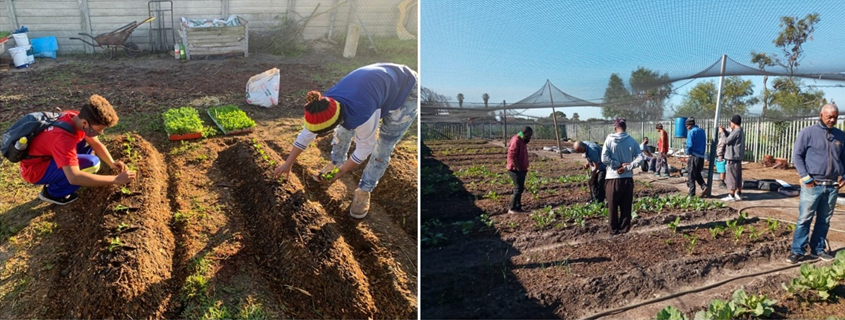
An intriguing aspect of our findings is the prevalence of community gardens on school land, driven by land tenure security challenges. This unique arrangement not only addresses the issue of land availability but also fosters educational collaboration between the gardens and schools. One participant highlighted this symbiotic relationship, stating, ‘Our garden not only feeds us but also nourishes the minds of the younger generation through collaboration with schools’.
Examining the organisation, access, and resources of these community gardens provided insights into their inner workings. Informal governance structures, where the most active member assumes a leadership role, prevail in most gardens. However, some opt for formal structures, registering as non-profit organisations (NPOs) or cooperatives to gain credibility for funding opportunities. The collective utilisation of infrastructure and facilities, including tool sheds, marketing sheds, water systems, and toilets, underscores the interconnectedness within these gardens.
Furthermore, the findings illuminate the gardens’ impact on their communities beyond cultivation. Engaging in collective activities, workshops, and training sessions, the gardens become hubs of social interaction and knowledge-sharing. Many gardens extend their reach beyond their boundaries, participating in Community Action Networks (CANs) and collaborating with food activist organisations, emphasising their commitment to promoting awareness and education.
In this way, we argue that the gardens are more than patches of green; they are beacons of change, offering an alternative model for resource management in a city where the dominant narrative often leans toward privatisation.
The way forward
As we move forward in our exploration, we must embrace these community gardens as ‘experimental’ commons. They are constantly in flux, at times appearing contradictory in their quest to break free from the constraints of the neoliberal city. Yet, their potential is undeniable. These green sanctuaries possess the remarkable ability to bolster food security, nurture community solidarity, and pave the way for sustainable urban development. In moving forward, it is crucial to recognise these community gardens as ‘experimental’ commons, still evolving and at times contradictory in terms of their community mobilisation goals that transcend food production and income generation. The potential for policy relevance and contributions to the development of resilient local food production systems should not be underestimated. Community gardening can enhance food security and foster community solidarity for low-income and middle-income urban households, serving as a vital component of sustainable urban development.
In the grand tapestry of Cape Town’s urban landscape, the story of these community gardens stands out as a testament to hope and resilience. They challenge the prevailing neoliberal narrative and illuminate a path toward positive change. These gardens are not just places to grow plants; they are living examples of how communities can unite and thrive, creating a brighter and more sustainable future for all.
About the authors: Tinashe Kanosvamhira is a Postdoctoral Fellow at the University of the Western Cape, Alexander Follmann is a Research Fellow at the University of Cologne, and Daniel Tevera is an Extraordinary Professor at the University of the Western Cape.
Suggested Further Reading
Kanosvamhira, T.P., Follman, A. & Tevera, D. (2023) Experimental urban commons?: Re-examining urban community food gardens in Cape Town, South Africa. The Geographical Journal. Available at: https://doi.org/10.1111/geoj.12553
Kanosvamhira, T.P. (2023) The institutionalisation of urban community gardens in Cape Town, South Africa. Area. Available at: https://doi.org/10.1111/area.12911
Saguin, K.K. (2022) Urban gardens on the edge of city-making in Metro Manila. The Geographical Journal. Available at: https://doi.org/10.1111/geoj.12459
How To Cite
Kanosvamhira, T., Follmann, A., and Tevera, D. (2023, 29 November) Cultivating hope: urban community gardens as beacons of resilience in the neoliberal city – a case study in Cape Town, South Africa. Geography Directions. https://doi.org/10.55203/MTCY3667
 Geography Directions
lovely research . Keep it up!