


By Nicola Gabellieri, University of Trento, Arturo Gallia, University of Rome “Tre”, Eleonora Guadagno, University of Naples “L’Orientale
What happens when we pop a bottle? What implications does it have for supply chains? For production processes? For the protection of the environment, biodiversity, or the ecosystem? For the landscape or cultural heritage of a region?
Viticulture – the cultivation of grapes for winemaking – is undergoing many interconnected changes in Europe today, including European policies for the protection and recognition of quality brands; enforcement regulations related to specifications; varietal choices and local agronomic practices; and changing climatic conditions to which the sector needs adapt. In Italy, the recent passage of the ‘Ministerial Decree on Historic and Eroic Vineyards No. 6899/2020’ has had significant policy implications and poses new challenges for geo-historical and geographical analysis. It also, however, allows us to reflect upon the effects of climate change and environmental degradation on viticulture.
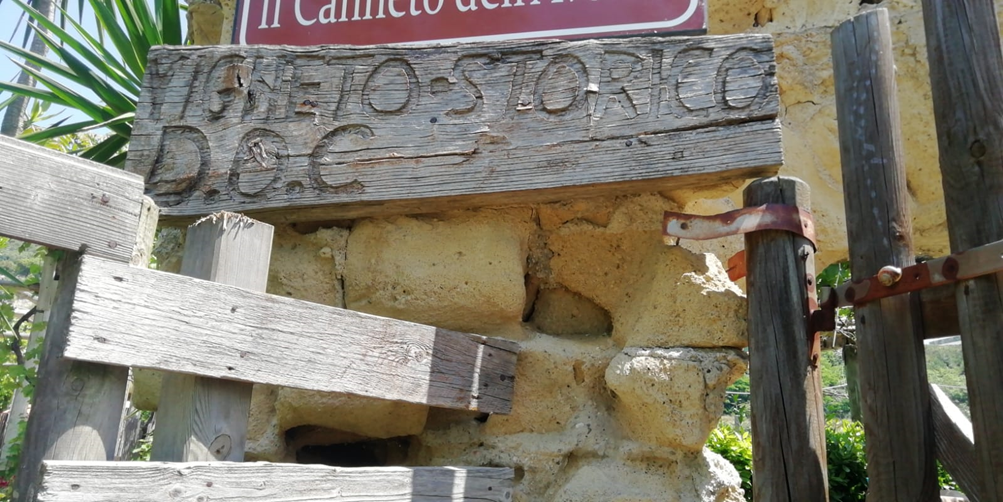
The decree emphasises the importance of recovering traditional techniques and the preservation of crop varieties historically present in at-risk wine-growing territories e.g. on islands, mountain regions, or areas of hydrogeological risk. This involves the designation of certain areas as being of ‘cultural significance’ due to their long-standing tradition of winemaking, unique grape varieties, historical vineyards, and cultural practices associated with wine production in order to preserve and protect them for future generations. Legal and administrative measures will be employed to ensure their conservation whilst also supporting sustainable viticulture and rural development. This, however, comes with several challenges.
- Selective use of history: Recognition of historic vineyards requires awareness of the discontinuities in that place’s history. It is therefore necessary to avoid an instrumental, exclusive, and selective use of the past. What is not ‘selected’ and therefore not considered as ‘heritage’? What values are ascribed to heritage? Is there a current use of the past or an expansion of ‘places of memory’ in terms of a ‘public use of history’? Places are often designated ‘historic’ simply for marketing purposes, not considering the potential impacts of such a definition.
- Infrastructure and tourism: Promoting heritage viticultural areas often entails developing infrastructure for tourism and wine-related activities. This can strain local resources and requires careful planning to avoid negative impacts on the environment and local communities. Productivity stress and the exploitation of natural resources in some specific territories leads, paradoxically, to the loss of the primary resource and to environmental degradation that damages the lives of the communities inhabiting the territories (e.g., the case of Trentino Alto-Adige or Veneto).
- Environmental degradation and effects of climate change: The new policies pose significant challenges to viticulture, affecting grape ripening, wine quality, and production. Rural territories face the challenge of simultaneously adapting to these changing conditions whilst preserving their viticultural heritage to enhance their economic and cultural resilience. The increasingly urgent problem of climate warming in the Italian peninsula that has led to the increase of extreme phenomena and major droughts, in addition to endangering ecosystem balances, jeopardises the complex socio-economic system related to quality wine production. According to what has been presented in the literature, the risks associated with climate change with respect to the viticulture sector include different but interrelated elements (e.g., heat stress, water availability, soil degradation, diseases) and can lead to wines that are unbalanced, that have high alcohol content and low acidity, that have reduced commercial value, and, above all, that undermine the very concept of terroir (the characteristic taste and flavour imparted to a wine by the environment in which it is produced) inextricably linked to quality production.
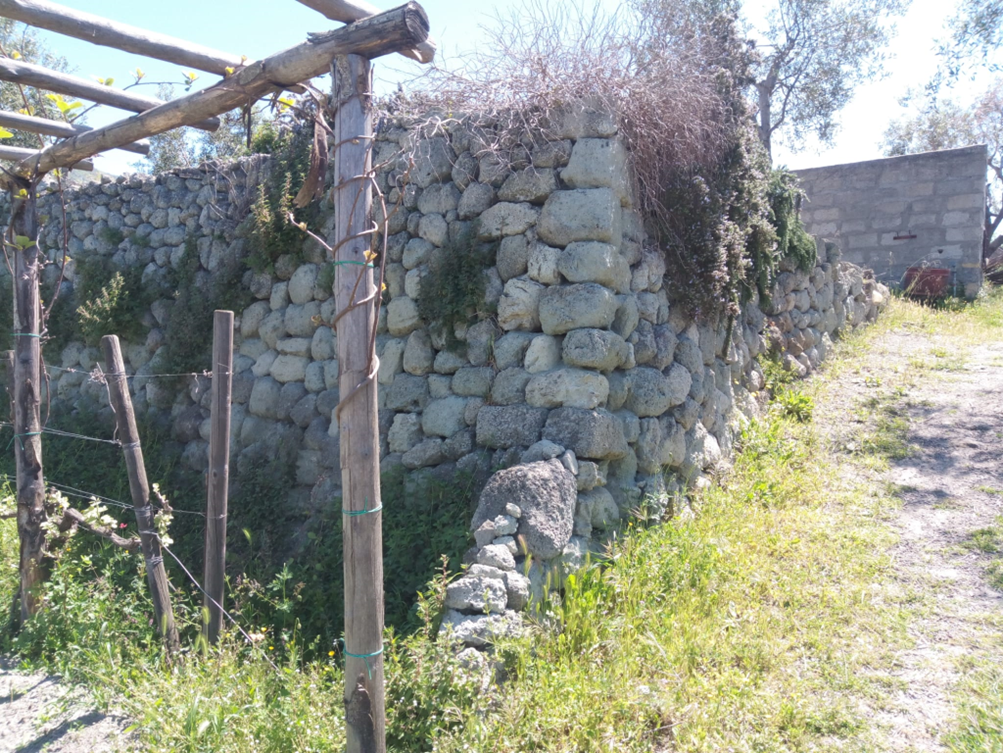
The issues we present here are part of research carried out in three different geographical contexts in Italy (the Trentino-Alto Adige, Lazio, and Campania regions). Our research considers the specificities, vulnerabilities, and characteristics of each territory and community we have studied also in the light of the possible impacts of climate change. The results of these investigations have been collected in a recent publication and highlight how addressing these challenges requires careful planning, collaboration, and a holistic approach to rural development that balances heritage preservation with the changing dynamics of the wine industry and rural landscapes.
Starting from this observation, one way to manage risk is to invest in modelling tools that take planned adaptation strategies and diverse local conditions into account alongside the potential for extreme climatic phenomena. Local communities must also be worked with to raise awareness of certain risks and ensure the sustainability of resilience-building initiatives. These steps will give more ‘value’ to the wine-growing territories in the fight against climate change and make them more resilient, thus helping to overcome both institutional barriers and intrinsic contradictions and enabling them to maintain the quality levels required by certifications and the market.
What remains to be seen is whether the decree will have real implications for wine-growing territories in terms of protecting and enhancing rather than exploiting their resources. Thus, the new challenge is that of tracing the individual histories of vine landscapes to bring out the value of each individual landscape through a geographic-historical interpretation of environmental and spatial processes to see how cultural and environmental sustainability might be conceived of together.
The cover image for this post is by Nicola Gabellieri, Arturo Gallia and Eleonora Guadagno.
Suggested Further Reading
Lazzeroni, M. & Albanese, V.E. (2022) Perceptions and imaginaries about the fourth industrial revolution between geographies of opportunity and discontent: Some reflections on the Italian case. The Geographical Journal. Available from: https://doi.org/10.1111/geoj.12491
Marques, P. & Barberá-Tomás, D. (2022) Innovating but still poor: The challenges of regional development in regions with mature industries. Transactions of the Institute of British Geographers. Available from: https://doi.org/10.1111/tran.12507
Summerfield, M. (2016) The geography of wine: regions, terroir and techniques, Journal of Wine Research. Available from: 10.1080/09571264.2016.1147690
How To Cite
Gabellieri, N., Gallia, A., Guadagno, E. (2023, 16 October) Heritage vineyards: the landscape of winemaking and environmental sustainability in Italy. Geography Directions. https://doi.org/10.55203/FSID8578
 Geography Directions