Seeing glacial change: optical consistency through the camera and the archive

April 5, 2013

Martin Mahony

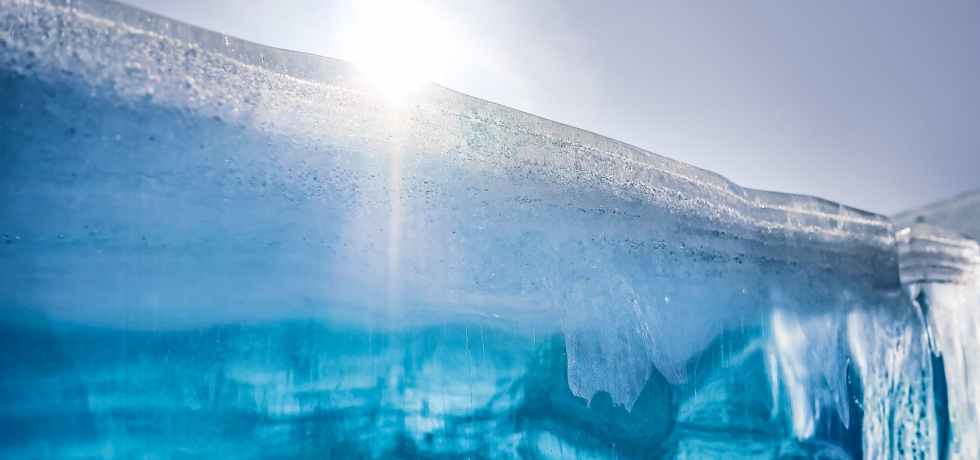
The Gangotri glacier in India, source of the Ganges river. Source: Wikimedia Commons

Towards the end of last year I visited an exhibition at the Massachusetts Institute of Technology (MIT) Museum entitled ‘Rivers of Ice: Vanishing Glaciers of the Greater Himalaya’. The exhibition presented the work of mountaineer, photographer and filmmaker David Breashears, who had recently trekked through the Himalaya to produce updated photographs of glaciers which had been caught on film by earlier explorers. The exhibition blended the scientific iconography of climate change with that of the intrepid explorer, with the ice picks and ropes of the geographic expedition juxtaposed against the graphs and satellite imagery of climate science (see here).

My interest in glaciers grew from some empirical work I’ve been conducting on the contestation between the Intergovernmental Panel on Climate Change and the Indian government over the possible rapid melting of Himalayan glaciers. In the IPCC’s 2007 report, it was asserted that the glaciers could entirely disappear by 2035. This claim was refuted by a government-sponsored review conducted by an Indian glaciologist, which reported a mixed pattern of advancing and receding glaciers and challenged “the conventional wisdom” of climate change causing rapid melting, as the Environment Minister Jairam Ramesh put it. The 2035 claim was later revealed to be ill-founded, having been picked-up from a magazine interview with a glaciologist in the 1990s and eventually finding its way into the IPCC report.

Melting ice has become a visual icon of climate change. Images of polar bears stranded on diminished ice floes and juxtaposed ‘then-and-now’ photographs of shrinking glaciers often dominate media coverage of the issue. There is something very tangible about disappearing ice, perhaps because its relationship to warming temperatures is much more direct and imaginable than the more complex causal links between global warming and the occurrence of extreme weather events. The vulnerability of ice to human-generated heat neatly captures the sense that human activities are impinging on and endangering a fragile natural world.

Scientific knowledge of melting ice is, however, deeply complex. As shown by the IPCC incident, it also sometimes the topic of heated scientific and political debate. In a recent paper in The Geographical Journal, Ulrich Kamp and colleagues provide a window onto the complex methods of detecting change in mountains glaciers, while also offering a fascinating account of how different sorts of data can be combined to produce new scientific understandings. The authors visited the RGS archives in London to access data and photographs from a 1910 RGS expedition to the Turgen Mountains in Mongolia led by Douglas Alexander Caruthers (1882-1962). After reviewing field notes and photographs from the expedition, the authors made their own way to the Turgen Mountains to reproduce the images made by Caruthers and his team.

By carefully positioning and calibrating their cameras, Kamp’s team was able to produce images suitable for detailed comparison. The anthropologist and philosopher of science Bruno Latour has often noted how much scientific knowledge production depends on achieving “optical consistency”, in order to find regular avenues through geographic space. The optical consistency achieved by the 21st century explorers enabled them to compare the pixels of their new images with scanned versions of the 1910 pictures, in order to ascertain precise measurements of ice loss. The authors are then able to conclude that glaciers on the lower slopes of the mountains have shown a marked retreated over the course of the last 100 years, and that continuing climate change will likely see that trend continue.

The image of the geographer-as-explorer has long since receded from imagination (at least those of academic geographers). However, Kamp et al.’s study demonstrates that where a key variable of scientific research is the passage time, there is great value in revisiting the archived work of geographers of old.

globe42

India ‘arrogant’ to deny global warming link to melting glaciersThe Guardian

globe42 IPCC officials admit mistake over melting Himalayan glaciersThe Guardian

books_icon

Ulrich Kamp et al., 2013, Documenting glacial changes between 1910, 1970, 1992 and 2010 in the Turgen Mountains, Mongolian Altai, using repeat photographs, topographic maps, and satellite imageryThe Geographical Journal, DOI: 10.1111/j.1475-4959.2012.00486.x


The Rise of the South: Beyond Expectations or a Warning about Our Future?

March 21, 2013

Jen Dickie

New Orleans after Hurricane Katrina: A Texas Army National Guard Blackhawk black deposits a 6,000 pound-plus bag of sand and gravel on-target, Sunday, September 4, 2005as work progresses to close the breach in the 17th Street Canal, New Orleans. (U.S. Army Corp of Engineers photo by Alan Dooley).  This work is in the public domain.On the 14th March, the United Nations Development Programme published the 2013 Human Development Report, The Rise of the South: Human Progress in a Diverse World, which describes how the “rise of the South is radically reshaping the world of the 21st century, with developing nations driving economic growth, lifting hundreds of millions of people from poverty, and propelling billions more into a new global middle class”.  Crediting sustained investment in education, health care and social programmes as well as increasing international engagement, the report states that the “world is witnessing an epochal global rebalancing”.  Whilst the UN’s press release focuses on the “massive poverty reduction” and that more than 40 developing countries have demonstrated growth beyond expectations, Claire Provost highlights some of the more negative findings from the report in her article for The Guardian.  Her article focuses on the warning from the UN that unless action is taken to tackle environmental threats such as climate change, deforestation and air and water pollution, the number of people living in extreme poverty could increase by up to 3 billion by 2050.  The report highlights that climate change is already exacerbating “chronic” environmental threats, and stresses that although everyone is affected, “they hurt poor countries and poor communities the most”.

In an article for The Geographical Journal, Nigel Clark, Vasudha Chhotray and Roger Few discuss the relationship between natural hazards and disasters and how best to address the “uneven exposure and resilience of different social groups”.  They argue that human-induced climate change and its associated impacts have further added to the already complex nature of natural disasters.  Questioning the concept of global environmental justice, they discuss issues such as the tendency of powerful political and economic actors to take advantage of disasters and how traditional coping mechanisms have been eroded by ‘global modernising forces’; however, they state that whilst aid responses can be distributional and/or rights-based, the idea of justice is likely to stem from “ordinary human virtues of care and compassion”.  Following this argument, Clark et al., offer the notion that current generations of humans may be more likely care about the environment and the challenges it, and our future generations, face if we consider ourselves as owing an incalculable debt to past generations who survived a magnitude of natural disasters and therefore made our existence possible.

As growth in developing nations continues, the challenges facing them will change.  The UN highlights that sustainable economies and societies will rely on new policies and structural changes, and that these are needed if human development and climate change goals are to be aligned.  However, it is clear that policies alone will not be enough.  If we can show the same resilience and respect for our environment as our ancestors did, and view our actions as something we ‘owe’ our future generations, perhaps attitudes will change.

books_icon Nigel Clark, Vasudha Chhotray, Roger Few, 2013, Global justice and disasters, The Geographical Journal, DOI: 10.1111/geoj.12005

60-world2 Environmental threats could push billions into extreme poverty, warns UN, The Guardian, 14th March 2013

60-world2 Press release: “Rise of South” transforming global power balance, says 2013 Human Development Report, accessed 18th March 2013

60-world2 Human Development Report 2013, The Rise of the South: Human Progress in a Diverse World, accessed 18th March 2013


Vexed Natures: Geoengineering in the UK Media

March 7, 2013

By Martin Mahony

The idea of human control over the weather is certainly not new; neither are many of the accompanying anxieties. Source: Wikimedia Commons

Geoengineering – or ”deliberate large-scale intervention in the Earth’s climate system, in order to moderate global warming” (as defined by the Royal Society) – is a topic which always divides opinion in debates about how to tackle climate change. As levels of carbon dioxide in the atmosphere continue to rise at break-neck speed, many insist that efforts to de-carbonise our economies will not be sufficient to avoid dangerous levels of climate change. The only solution, the argument goes, is to counteract humankind’s alteration of the atmosphere’s chemistry with similarly large-scale – but planned – interventions in the operation of the earth system.

The technologies conventionally captured under the label “geoengineering” can perhaps be more usefully thought of in terms of solar radiation management (SRM) and carbon dioxide removal (CDR). SRM technologies range from the mundane to the fanciful: from painting roofs white to reflect more sunlight, to the deployment of giant mirrors between the earth and the sun to intercept solar energy before it even reaches earth’s atmosphere. Other suggestions include the artificial fertilisation of the ocean to encourage it to absorb more carbon dioxide, and the injection of reflective sulphate aerosols into the high atmosphere. The CDR category contains slightly less vaulting technological ambition; technologies here would seek to remove excess carbon dioxide from the atmosphere (with things like synthetic trees and carbon ‘scrubbers’ in power stations) and squirrel it away in underground stores.

For advocates of geoengineering research and deployment, it is essential that we prepare the way for technologies which could deliver us from a full-blown climatic catastrophe. For opponents, geoengineering is another example of the kind of hubris which got us into the environmental crisis in the first place, and the technologies will simply lead us into a vicious circle of unintended consequences and even more risky and uncertain remedial actions. The geoengineering debate thus takes us to the core of deeply ideological debates about the relationship between humans and nature, about technological progress, and about the democratic governance of risk and the environment.

New research from the Science, Society and Sustainability (3S) Group at the University of East Anglia has shone some light on how these diverse normative, ideological and technological assumptions have played out in media coverage of geoengineering debates. In a paper in The Geographical Journal, Kate Porter and Mike Hulme explore the dominant framings of UK newspaper coverage of the issue. Questions of innovation, risk, governance, economics, morality, security and justice are all identified as framings which direct – implicitly and explicitly – the ways stories about geoengineering are assembled and presented to the reading public. Risk framings, for example, tend to emphasise the trade-offs between the avoidance of serious climate change and the uncertain outcomes of large scale geoengineering interventions. Morality framings, by contrast, tend to translate these calculations into a Biblical language of guilt, blame, judgement and punishment.

What will perhaps be of most interest to geographers is Porter & Hulme’s account of the different conceptions of ‘nature’ which can be traced through these diverse framings. Nature emerges, variously, as a powerful self-regulating system in need of palliative care; as something much bigger than and outside of human agency against which dreams of total knowledge and control are futile; and as something more ephemeral which is inherently threatened by geoengineering. This latter conception stands close to Francis Bacon’s notion of natura vexata - a nature once free and unconstrained, which is now oppressed and frustrated by human action. These different understandings of the relationship between the human and the nonhuman have deep roots. Any attempt at a deliberate, global modification of the planet’s energy flows will have to negotiate these competing visions. How to do this in a way which is robustly and justly democratic is a question which we are yet to come to terms with.

Any discussion of geoengineering is freighted with normative assumptions and political preferences (you’ll probably have noticed some of mine). Porter & Hulme’s work offers a preliminary guide to the rhetorical resources and ideological frames which populate the geoengineering debate, and raises further interesting questions. How do these debates play out differently in different places and cultures? Who is trusted as a source of information on geoengineering? How do different conceptions of ‘nature’, ‘risk’ and even ‘democracy’ shape the debate? These are important discussions which geographers are well-placed to contribute to.

books_icon Kate Elizabeth Porter and Mike Hulme, 2013, The Emergence of the Geoengineering Debate in the UK Print Media: A Frame Analysis, The Geographical Journal, DOI: 10.1111/geoj.12003

globe42 Rogue geoengineering could ‘hijack’ world’s climateThe Guardian

globe42 Carbon dioxide levels show biggest spike in 15 yearsTimes of India


Governing from Above: The Vertical Geopolitics of Climate Change

February 8, 2013

The laying of water pipes in Israel c. 1946. Hydrological politics are now a key site where climate change meets questions of sovereignty. Source: Wikimedia Commons

Martin Mahony

Global geopolitics have conventionally been conceived of in terms of the horizontal actions and interactions of territorially-bounded nation states. However, critical geographers have recently started giving consideration to ‘vertical geopolitics’, drawing greater attention to the spatial exercise of power in a dimension which cannot conventionally be discerned from a flat political map of the world.

Vertical geopolitics have figured prominently in the news recently, particularly as new technologies of surveillance and violence have challenged conventional orderings of vertical territory (such as the notion of sovereign ‘airspace’). In particular, the military use of drones – or unmanned aircraft – for the purposes of intelligence-gathering  and assassination has quite radically altered the political geographies of modern warfare. Meanwhile, the WWF’s recent announcement that drones will be used to help protect wildlife from poachers marks an interesting development in the sky-bound surveillance of the global environment.

Climate change offers an fascinating window through which to observe the changing dimensions of political geography. In the first instance, the science and politics of the atmosphere may seem to challenge conventional territorial forms of governance. However, research is starting to emerge which demonstrates how certain political responses to climate change represent reterritorialising moves in the ongoing negotiations over sovereignty, environment and natural resources.

A paper I wrote recently with Mike Hulme seeks to explore the knowledge-base underlying many such moves. Regional climate prediction has become a key means of localising or even territorialising climate change, thus producing new forms of political space in which the implications of climate change can be debated. A recent paper by Michael Mason in The Geographical Journal takes this proposition further. In analysing the ‘securitisation’ of climate change in the context of the Israel/Palestine conflict, he offers a fascinating picture of the interaction of climate politics with the (vertical) geopolitics of contested sovereign spaces.

Mason argues that the specific way in which climate change has been rendered as a security problem by the Israeli government tends to reinforce vertical relations of domination over Palestinian skies and groundwater resources. By contrast, in the case of the Palestinian Authority, the threats posed by climate change have both been woven into liberation narratives and used as an opportunity to demonstrate policy competence and fitness for statehood.

Mason’s paper makes an important contribution to a growing body of literature which emphasises the multitude of ways in which climate change is securitised, normalised and politicised in different contexts and settings. The vertical geopolitics of climate change represent an important facet of this line of inquiry, and one which is only just beginning to be explored.

books_icon Michael Mason, 2013, Climate Change, Securitisation and the Israel-Palestine ConflictThe Geographical Journal, DOI: 10.1111/geoj.12007

books_icon

Martin Mahony & Mike Hulme, 2012, Model Migrations: Mobility and Boundary Crossings in Regional Climate Prediction. Transactions of the Institute of British Geographers, 37, 2, 197-211

globe42 WWF plans to use drones to protect wildlifeThe Guardian

globe42

John Brennan’s killer drones are new symbol of American in the worldLos Angeles Times


Avalanche! How Trees Hold the Secrets of the Past…

February 6, 2013

Jen Dickie

Stob Ghabhar, Scotland. This image was taken from the Geograph project collection. See this photograph's page on the Geograph website for the photographer's contact details. The copyright on this image is owned by Richard Webb and is licensed for reuse under the Creative Commons Attribution-ShareAlike 2.0 license. Last month, tragedy struck in the Scottish Highlands when an avalanche swept four climbers to their deaths. The experienced mountaineers were descending the Bidean Nam Bian peak on the southern side of Glencoe when the avalanche hit, causing them to fall 1000ft (c. 300m) before being buried under dense snow.  In a report for The Independent, Richard Osley describes how the tragedy occurred shortly after the Scottish Avalanche Information Service (SAIS) issued a warning that human-triggered avalanches were likely in the Glencoe area and the risk was rated as ‘considerable’.  The SAIS reported that on the day of the avalanche, there did not appear to be much depth of snow on the hills of Glencoe, however, there were areas of “mainly hard, unstable windslab” that overlay “a persistent softer weaker layer”; in these conditions more compact blocks of snow can separate from the surrounding snow resulting in a ‘Slab Avalanche’, this type of avalanche is responsible for the majority of avalanche-related fatalities.

As the popularity of the winter sports industry grows, there is increasing pressure on scientists to predict where and when avalanche events will occur.  Dedicated research centres such as the Swiss Institute for Snow and Avalanche Research are continually improving our understanding of avalanche formation and dynamics and therefore providing increasingly reliable warning services, however, they highlight that we are still unable to accurately predict “why, when and where an avalanche will be released”.

In an article for Area, Mircea Voiculescu and Alexandru Onaca describe how they have applied dendrogeomorphological methods to assess snow avalanches in the Sinaia ski region in the Romanian Carpathian Mountains.  By combining climatological and nivological (physical properties of the snow) analyses with information on disturbances recorded in tree growth, they argue that historical avalanche activity can be reconstructed, including the frequency, magnitude and return-period characteristics of the events.  This knowledge, they argue, can be used to make assessments of risk in areas such as the Carpathian Mountains, where the geomorphological understanding of local avalanches is limited.

As winter sports become more popular with non-expert communities, there is growing pressure to identify high risk areas and to provide appropriate warning systems that non-experts can understand.  It is clear that real-time observations and local knowledge are key to identifying avalanche risk, however, this research shows that by combining different techniques and approaches, we can increase our knowledge and understanding of hazards such as avalanches, and provide essential risk information to previously unmonitored regions such as newly established winter sports resorts.

books_icon Mircea Voiculescu and Alexandru Onaca, 2013, Snow avalanche assessment in the Sinaia ski area (Bucegi Mountains, Southern Carpathians) using the dendrogeomorphology method, Area 45 109–122 doi: 10.1111/area.12003

60-world2 Four climbers die in Glencoe avalanche, The Independent, 20th January 2013

60-world2 SportScotland Avalanche Information Service, accessed on 18th January 2013

60-world2 The WSL Institute for Snow and Avalanche Research SLF, accessed on the 18th January 2013


Adding Fuel to the Fire: Australia’s Heatwave and Bushfire Epidemic

January 21, 2013

By Jen Dickie

Bushfire in Kakadu National Park, Northern Territory, Australia by Thomas Schoch.  This file is licensed under the Creative Commons Attribution-Share Alike 2.5 Generic licenseWhilst the UK suffered its wettest summer in 100 years and is currently under a blanket of snow, pictures showing the devastating effects of the epidemic of bushfires that have hit Australia, linked to a record breaking heatwave this January, have been appearing in the news.  In The Observer last Saturday, Alison Rourke reports how firefighters are struggling to control what have been described as the “most atrocious fire-fighting conditions in 30 years”.  A combination of high temperatures and strong winds have resulted in the situation being given a fire danger rating of ‘catastrophic’, the highest possible rating.  In a special climate statement released by Australia’s Bureau of Meteorology (BoM) on Monday, the heatwave event is described as being persistent and widespread, affecting large parts of central and southern Australia.  The combination of dry conditions since mid-2012 and a delay in the monsoon are thought to have exacerbated the susceptibility of the landscape to bushfires.

While Tim Flannery from The Guardian argues that these “raging wildfires are forcing many to rethink their stance on climate change”, the immediate focus is largely on the improvements in communication, weather prediction and management of the outbreaks, particularly since the tragedy in Victoria in 2009 where 173 people lost their lives.

In a paper for Geography Compass, Christopher O’Connor, Greg Garfin, Donald Falk and Thomas Swetnam review trends in human pyrogeography research, where they discuss the interactions among of fire, climate and society.  In particular, they highlight that geographers have the necessary tools to “change operational management actions and societal preparedness” and advance the study of the complex nature of pyrogeography.  They investigate, among other themes, the frequency and extent of wildfires, the role climate plays as a driver of fire occurrence and the impacts of human modification of the landscape; however, they emphasise that our current understanding of the interactions needs to be improved if we are to predict what might happen in the future.  Whether you believe in climate change or not, it seems that there have been more and more extreme weather events hitting our headlines over recent years; however, as the understanding of the complex relationships among fire, climate and society improves, hopefully society will become increasingly more prepared to deal with them in the future.

books_icon Christopher O’Connor, Gregg Garfin, Donald Falk, Thomas Swetnam, 2011, Human Pyrogeography: A New Synergy of Fire, Climate and People is Reshaping Ecosystems across the Globe, Geography Compass 5, 329-350

60-world2 As Australia heatwave hits new high, warning that bushfires will continue, The Observer, 12th Jan 2013

60-world2 As Australia burns, attitudes are changing. But is it too late? The Guardian, 11th Jan 2013

60-world2 Extreme January heat, SPECIAL CLIMATE STATEMENT 43 – INTERIM, Climate Information Services – Australia’s Bureau of Meteorology, 14th Jan 2013


Climate Change: A Little Further Round the Pragmatic Turn?

January 18, 2013

Cutting black carbon emissions from diesel exhausts would be one way to both slow global warming and cut air pollution levels.

Martin Mahony

A few weeks back I wrote a post on here which reflected on whether the outcomes of the Doha climate negotiations represented something of a ‘pragmatic turn’ in global climate policy discourse. Drawing on the Hartwell Paper - which advocates a more pragmatic set of immediate climate policy goals – I suggested that the growing interest in the multi-scalar character of climate governance and in potential ‘win-win’ strategies like soot emissions reductions (which would have benefits both for the climate and for human health) might represent an application of some of the principles of a new climate pragmatism.

Events this week suggest that we may be heading a little further round this pragmatic turn. At a conference in London, Executive Secretary of the UN Framework Convention on Climate Change Christiana Figueres argued that national domestic climate legislation “is critical because it is the linchpin between action on the ground and the international agreement… domestic legislation opens the political space for international agreements and facilitates overall ambition”, as reported in The Guardian.

This marks something of an inversion of the logic which has dominated much of the history of climate governance, i.e. that national laws should be implemented under a framework of international, legally-binding agreements. For Figueres, effective national policies are now a precursor to achieving the long-desired comprehensive legal framework to tie countries together in their efforts to reduce emissions of greenhouse gases.

This news was followed by reports that a group of scientists studying the aggregate effects of soot or ‘black carbon’ emissions on the climate had made some rather surprising calculations. The scientists – who spent four years compiling observations and data from around the world – suggested that the contribution of black carbon to global warming may be twice that of previous estimates. This would place black carbon second in the list of climate-warming emissions, after carbon dioxide.

For the climate pragmatists, black carbon emissions represent something of a low hanging fruit – a problem whose solution would be politically much more straightforward than the decarbonisation of the world’s energy supply. These new findings suggest that the fruit may be a little sweeter (and twice as plump) than first thought, and the renewed emphasis on multi-scalar governance may make it a little easier to reach.

However, as Bailey and Compston argued in 2010, “trajectories of climate governance are shaped by struggle and negotiations between competing sets of interests operating within and across territorial scales.. Despite the customary framing of climate change as a global problem requiring global solutions, climate governance can never be disentangled from these processes, just as international and national political strategies cannot simply be rolled out to the sub-national and local levels or between political jurisdictions. Some sources of resistance are embedded in localities and spatial scales. Others, especially those allied to corporate interests, transcend conventional spatial boundaries.”

The potential new trajectories currently emerging will not be smooth and easy paths, and the re-scaling of political efforts and the re-prioritising of specific issues will mean that new sources of resistance will be inevitably be encountered. The key premise of climate pragmatism however is that these resistances need not paralyze entire political projects, such as the search for an all-encompassing global climate agreement. Thus the confluence of a spatially sensitive approach to climate governance and a pragmatic turn in the ordering of policy goals may mean that climate-friendly and socially just policies are just around the corner.

globe42 Domestic climate laws are essential, says UNThe Guardian

globe42 Black carbon is worse for global warming than previously thoughtThe Guardian

books_icon Ian Bailey and Hugh Compston, 2010, Geography and the Politics of Climate PolicyGeography Compass 1097-1114


Before the Flood: Modelling Hybridity at the Science-Policy Interface

January 4, 2013

Martin Mahony

Yesterday the UK Met Office reported that 2012 was the country’s second wettest year on record. The announcement was much anticipated, partly due to the simultaneous flooding of large swathes of rural and urban Britain which has seen everything from inundated homes to seals swimming in lakes 50 miles from the coastline. A competitive spirit seemed to grip the media, as we eagerly awaited confirmation that what had been experienced over the course of 2012 was some kind of state of exception – a radical departure from the everyday interactions of humans and their environments.

Climate change inevitably entered the debate, although recent weather events in the UK and the US (i.e. Hurricane Sandy) have meant that much of the discussion has been about adaptation to new trends and extremes, rather than about the potential to mitigate the causes of climate change (see Climate Central’s discussion of newspaper trends).  Adaptation to climate change sees the sciences of the weather coming into contact with concerns about human health, land-use change, agriculture, energy supply, and a host of other topics which have long been of interest to both human and physical geographers alike.

Scientific models which claim to offer the prospect of knowing and perhaps controlling the future exercise a particular power over such debates (see for example an analysis in Transactions by Mike Hulme and myself of a particularly widely-used regional climate model). In a new essay in Transactions, Nick Green explores the potential of agent-based modelling to inform policy-making about land-use change. These computational tools consist of various ‘agents’ representing things such as households, individuals and businesses. By simulating the interactions of these entities, the models can offer plausible pictures of how land-use patterns may change over time, thus potentially informing decisions about things like flood defences. However, the predictive skill of such models is still questionable, and the interpretation of their results requires a complex interplay of different forms of reasoning across the conventional science-policy boundary; mathematical logic must combine with personal intuition and subjective judgement if the models’ fuzzy outputs are to be used appropriately in the fuzzy world of environmental policy-making.

In a 2011 paper, Stuart Lane and colleagues report a project in which the relations between scientific models, scientists, stakeholders and members of the public were fundamentally re-ordered. After a history of failed flood management practices in Ryedale, North Yorkshire, the researchers instigated a collaborative knowledge-making exercise in which expert knowledge was combined with what was found to be widely-distributed and sophisticated knowledge of the local hydrology among Ryedale residents. New forms of knowledge emerged, some of which were codified into model form. The authors argue that in situations where trust in experts and institutions is contested, ‘science’ is not best served by seeking to extract it from ‘politics’. By embracing the hybridity of science and politics (e.g. through making destabilizing political interventions through new ways of producing scientific knowledge), political empowerment can proceed in tandem with robust environmental decision-making.

If indeed our wet 2012 is a harbinger of a wetter future, innovative approaches to knowledge production and decision-making will be central to society’s adaptation to a changing climate. Geographers can provide not only the necessary technical tools and skills, but also the broader methods needed to ensure that decision-making  is always informed, inclusive, and just.

2012 second wettest year on record for UKThe Guardian

Seal spotted swimming in flooded Cambridgeshire field 50 miles inlandThe Guardian

Martin Mahony & Mike Hulme, 2012, Model Migrations: Mobility and Boundary Crossings in Regional Climate PredictionTransactions of the Institute of British Geographers 37 197-211

Nick Green, 2013, A Policymaker’s Puzzle, or How to Cross the Boundary from Agent-based Model to Land-use Policymaking?,  Transactions of the Institute of British Geographers, 38 2-6

Stuart Lane et al., 2011 Doing Flood Risk Science Differently: An Experiment in Radical Scientific MethodTransactions of the Institute of British Geographers 36 15-36


Antarctica: Frozen Diplomacy

December 20, 2012

600px-Antarctica_6400px_from_Blue_MarbleBy Benjamin Sacks

On 18 December 2012, William Hague, the Secretary of State for Foreign and Commonwealth Affairs, announced that the southern portion of the British Antarctic Territory, spanning from the southern edges of the Ronne Ice Shelf to the South Pole, had been renamed in honour of Queen Elizabeth II. In celebration of the Diamond Jubilee, the 169,000 square mile, unpopulated region is twice the United Kingdom’s land area. There is considerable precedent for ceremoniously naming parts of Antarctica. Britain had previously named the the region near the Dumont d’Urville Sea George V Land, and Princess Elizabeth Land near Prydz Bay and the Amery Ice Shelf. Norway, which along with Britain was the chief explorer of Antarctica in the early twentieth century, named a large swath of the continent after its monarchs.

The legal framework behind Britain’s decision to rename a portion of its Antarctic territory is, to pardon the pun, ‘frozen’. Britain’s claim to much of West Antarctica is, like the claims of six other states, held in permanent limbo under the terms of Antarctic Treaty, safeguarding the continent against future development, which became active on 23 June 1961. As such, although Britain, Australia, New Zealand, Argentina, Chile, France, and Norway all made territorial claims, their respective holdings are not necessarily recognized by any other state, and all countries are free to conduct scientific research in any part of the continent.

It is important to keep in mind how little the world knew about Antarctica at the beginning of the twentieth century. In June 1963, Griffith Taylor, a surviving member of Robert Scott’s 1910 expedition, wrote in The Geographical Journal of some of the changes international teams had noted since his perilous journey over fifty years previously. Taylor recalled explorers’ differing geographical accounts, particularly over the length and breadth of continental mountain ranges and ice shelves. Other areas, including the Filchner Shelf, were all but unknown in 1910-14. Finally, and somewhat ominously, he predicted, but did not elaborate upon, the continent’s ‘probable disintegration’ (pp. 190-91).

Although uninhabited, Antarctica was long (and, indeed, continues to be) described within a colonial vocabulary. In part, this was because still so little was actually understood about the continent’s interior. In 1951, famed explored Vivian Fuchs described post-war British efforts in the region. The British were not simply exploring Antarctica, but rather a somewhat indeterminate British Antarctica, stretching vaguely down from the Falkland Islands. The maps, including that of Marguerite Bay, took on a creative, even farcical quality normally associated with the faded charts of early exploration (see. p. 402, for example).  But Fuchs’ report was also a clear piece of authoritative legitimation, a systematic chronology of British expeditions since 1945 acknowledging the United Kingdom’s Antarctic interests. Successive generations, including the (1984-85) Joint Services expedition, have continued this role to the present.

books_icon

Griffith Taylor, 1963, Probable Disintegration of Antarctica, The Geographical Journal 129 190-91.

books_icon Vivian E Fuchs, 1951, Exploration in British Antarctica, The Geographical Journal 117, 399-419.

books_icon Chris Furse, 1987, Joint Services Expedition to Brabant Island, Antarctica, 1984/85The Geographical Journal 153 1-10.

60-world2 UK to name part of Antarctica Queen Elizabeth Land, BBC News, 18 December 2012.

60-world2 The Antarctic TreatyNational Science Foundation: Office of Polar Programs, accessed 20 December 2012.


“Geography is a Great Adventure”

December 10, 2012

By Catherine Waite

December 2012a AntarcticaGeography is a great adventure” is the widely quoted opinion of the Royal Geographical Society (with IBG)’s out-going President, Michael Palin. The discipline has long been associated with exploration and expeditions have taken place for hundreds of years in the pursuit of new geographical and scientific knowledge. This association is just as relevant now as it was, for example, in the late 15th Century when Christopher Columbus first sailed to the Americas. December 6th 2012 saw the start of what has been described as “The Last Great Polar Challenge”, an expedition by Sir Ranulph Fiennes and a team of five other explorers who hope to cross Antarctica, a journey of 2,000miles, during the Antarctic winter.

This trip is not simply an adventure and a chance to conquer this polar challenge. The team are also running a major fundraising initiative for the ‘Seeing is Believing’ charity who help fight avoidable blindness across the world. However, perhaps the most important aspect of this event is its scientific potential. As soon as the expedition’s ship left from London’s Tower Bridge bound for Antarctica, data gathering commenced. In the course of the journey the team hope to collect data on oceanography, meteorology and marine biology. On arrival in Antarctica the extreme conditions will test the existing knowledge and scientific expertise that was required to prepare the equipment for this expedition, as the team will experience temperatures as low as -90oC and most of the trek will take place in complete darkness. Yet, the trip also provides a unique opportunity to collect data from locations previously inaccessible to humans and it is hoped the data set will include information on the true surface-shape of the ice sheet, the composition of the snow and ice, atmospheric dynamics over the ice and any bacterial life that exists at the heart of Antarctica.

It is clear that this is very much an adventure, yet one that is accompanied by the opportunity for ground-breaking research. This relationship between expeditions, exploration, science and education is one that has been recently discussed in Couper and Ansell’s (2012) paper in Area entitled “Researching the outdoors: exploring the unsettled frontier between science and adventure”. Fieldwork and outdoor research is likely to continue to be at the forefront of the quest for new geographical knowledge and whilst it may not be possible to classify all fieldwork as adventurous or an expedition, this trip by Sir Ranulph Fiennes and his team most certainly is!

books_iconCouper, P. and Ansell, L. 2012 Researching the outdoors: exploring the unsettled frontier between science and adventure Area 44 14–21

world_iconSir Ranulph Fiennes’ ‘coldest journey’ begins BBC News 6th December 2012

world_iconViewpoint: The last great polar challenge BBC News 17th October 2012


Follow

Get every new post delivered to your Inbox.

Join 4,850 other followers

%d bloggers like this: